Implementation Success
Discussion Map





Implementation
Data & Goal Setting
Facilitation
Assignments
Celebrations
Curriculum
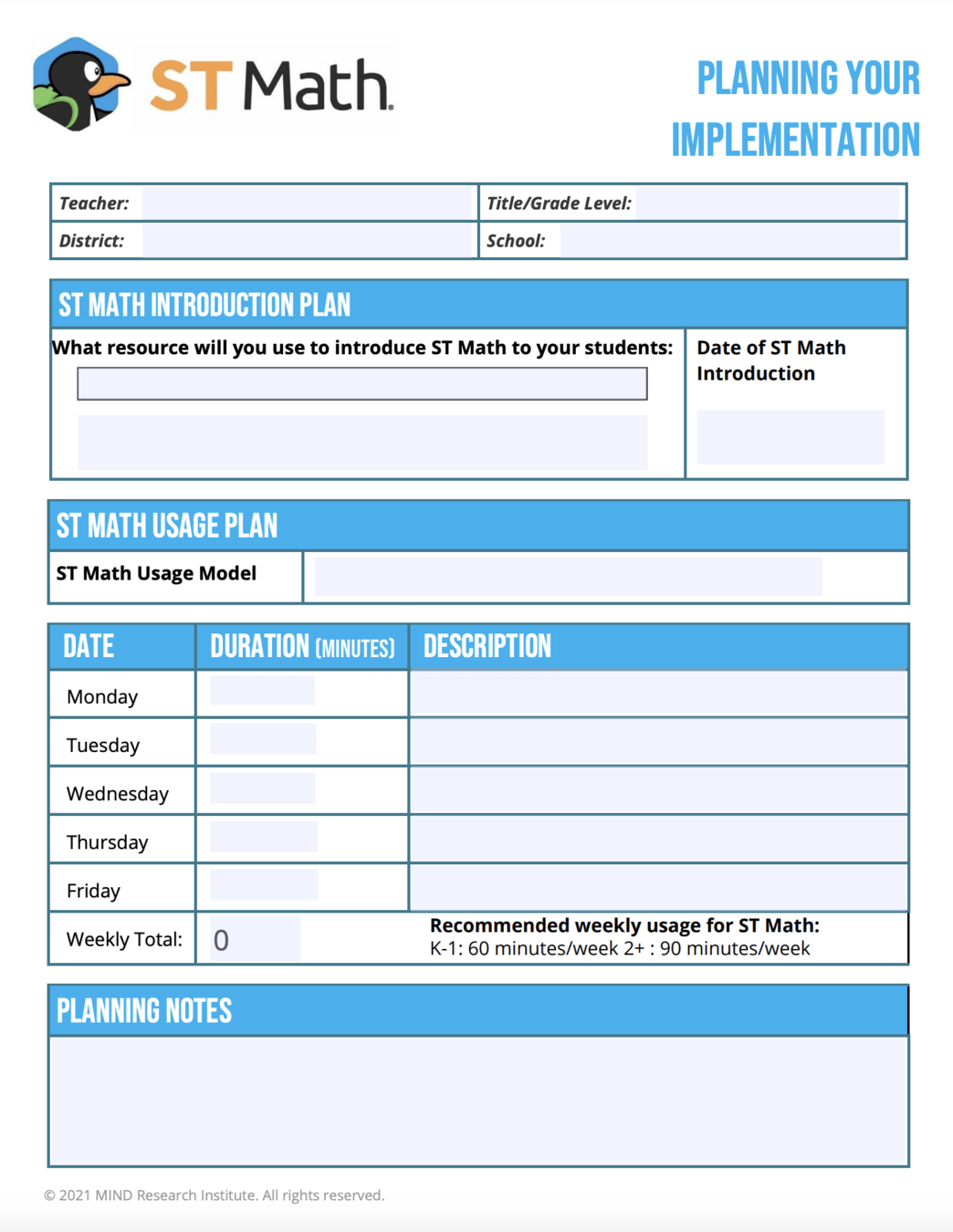
- Review your ST Math Implementation Plan
- Create a schedule for ST Math Usage
- Check to see all students have started and are making progress
- Have students track usage with one of our data trackers
Tips For a Successful Implementation
ST Math Scheduling
Tips For a Successful Implementation
ST Math Usage
ST Math Procedures



ST Math Scheduling
Create a schedule
This allows ST Math usage to be
- Intentional
- Consistent
- Supportive of usage goals
-
At least two sign-ins per week
-
60 min per week (K-1)
-
90 min per week (2+)
-
| Day | ST Math Time | Note |
|---|---|---|
| Monday | 1:00 - 1:30 pm | Computer Cart |
| Wednesday | 9:30 - 10:00 am | Computer Cart |
| Thursday | 9:30-10:00 am | Computer Cart |
| Friday (optional) | optional center time | Computer Station in room |
| Group | Teacher | ST Math | Writing | Reading |
|---|---|---|---|---|
| 1 | Monday & Wednesday | Tuesday & Thursday | Tuesday & Thursday | Monday & Wednesday |
| 2 | Tuesday & Thursday | Monday & Wednesday | Monday & Wednesday | Tuesday & Thursday |
| 3 | Monday & Wednesday | Tuesday & Thursday | Tuesday & Thursday | Monday & Wednesday |
| 4 | Tuesday & Thursday | Monday & Wednesday | Monday & Wednesday | Tuesday & Thursday |
Station Rotation Schedule
Whole Group Schedule

ST Math Procedures
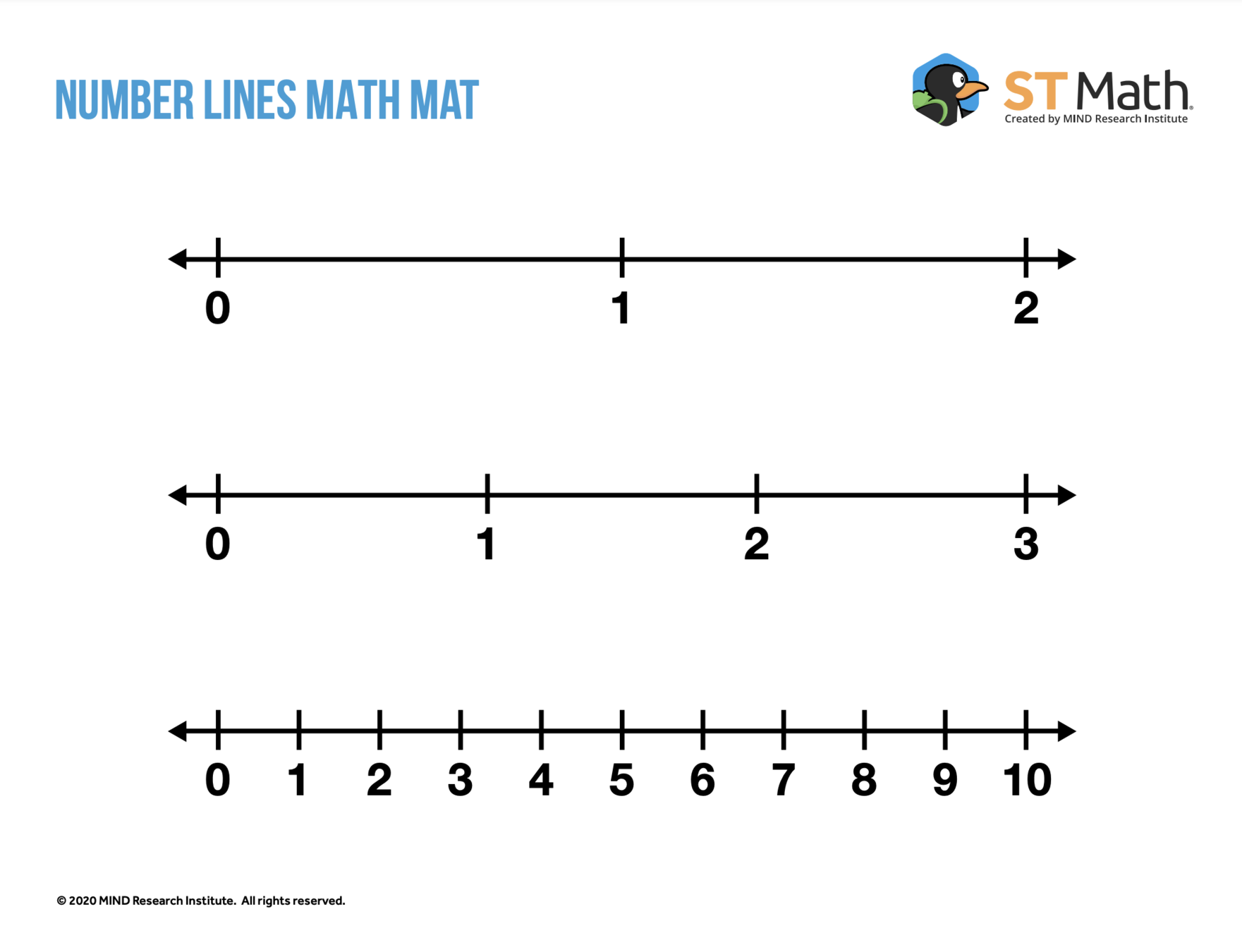
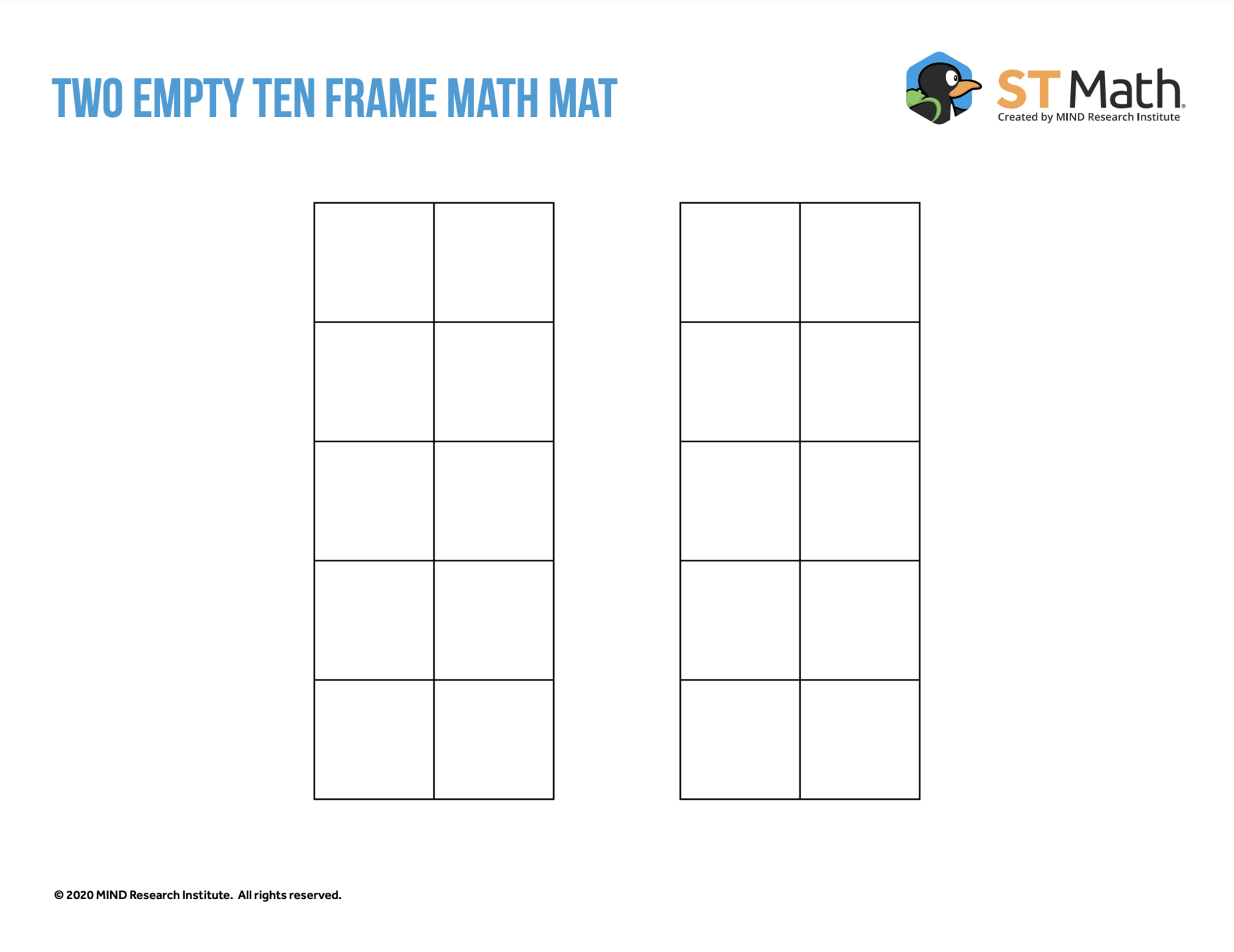
Provide access to math tools
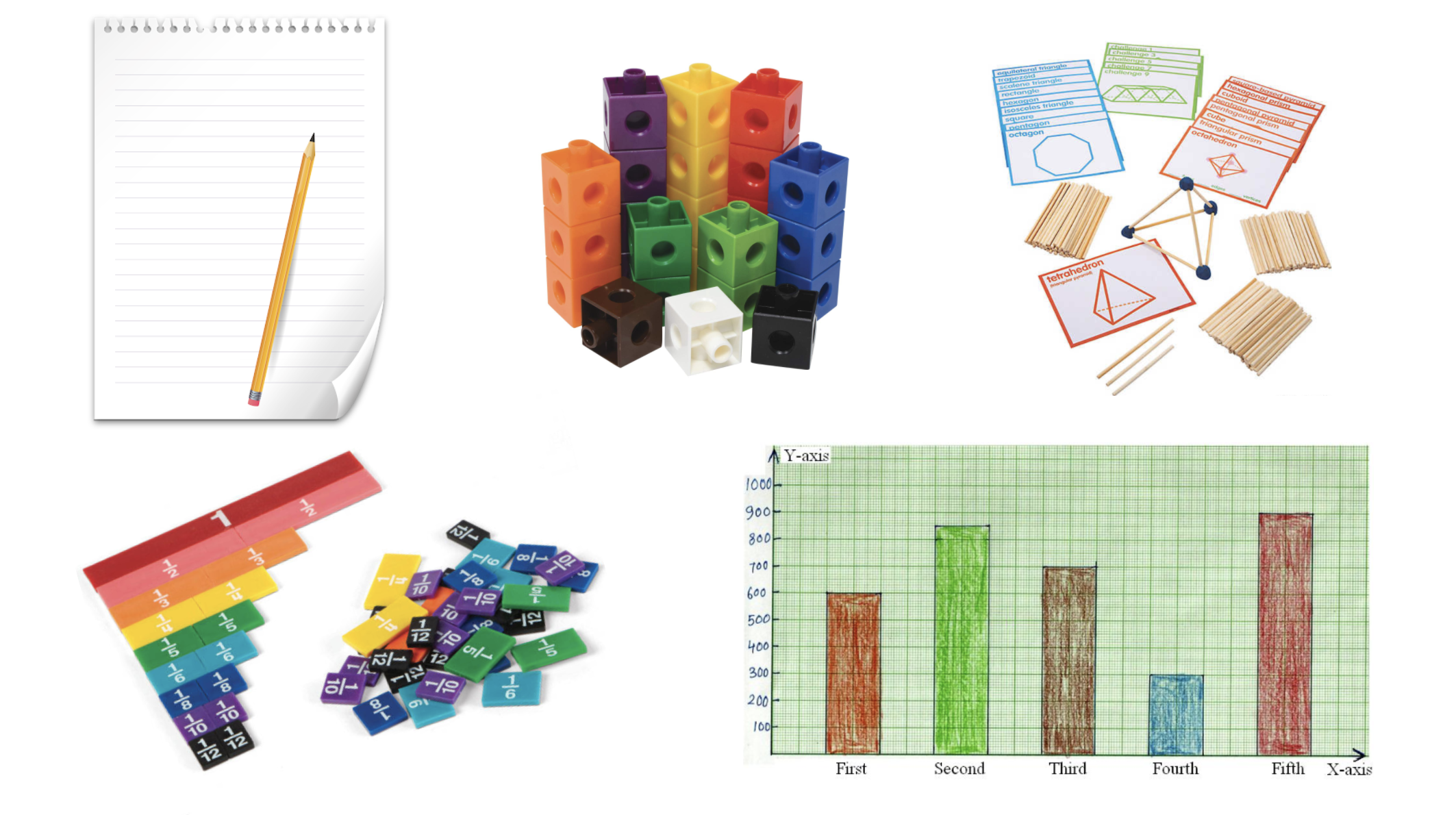

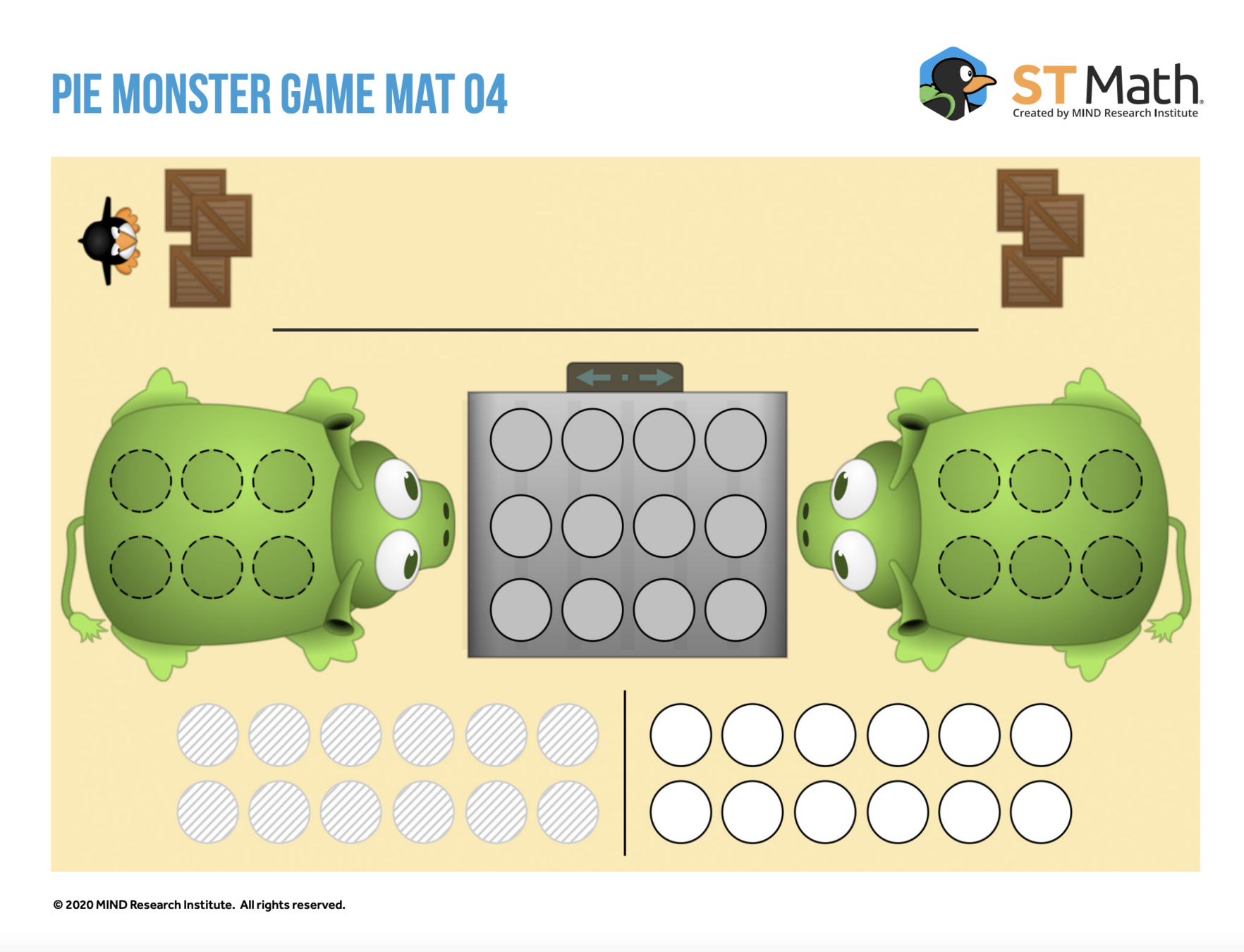
- Manipulatives
- Game Mats
- Math Mats
ST Math Procedures
-
Monitor students during ST Math time
-
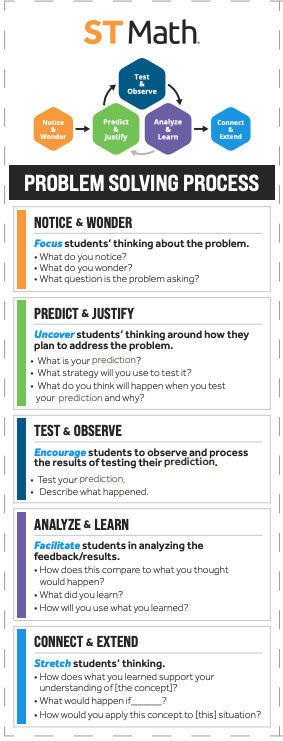
Use the Problem Solving Process
-
Ask questions to facilitate thinking
-
Teach self-facilitation strategies
-
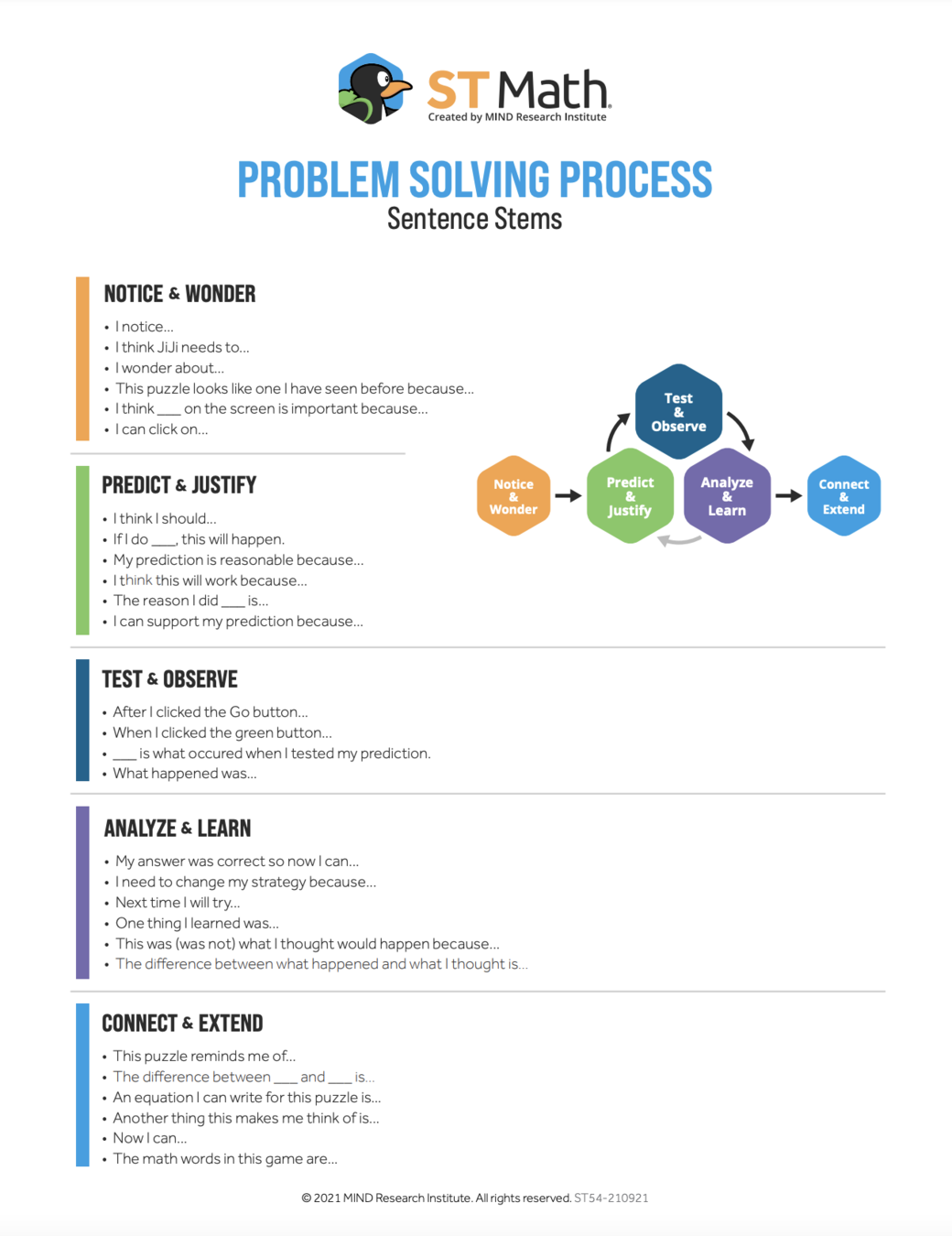
Ask questions to facilitate thinking
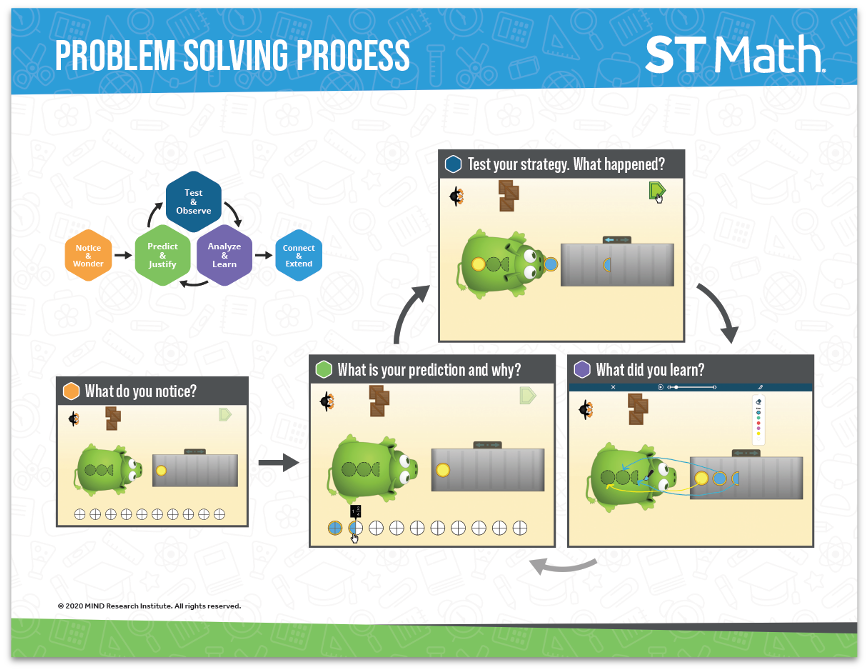
Teach self-facilitation strategies
ST Math Procedures
Have students summarize their learning
- Assess student learning
- Communicate thinking
- Make connections
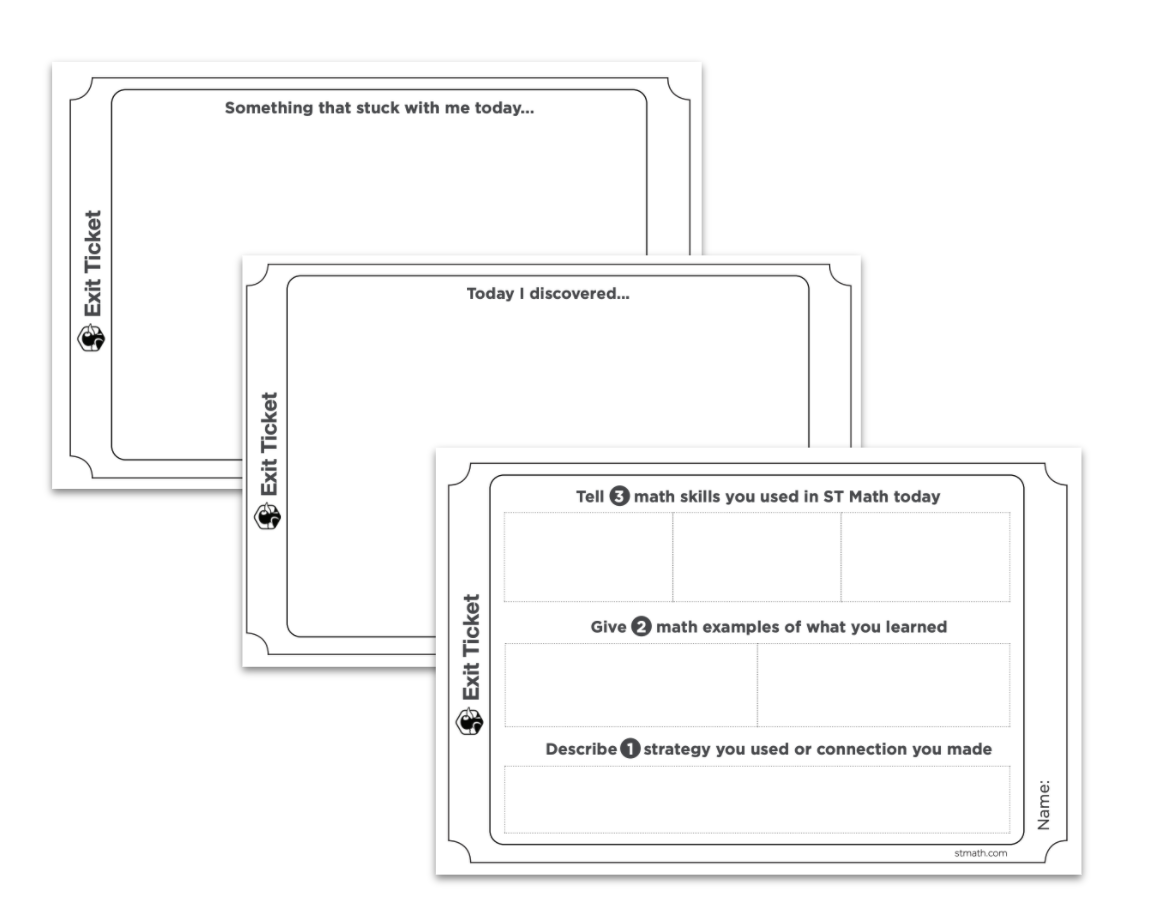
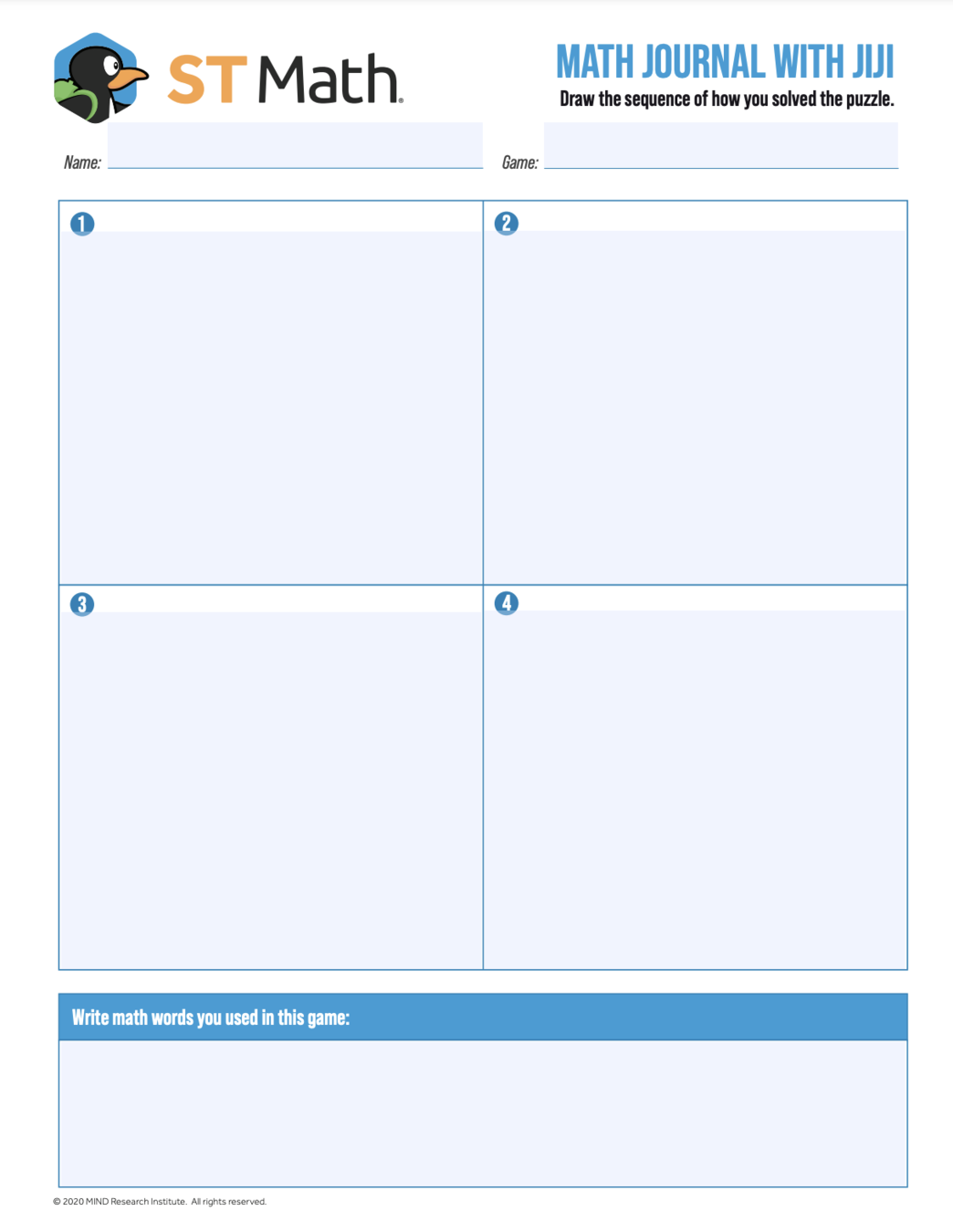
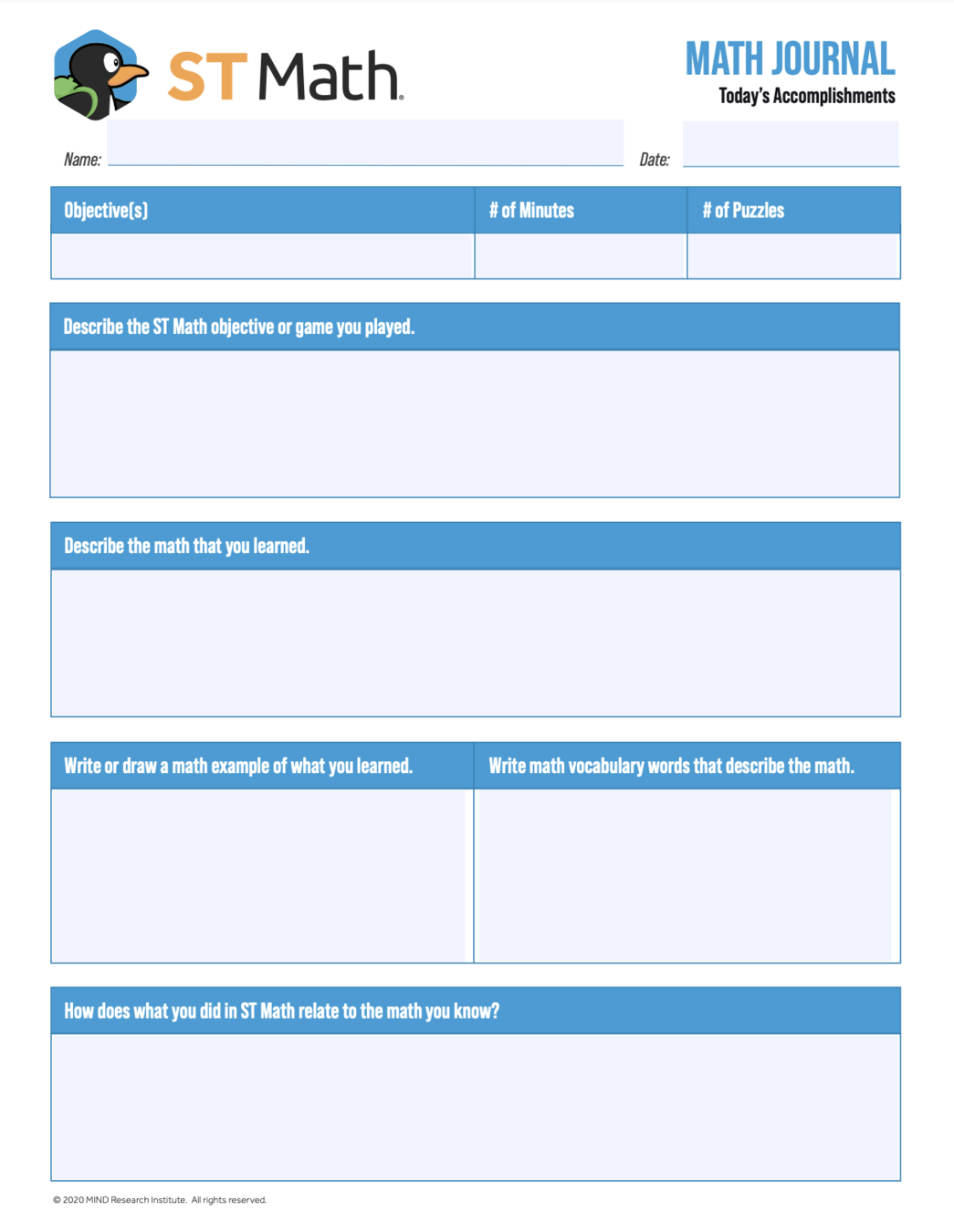
Math Journal
Exit Ticket
ST Math Procedures
Things to think about:
- How students ask for help
- Goal setting
- Students tracking progress
- Transitions
- Assigning students to computers
- Acceptable noise level
- Access to math tools/resources
- Summary activity

Research shows more ST Math time = more learning
Below are some recommended weekly goals.
ST Math Usage Goals
| Grades | Minutes | Puzzles |
| Pre-K/TK | 30 | 20 |
| Gr. K-1 | 60 | 40 |
| Gr. 2-8 | 90 | 60 |
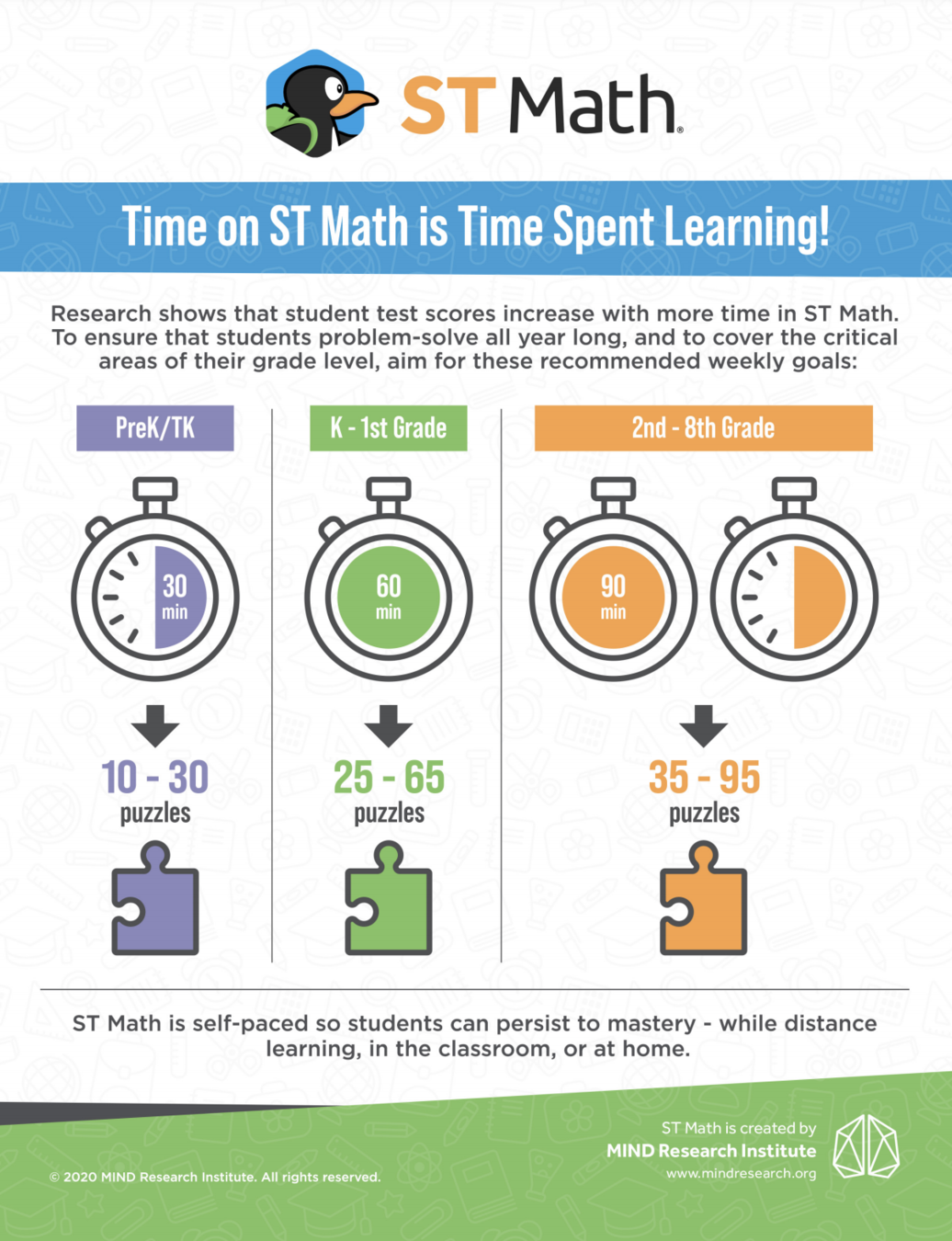
Time Spent on ST Math is Time Spent Problem Solving
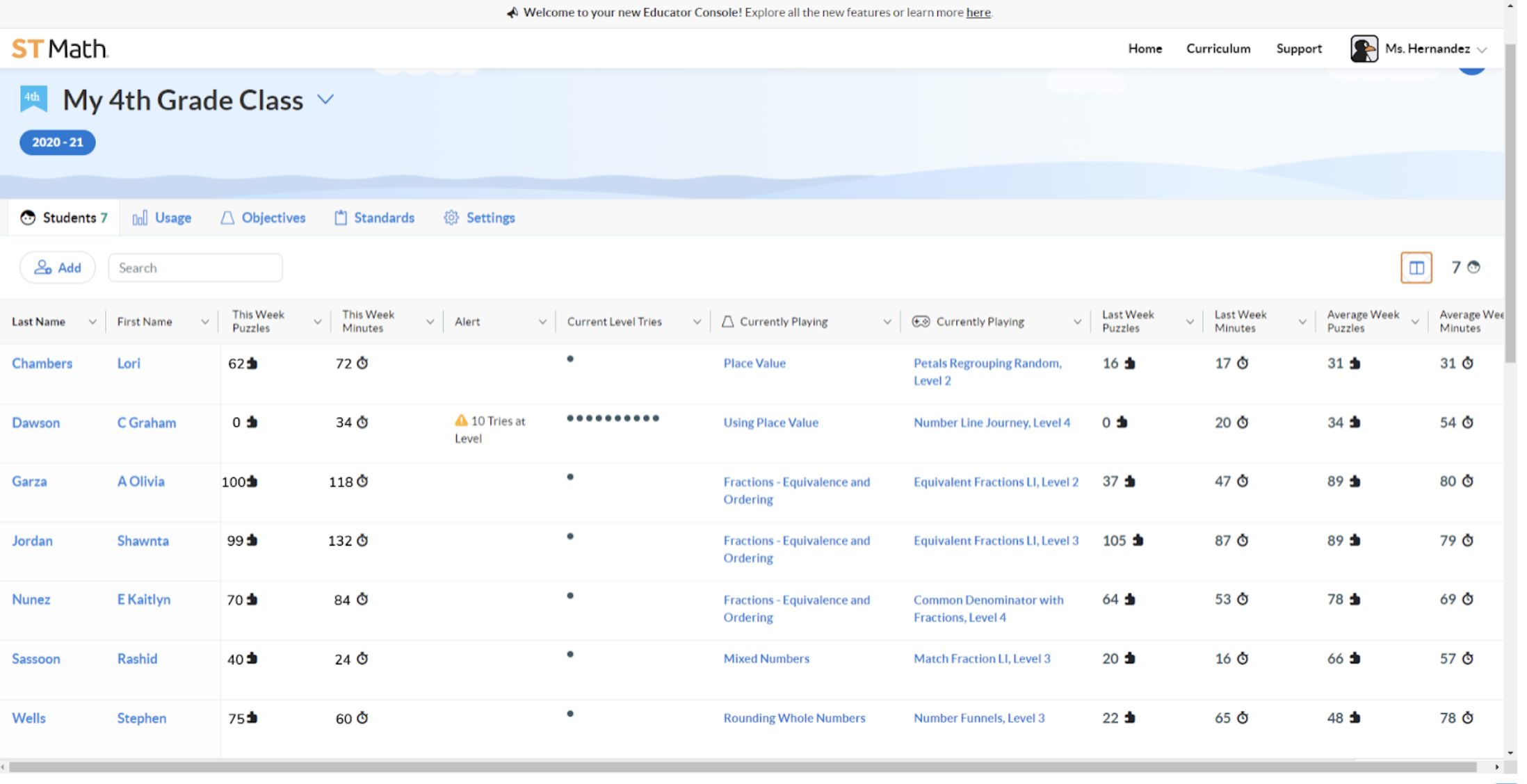
- Have all students started?
- Are students making progress?
- Are their any outliers?
View your Educator Dashboard
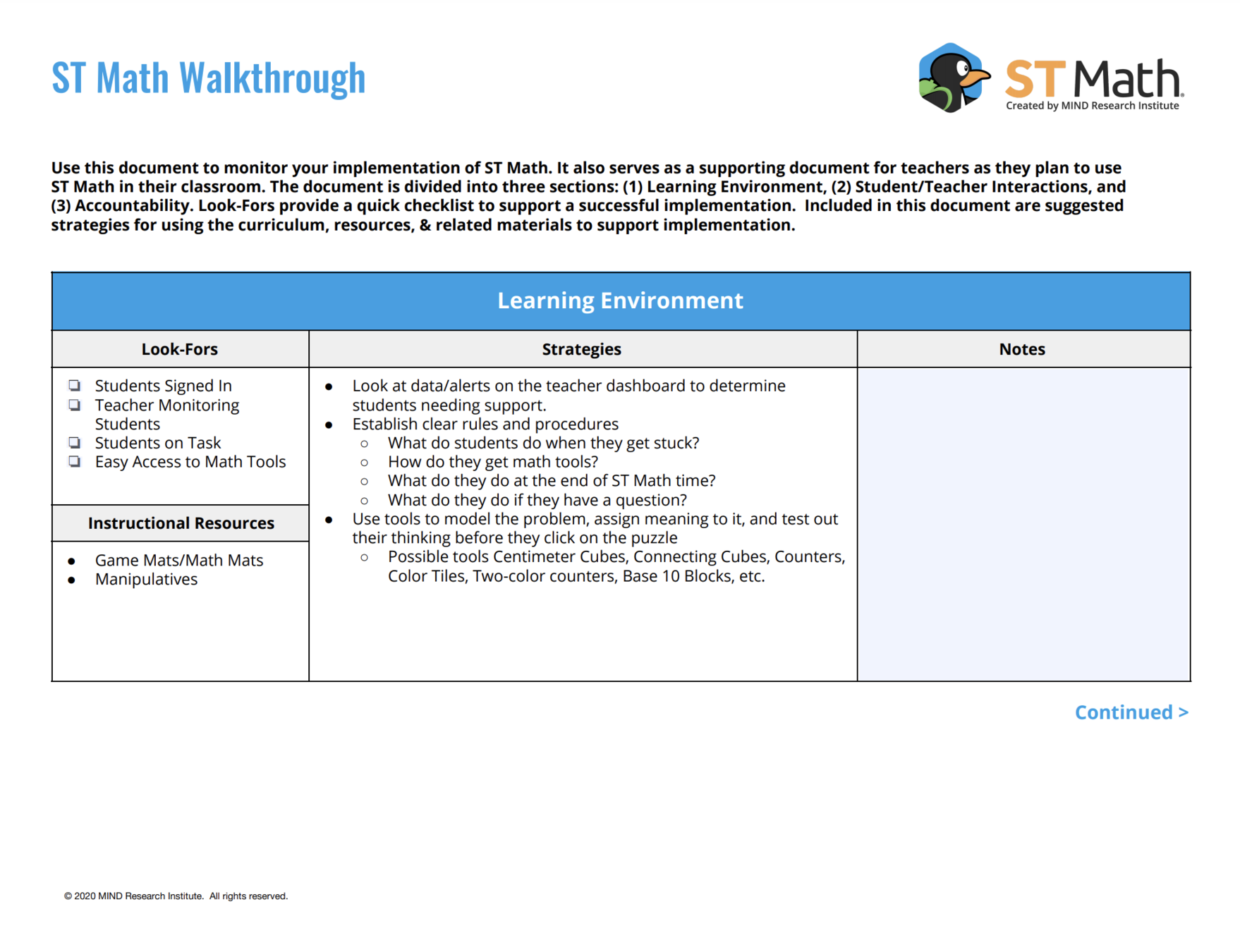
Monitor Implementation with look-fors, strategies, and instructional resources.
Focus on three areas to support implementation
- Learning Environment
- Student/Teacher Interactions
- Accountability
Classroom Walkthrough Document
Data and Goal Setting
The metrics that are reported in ST Math include progress, quiz scores, number of sign-ins, minutes, and puzzles collected.
Data Metrics
Data Trackers & Goal Setting
Productivity Data
Data Notebooks & Portfolios

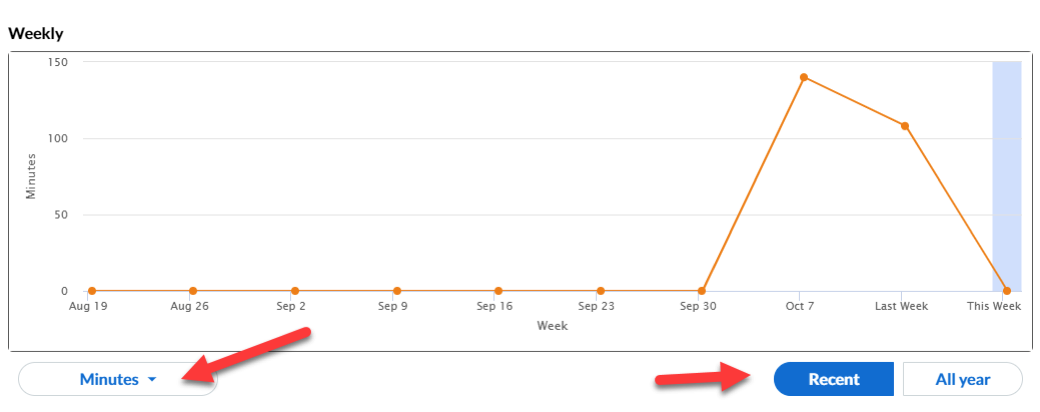
Productivity graph shows weekly trends
See weekly puzzles and minutes for individual students
Productivity Data
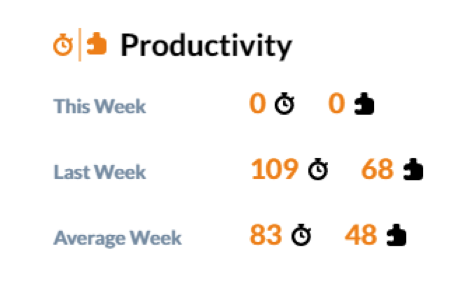
Sign-ins section displays the student’s daily usage data
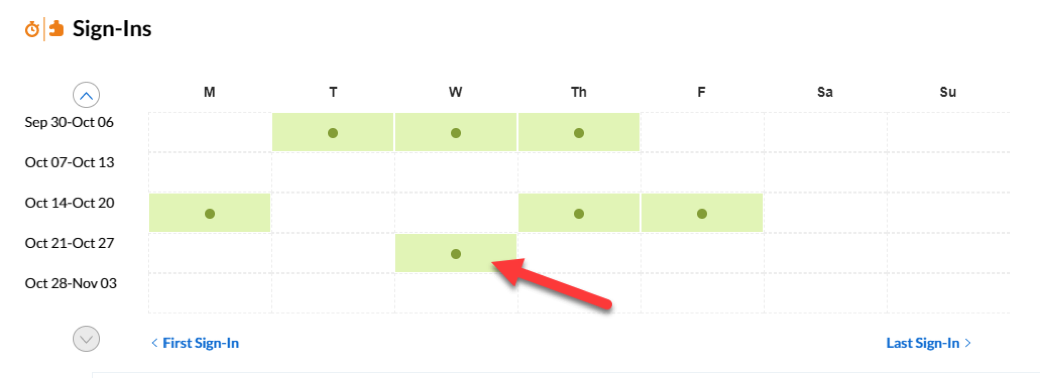
Students can monitor their productivity
Student Data
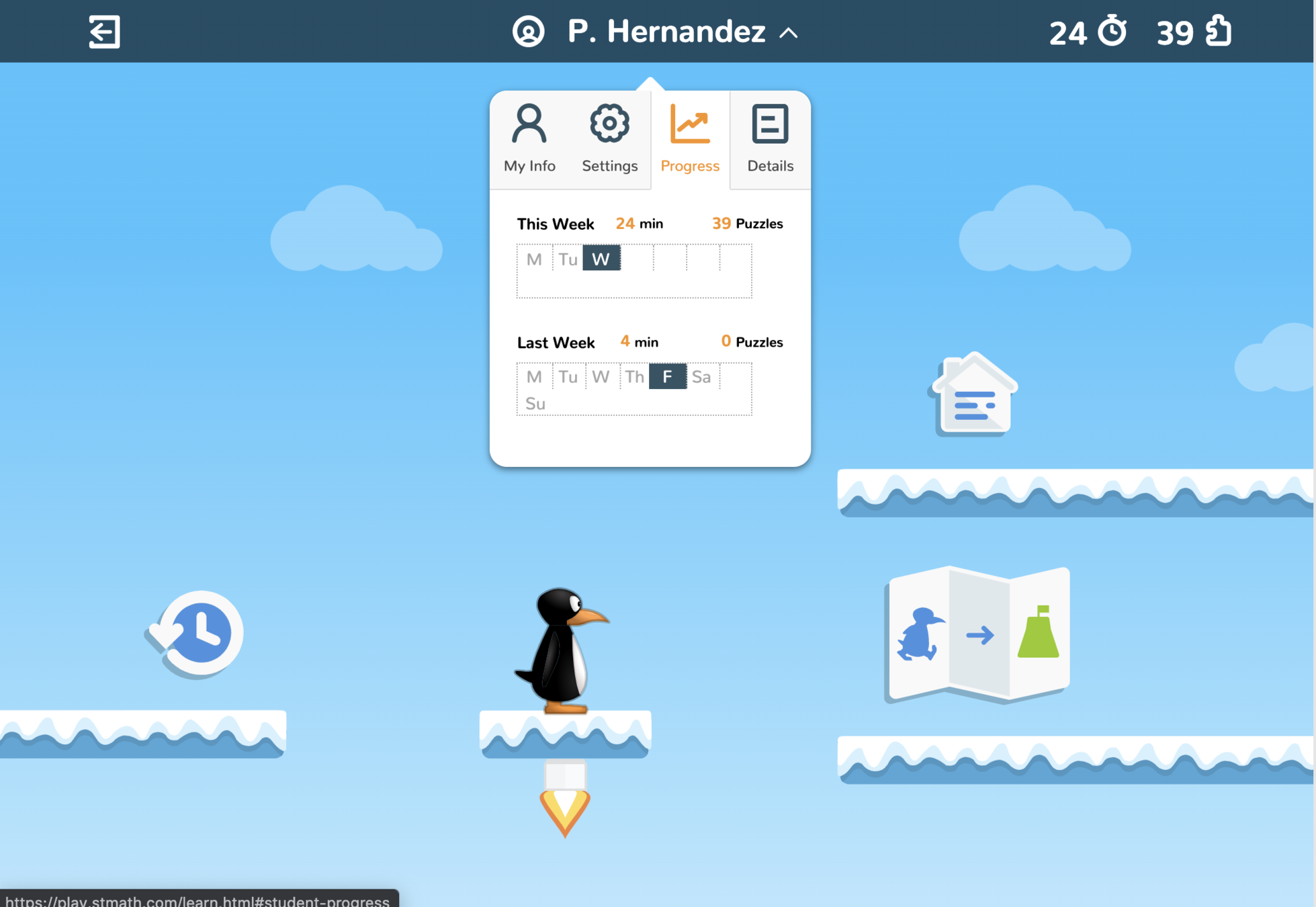
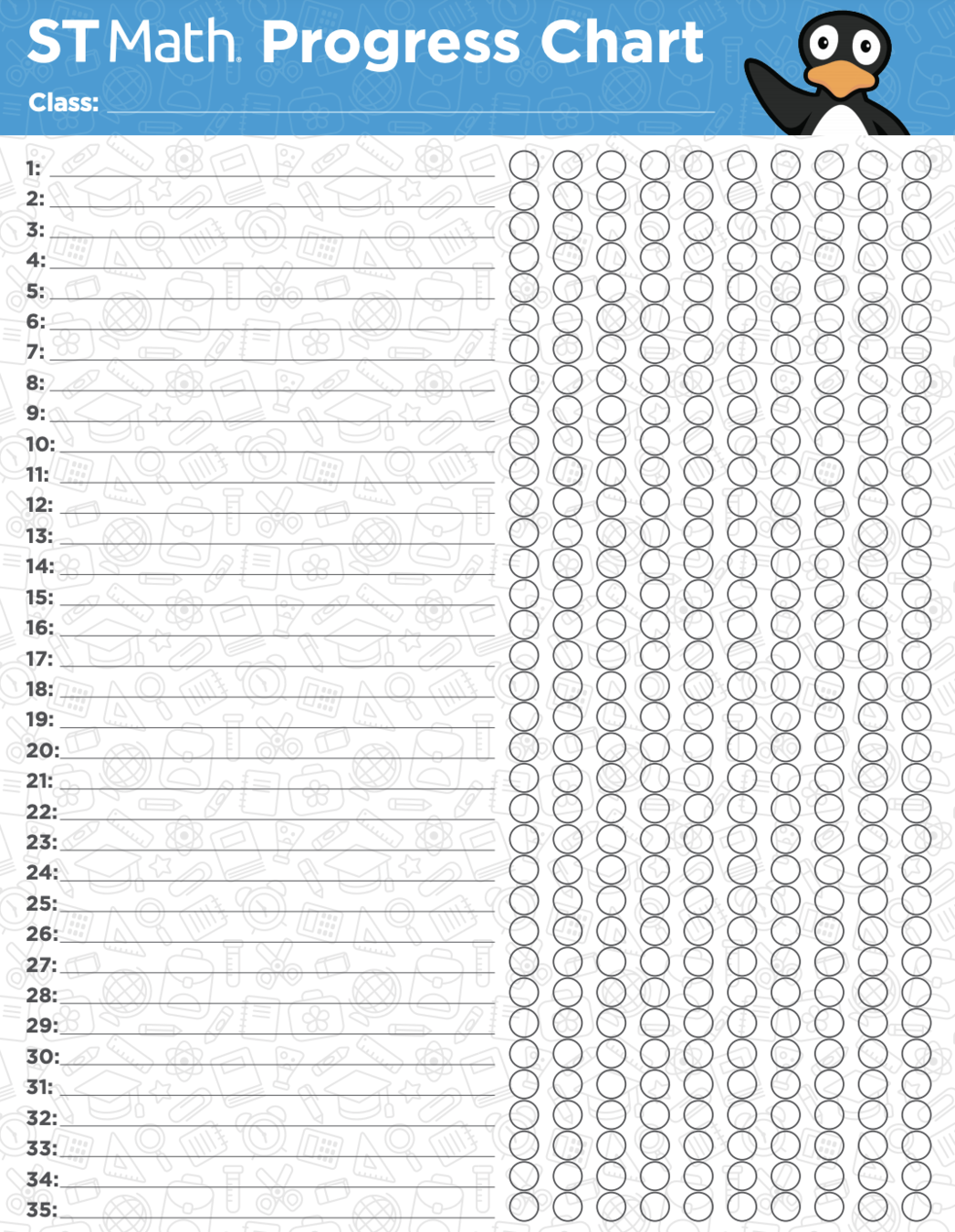
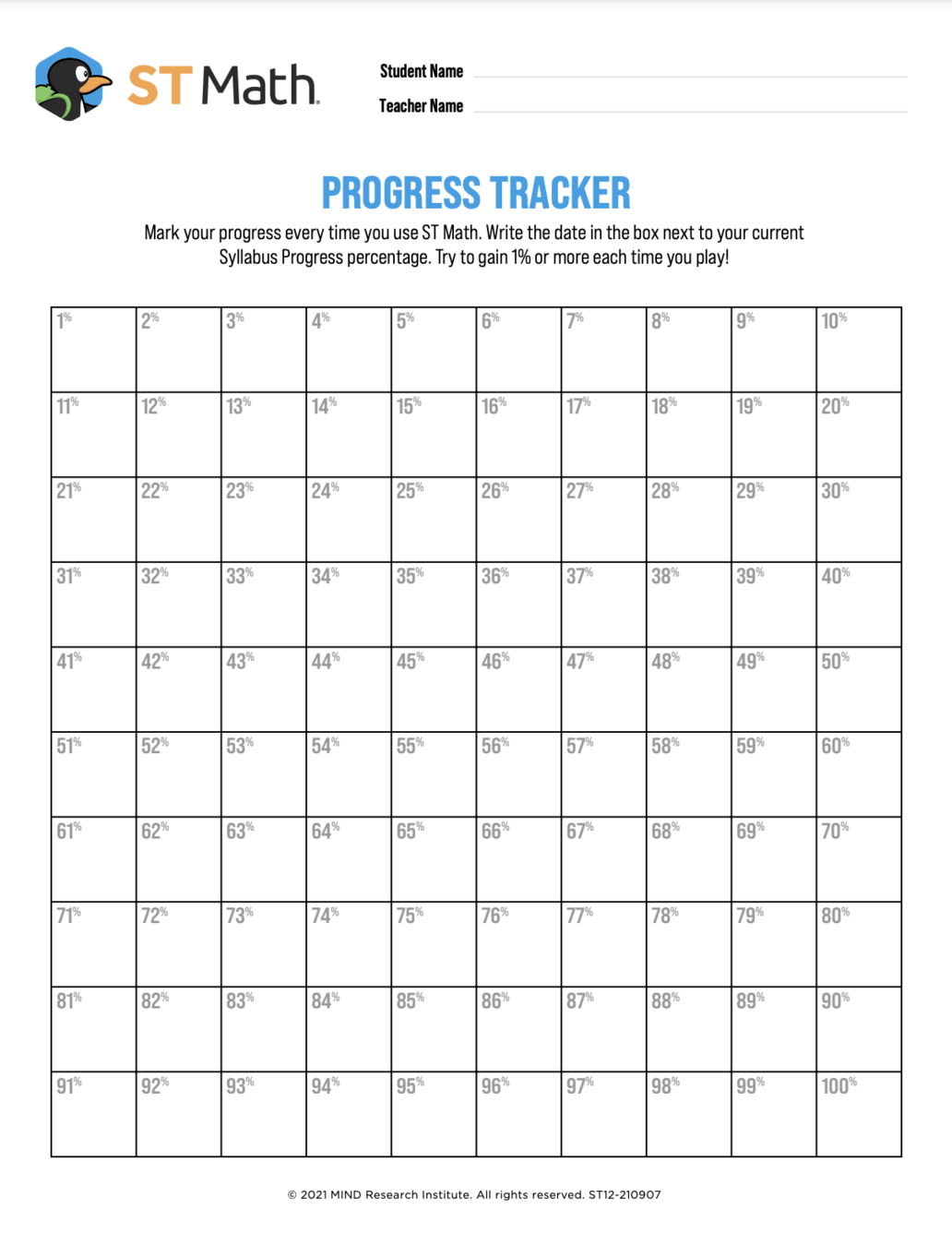
Individual & Class Tracker to log progress toward completing a year's worth of puzzles.
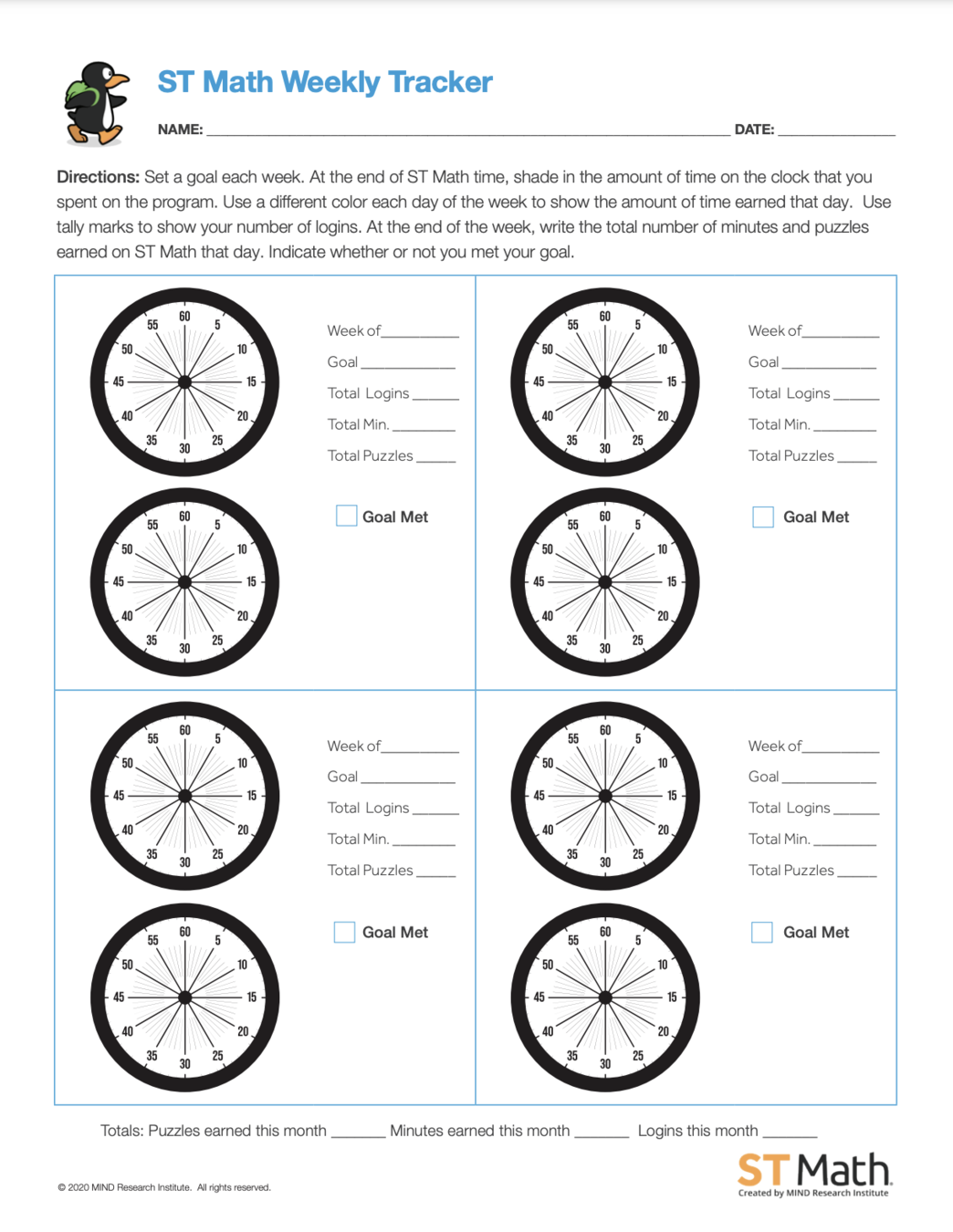
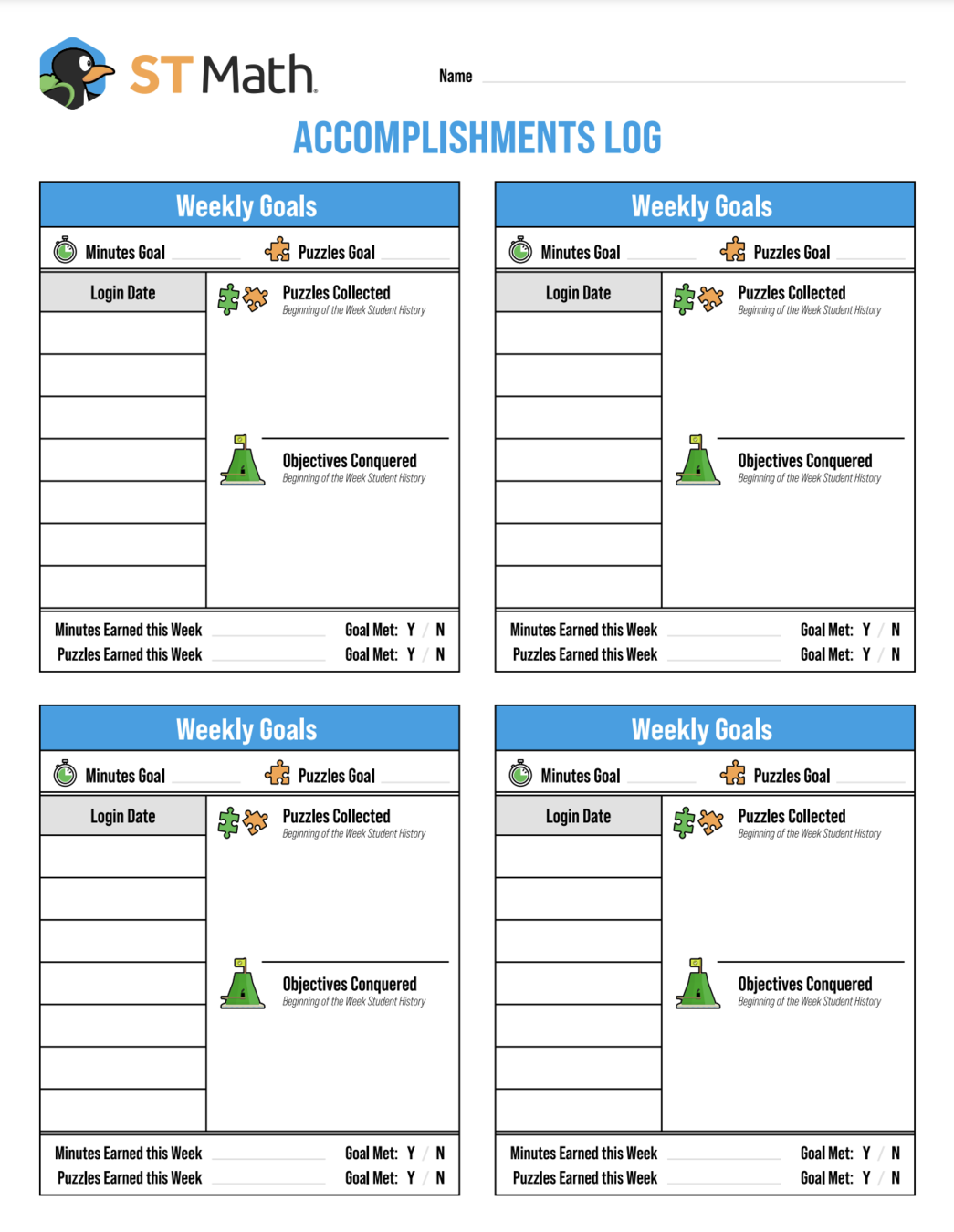
Track a variety of metrics
- Sign-Ins
- Minutes
- Puzzles
- Objectives
Data Trackers
Data Trackers
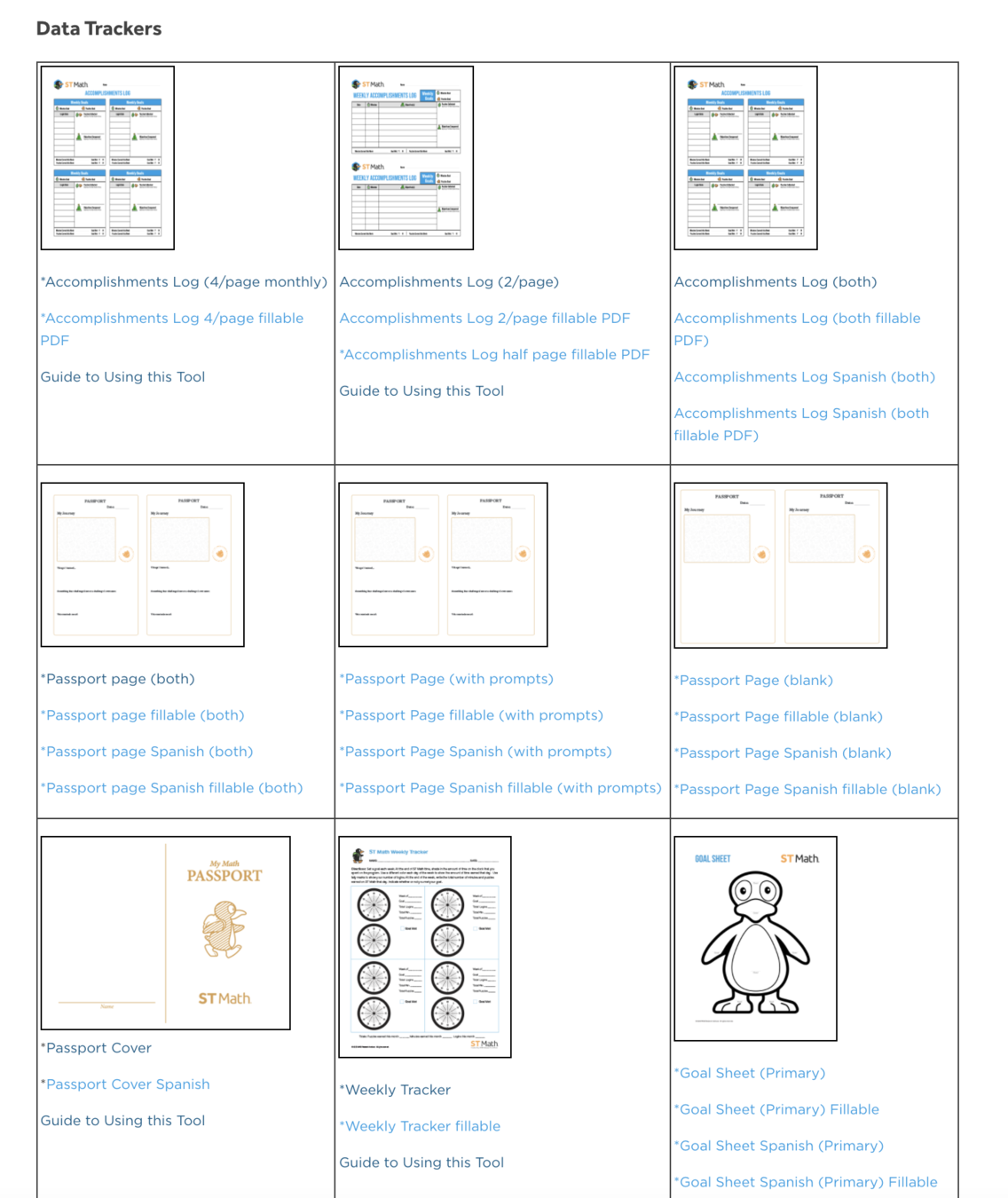
Each of the tracking documents has three purposes
-
Track and monitor data
-
Set and monitor appropriate goals
-
Promote mathematics discussion around student data
Goal Setting
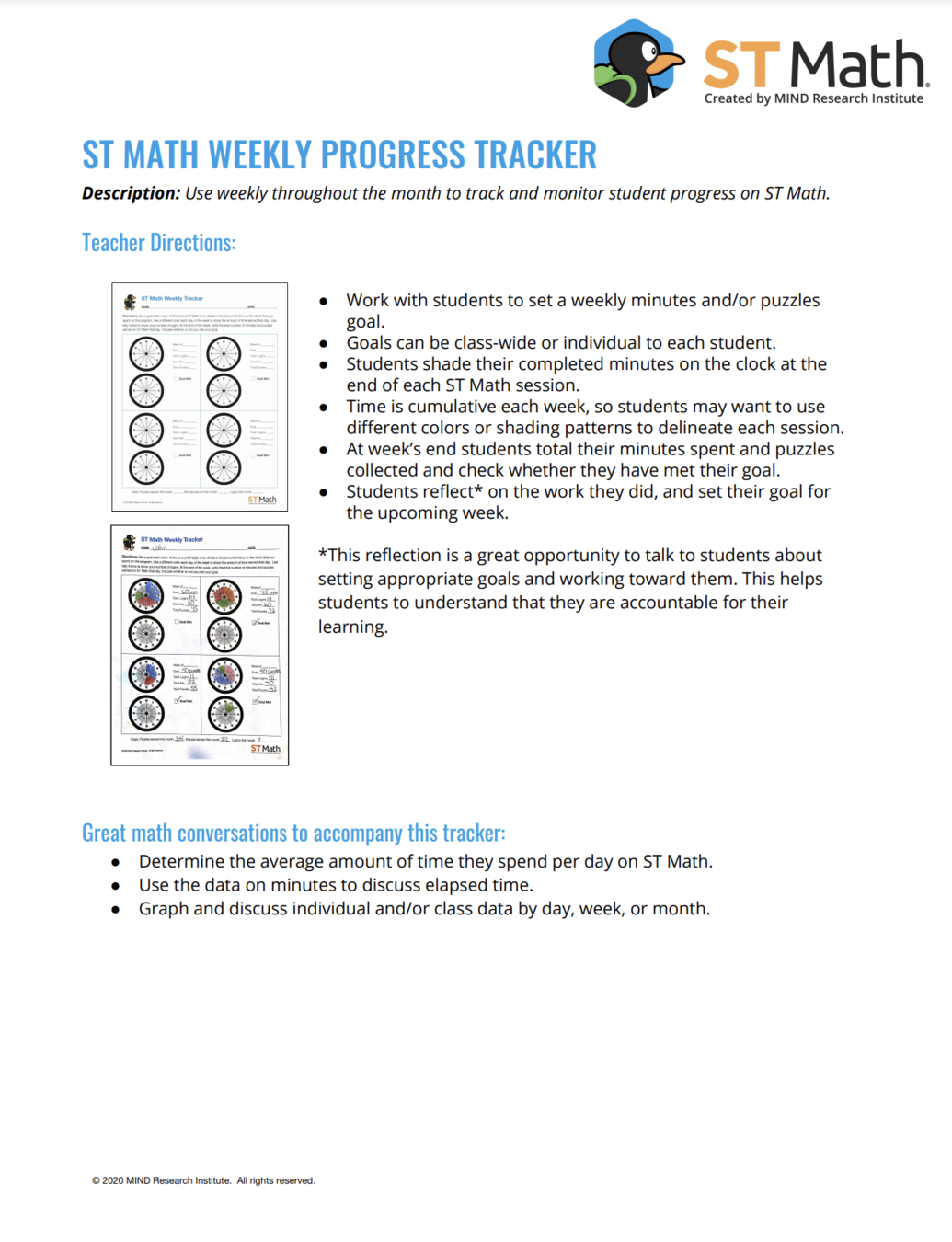
Set and track goals
- Build agency
-
Communicate accomplishments
-
Identify areas for improvement
-
Manage Time
-
Overcome challenges
As students complete the trackers, exit tickets & journals over time they can:
-
look for trends
-
identify areas they have improved in
- identify areas they are still working toward
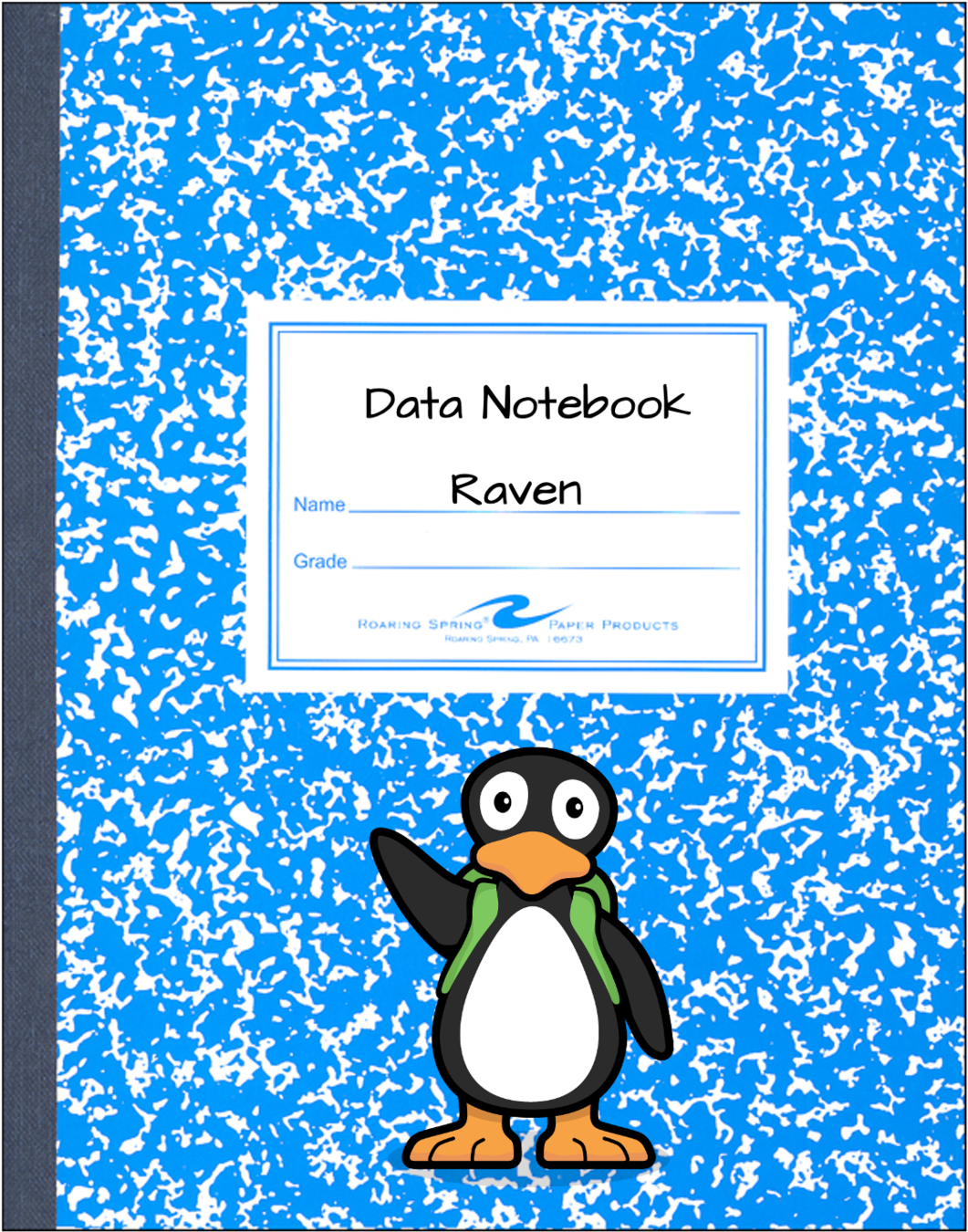
Student Data Notebooks
Celebrations
Celebrations
- Motivate learners to achieve
- Help develop a growth mindset
- Foster joy, love, and confidence in mathematics
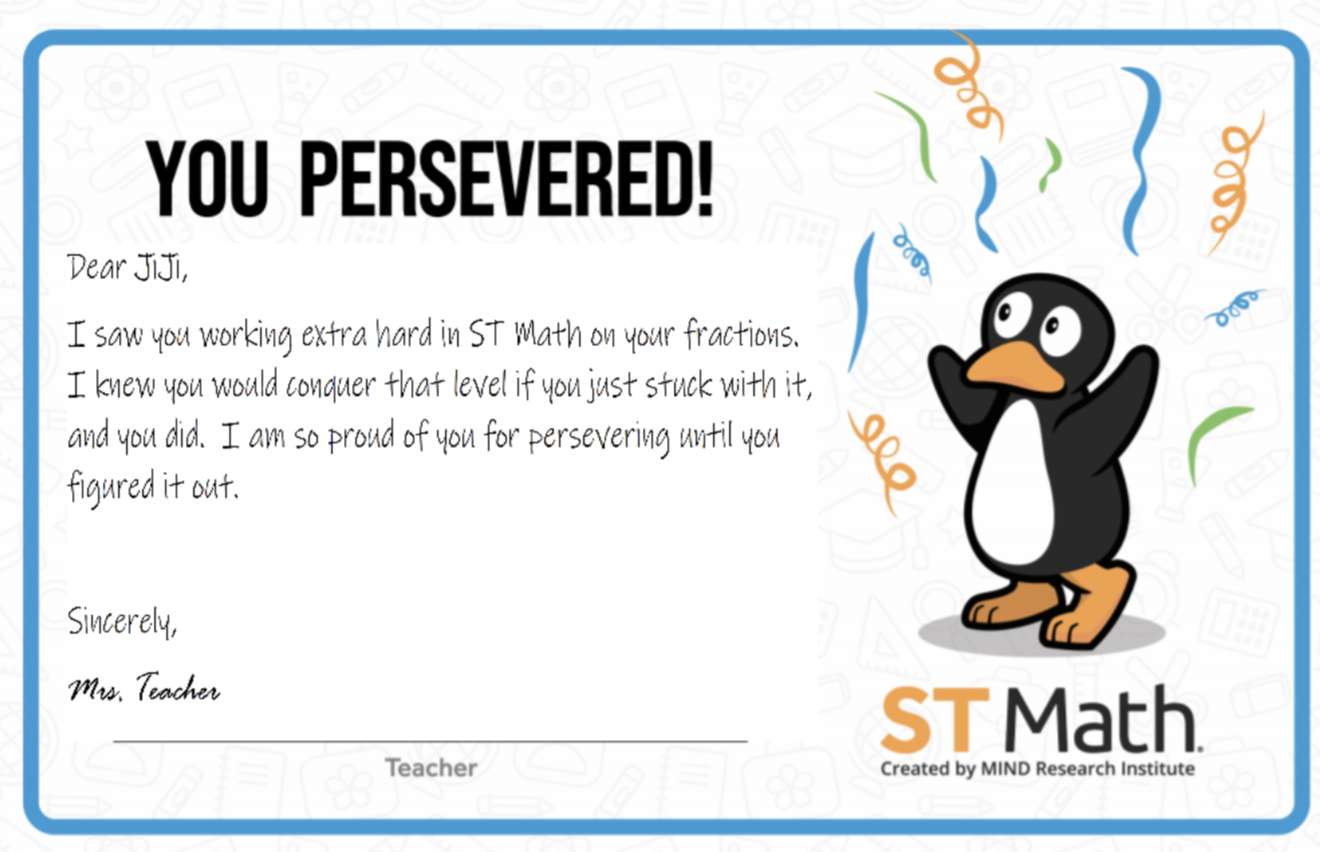
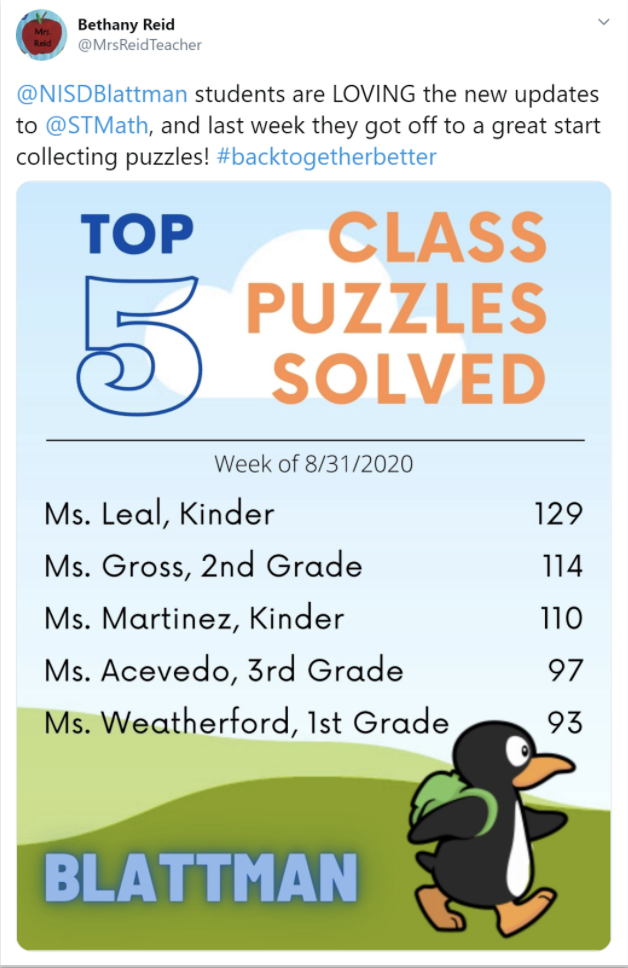
Celebrate the metrics, but also the qualitative measure (perseverance, growth, etc.)
Examples of things to celebrate as a class, grade level, or school
- Improvement from the previous week
- The highest “average week”
- Making connections
- Overcoming hurdles
- Hitting goals over holiday weeks
- Completing objectives
- Consistent achievement of goals
Celebrations
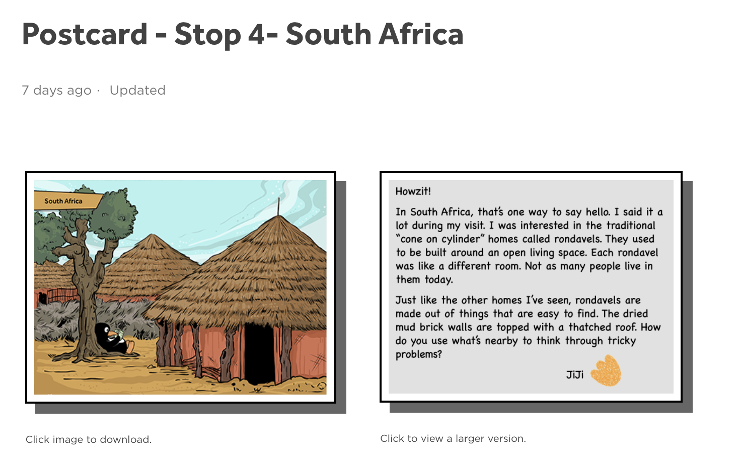
Use postcards to
- Reflect on ST Math learning
- Discuss goals
- Read about the places JiJi visits
- Engage students in cross-curricular work
Postcards

Receive postcards for every 10% progress made
- Portfolio of students’ mathematical thinking
- Use with the postcards
- Monthly reflections
-
Use for student-led conferences with parents
Passport Books

Facilitation
- Teach without telling
- Facilitate student thinking with the Problem Solving Process
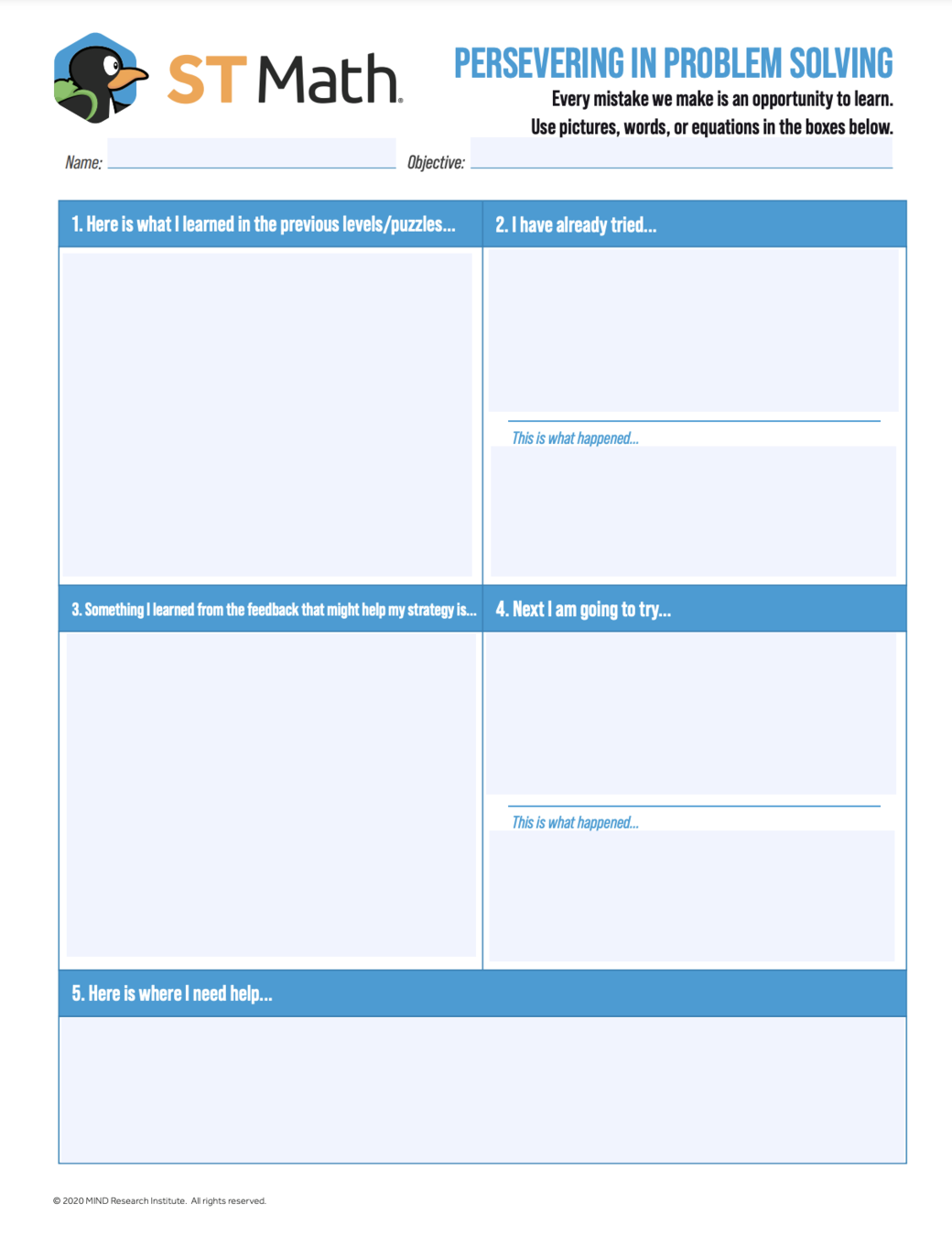
- Have students use the Persevering in Problem Solving Journal to think through their stuckness
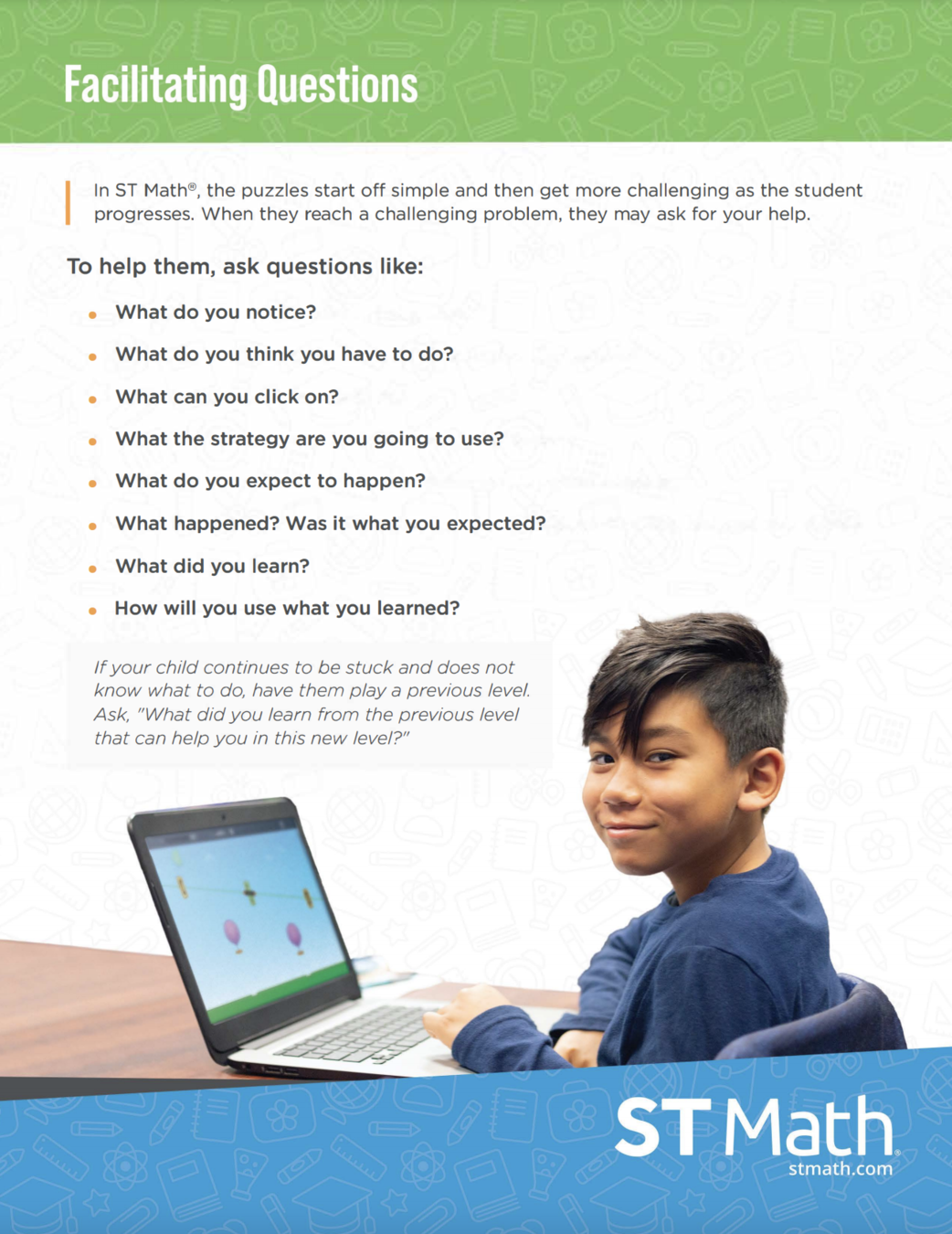
- Support families by providing facilitating questions to help with ST Math at home
Facilitation
Facilitation
Helping Stuck Students
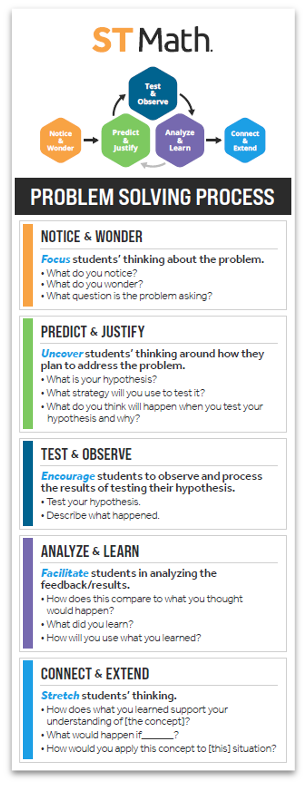
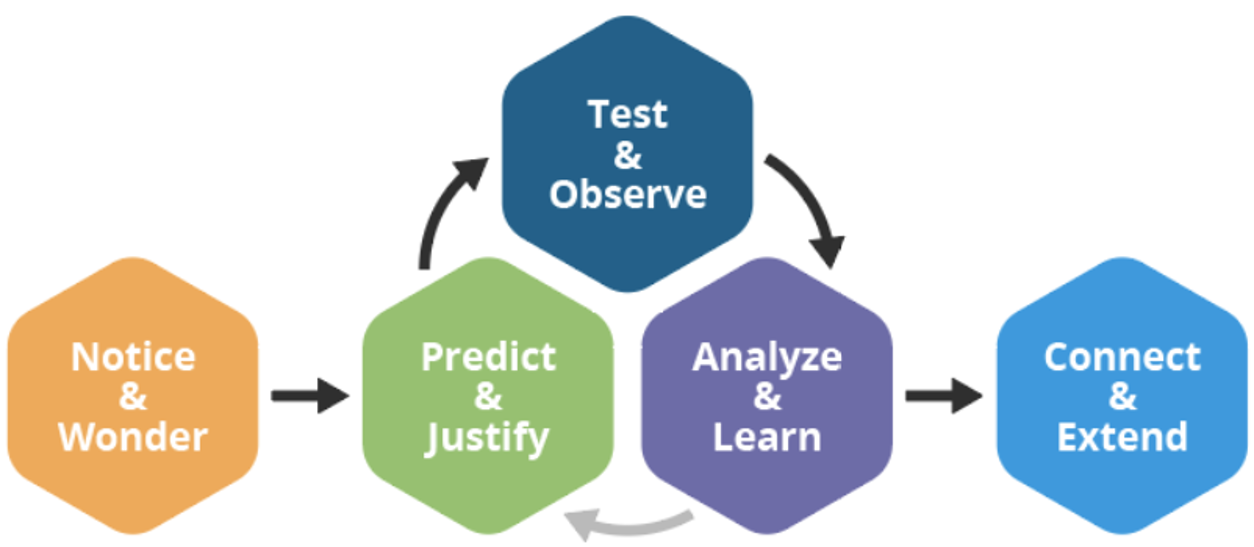
Problem Solving Process
Helping Stuck Students
Students should be. . .
- Reflecting on facilitation questions
- Analyzing their strategy: what is working/not working and why
- Considering what they learned in previous levels
- Given opportunities to process their thoughts and ideas
Helping Stuck Students
- Observe students to see where support may be needed. (It may just require you to ask one question to unlock their thinking.)
- Encourage the use of manipulatives (including pencil/paper)
- Facilitate student thinking through the Problem Solving Process
- Provide unlimited JiJi tries for students and ask the student questions to facilitate their thinking
The Problem Solving Process
Focus Thinking

-
What do you notice?
-
What do you wonder?
-
What question is the problem asking?
Uncover Thinking
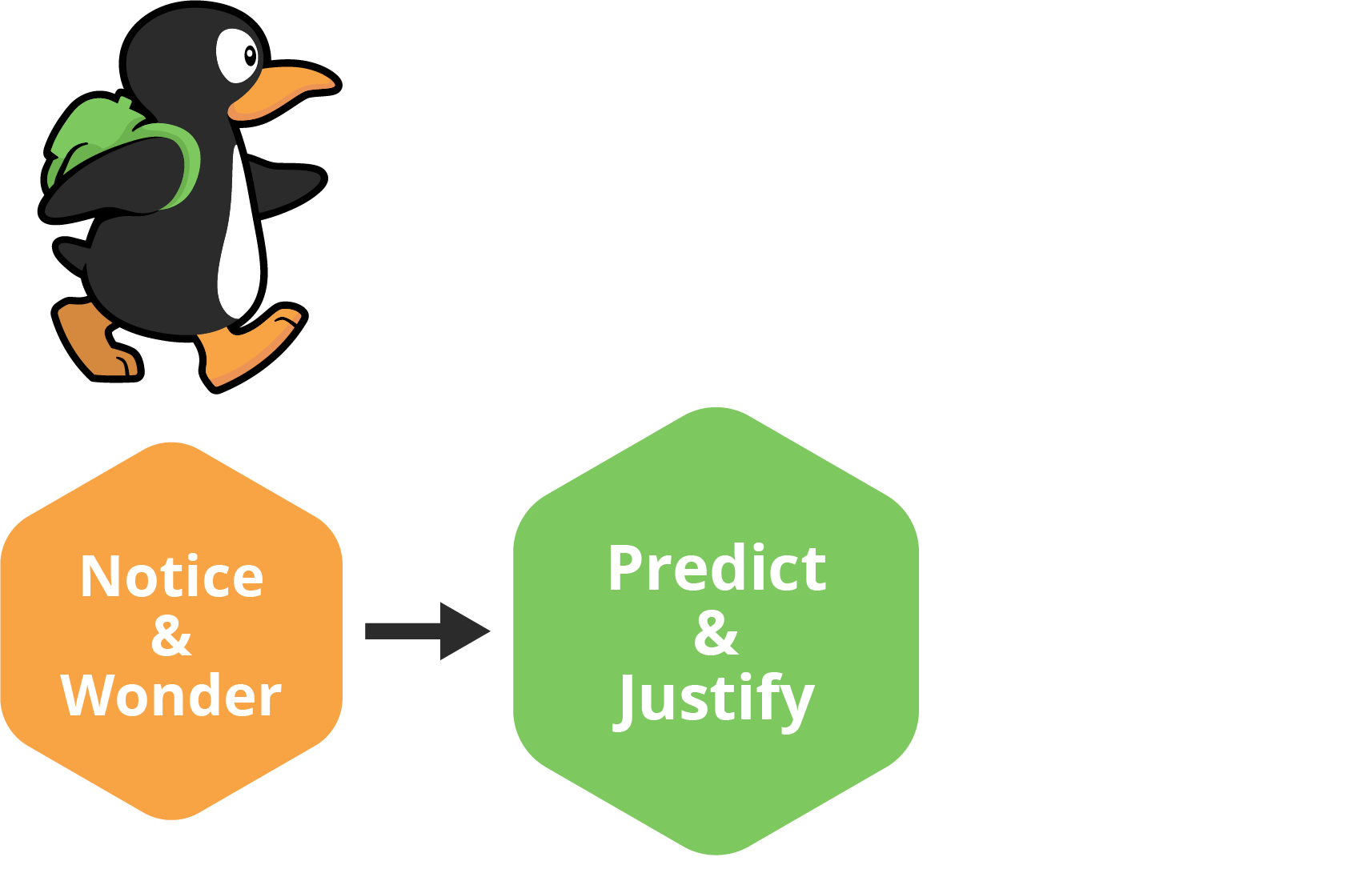
-
What is your prediction?
-
What strategy will you use to test it?
Encourage Students to Observe & Process Thinking

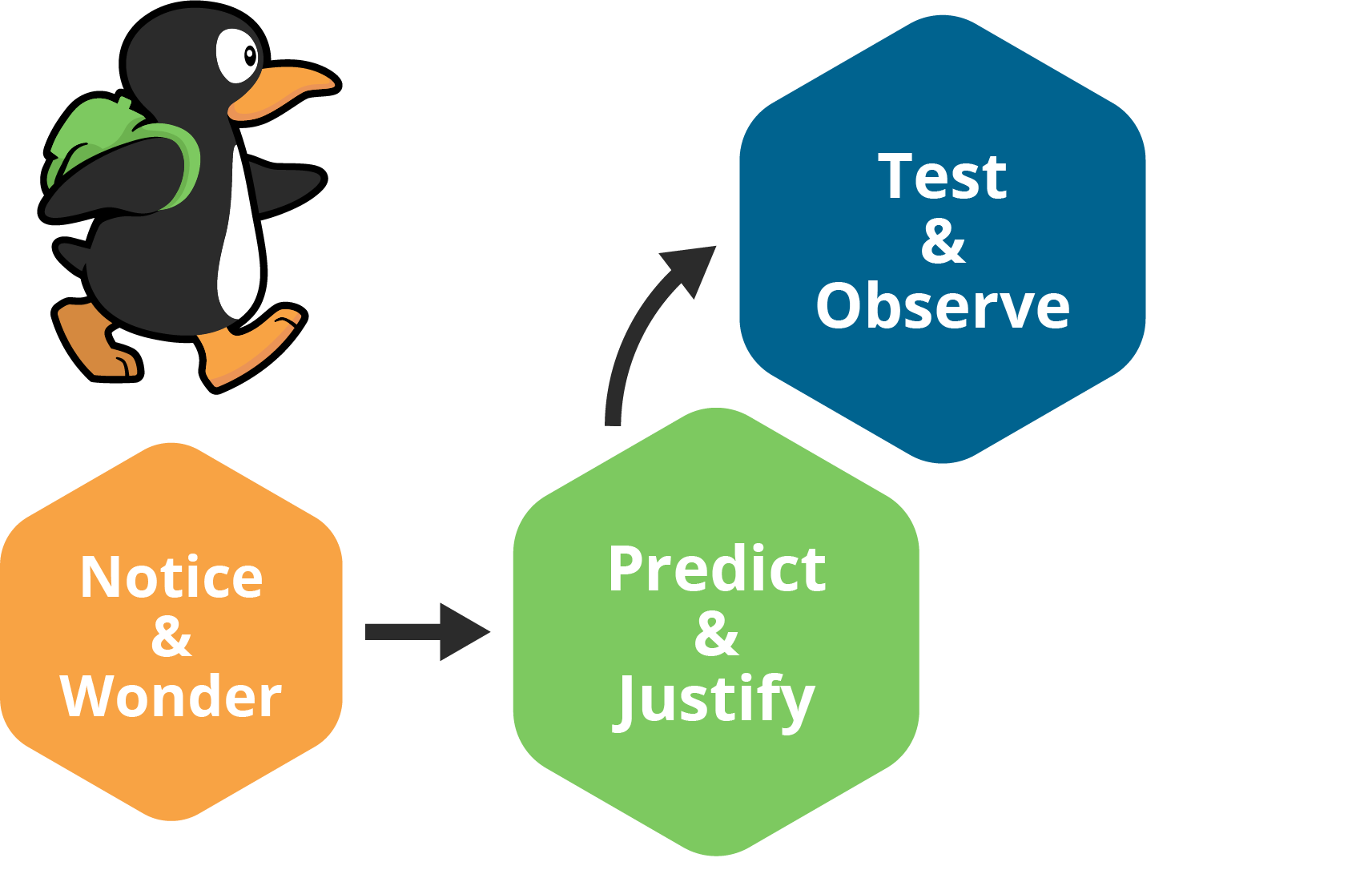
-
What happened when you tested your prediction?
Facilitate Thinking

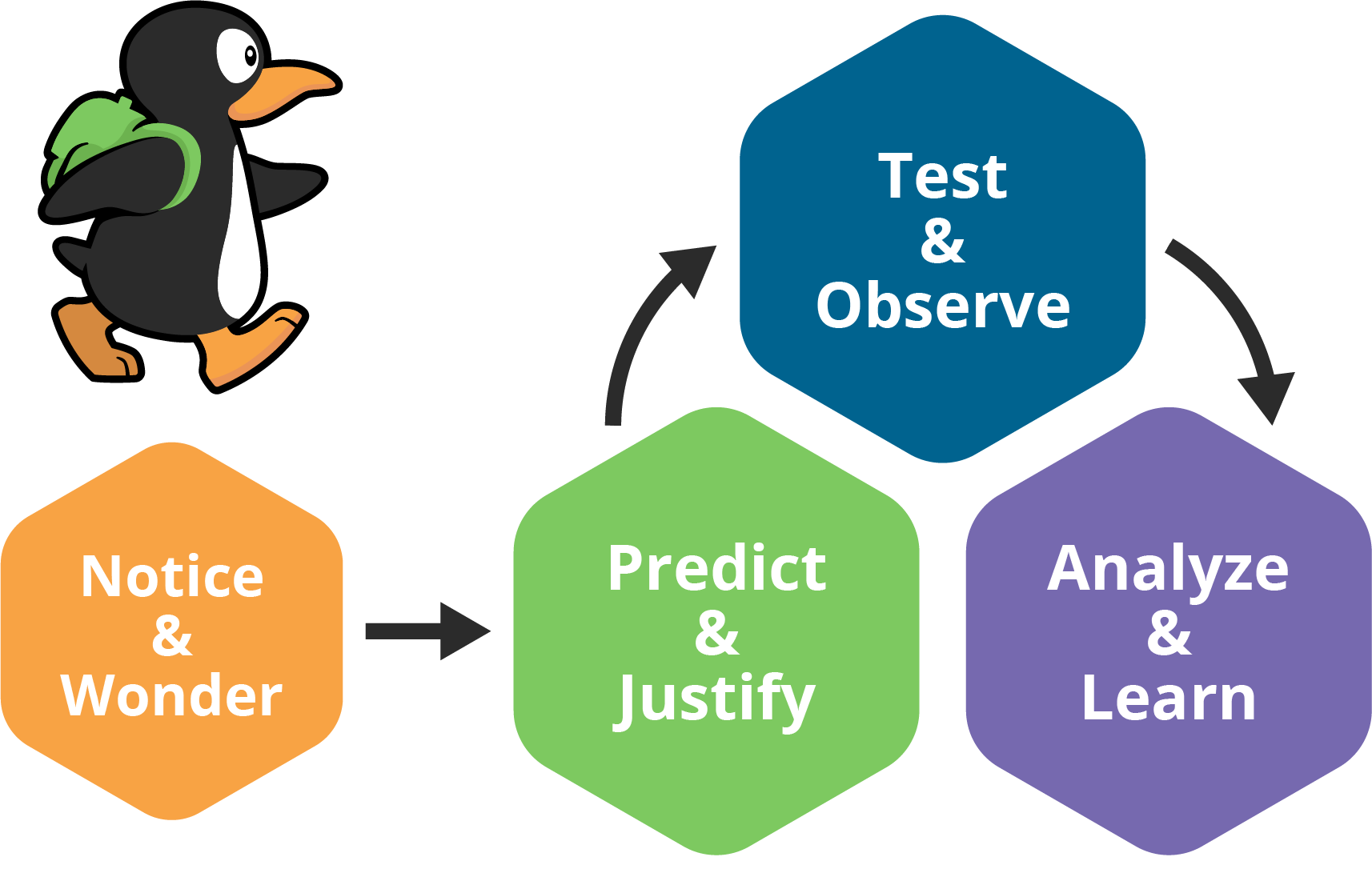
-
How does this compare to what you thought would happen?
-
What did you learn?
-
How will you use what you learned?
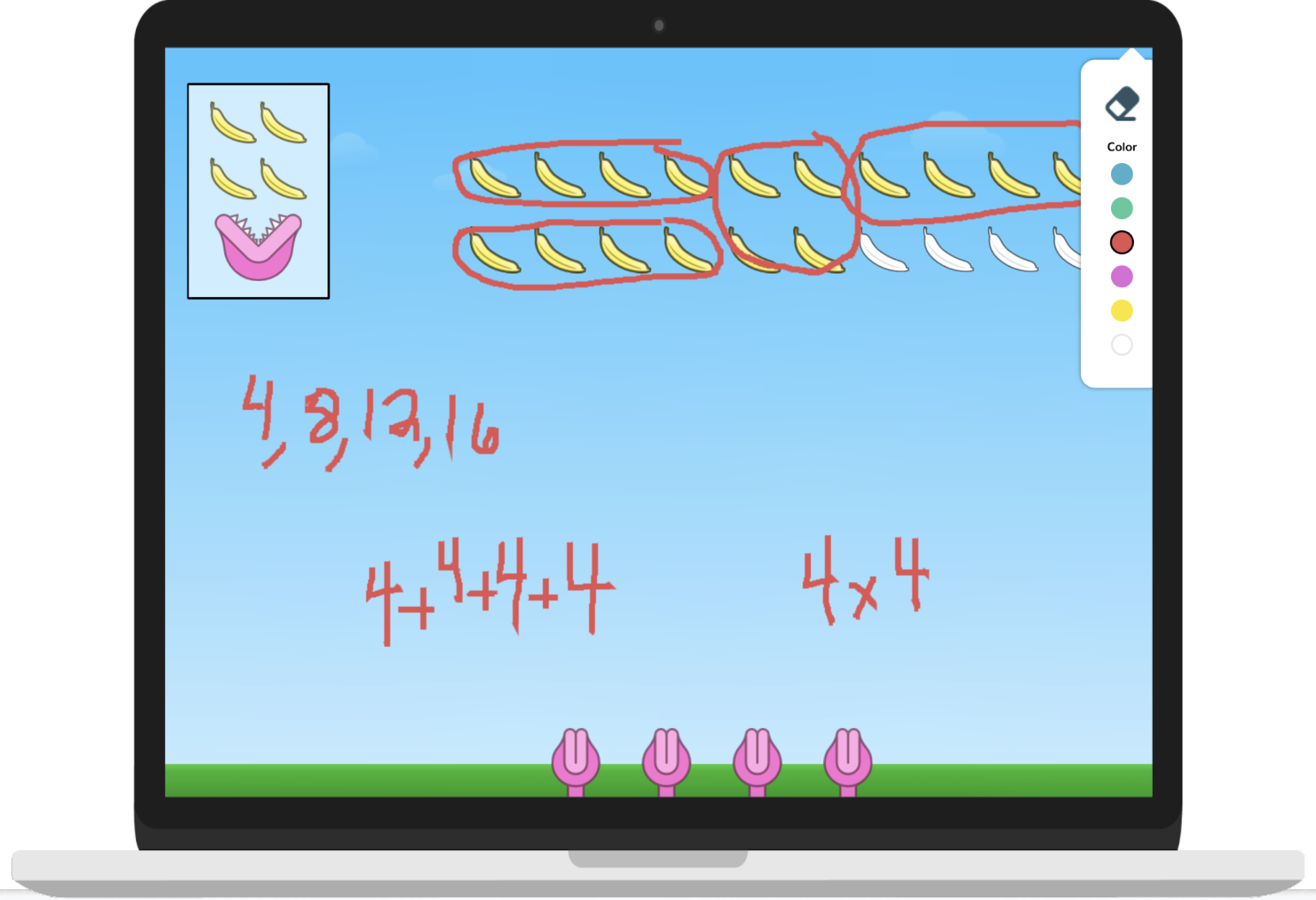
Stretch Thinking
-
How does what you learned support your understanding of [the concept]?
-
What would happen if______?
-
How would you apply this concept to [this] situation?
Facilitation Resources
Curriculum
Explore the curriculum
to make data-informed decisions
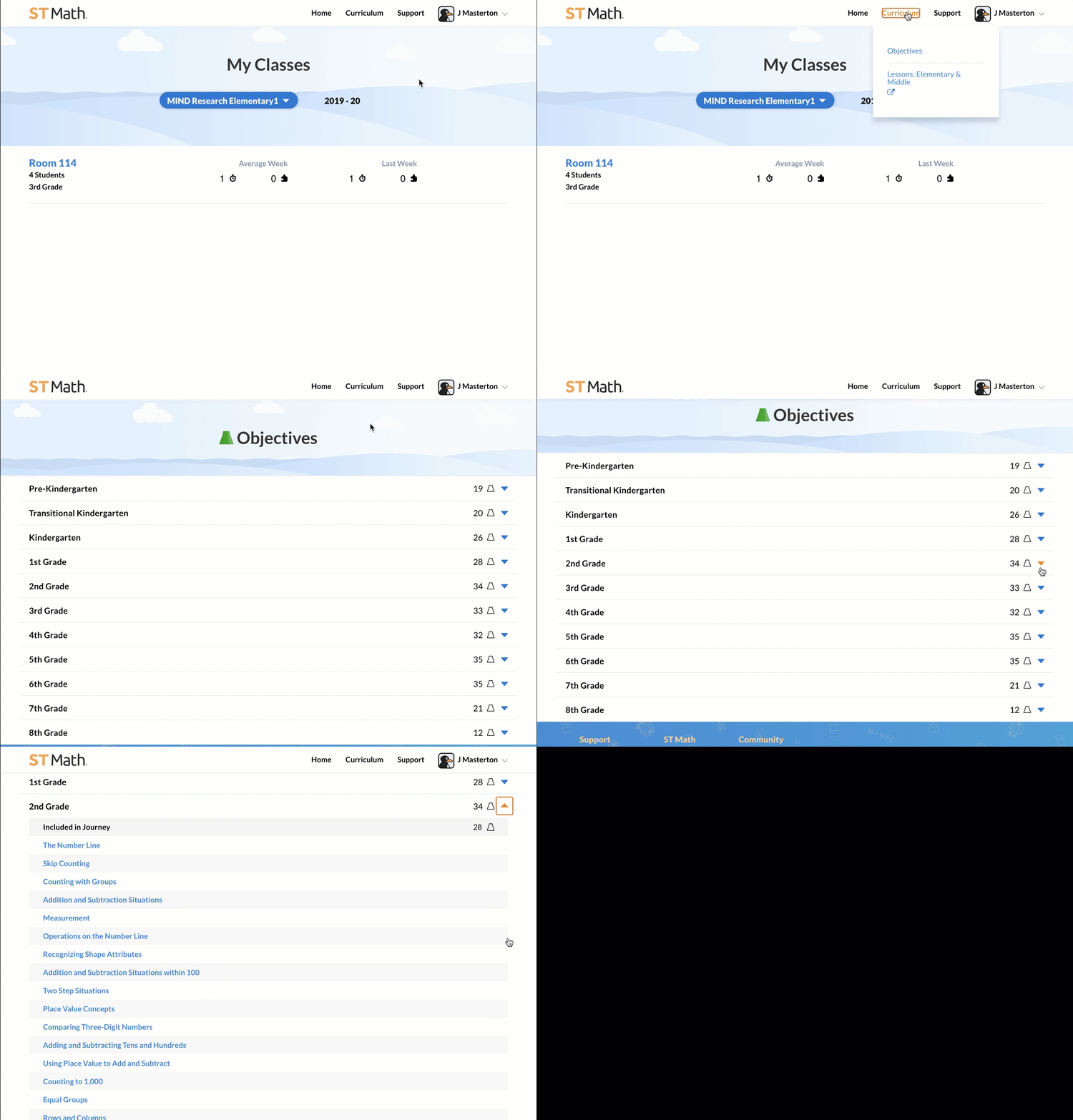
- View curriculum by grade level
- View curriculum by standard
- Learn about the content in each objective
- Assign above and below grade level content to students
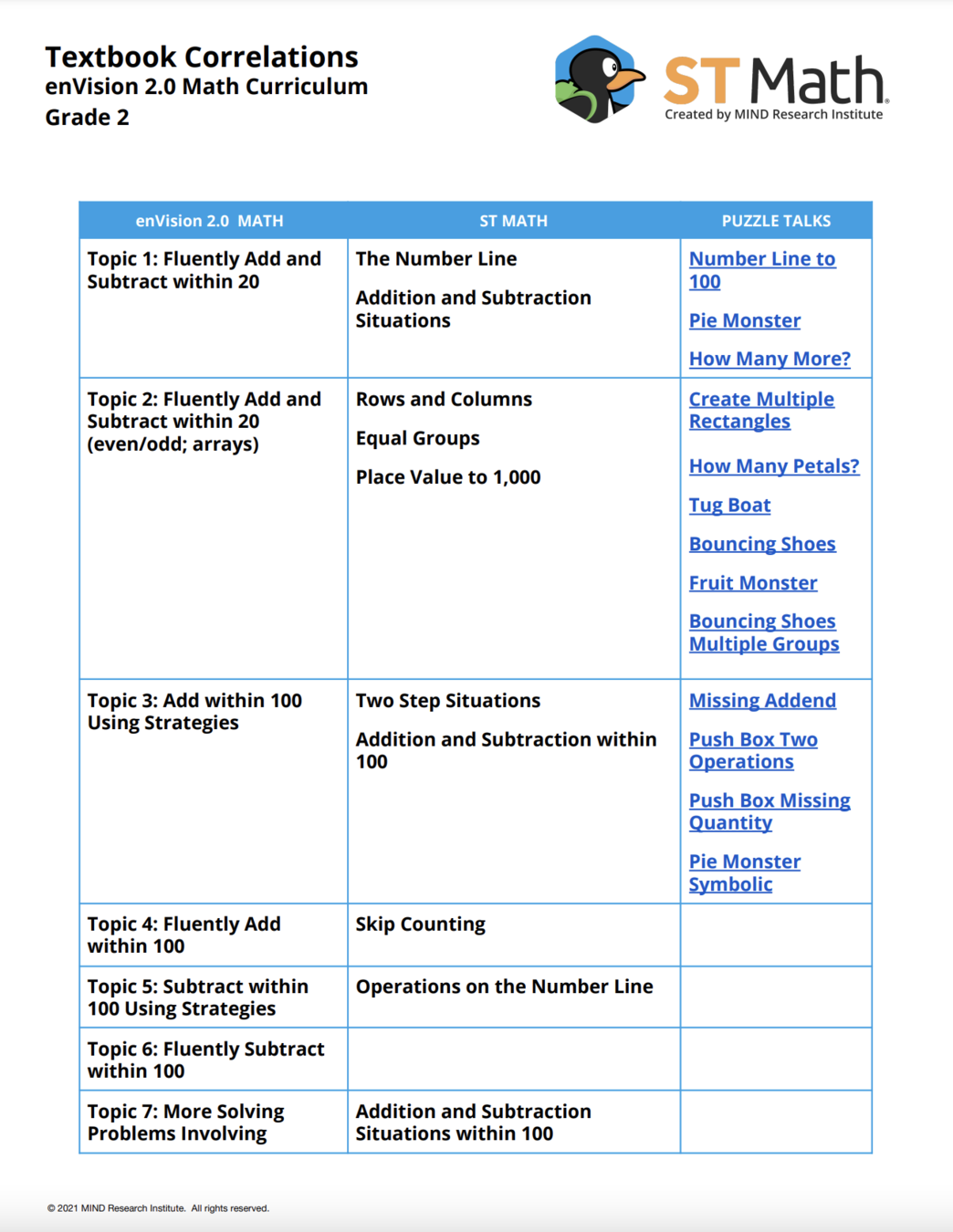
Use Textbook Correlations Instructionally
-
Identify objectives that
- support current instruction
- provide intervention
- provide a preview of content prior to unit
- Identify a Puzzle Talk to integrate into instruction
- Identify objectives to support small group instruction
Capture Student Thinking During ST Math Time
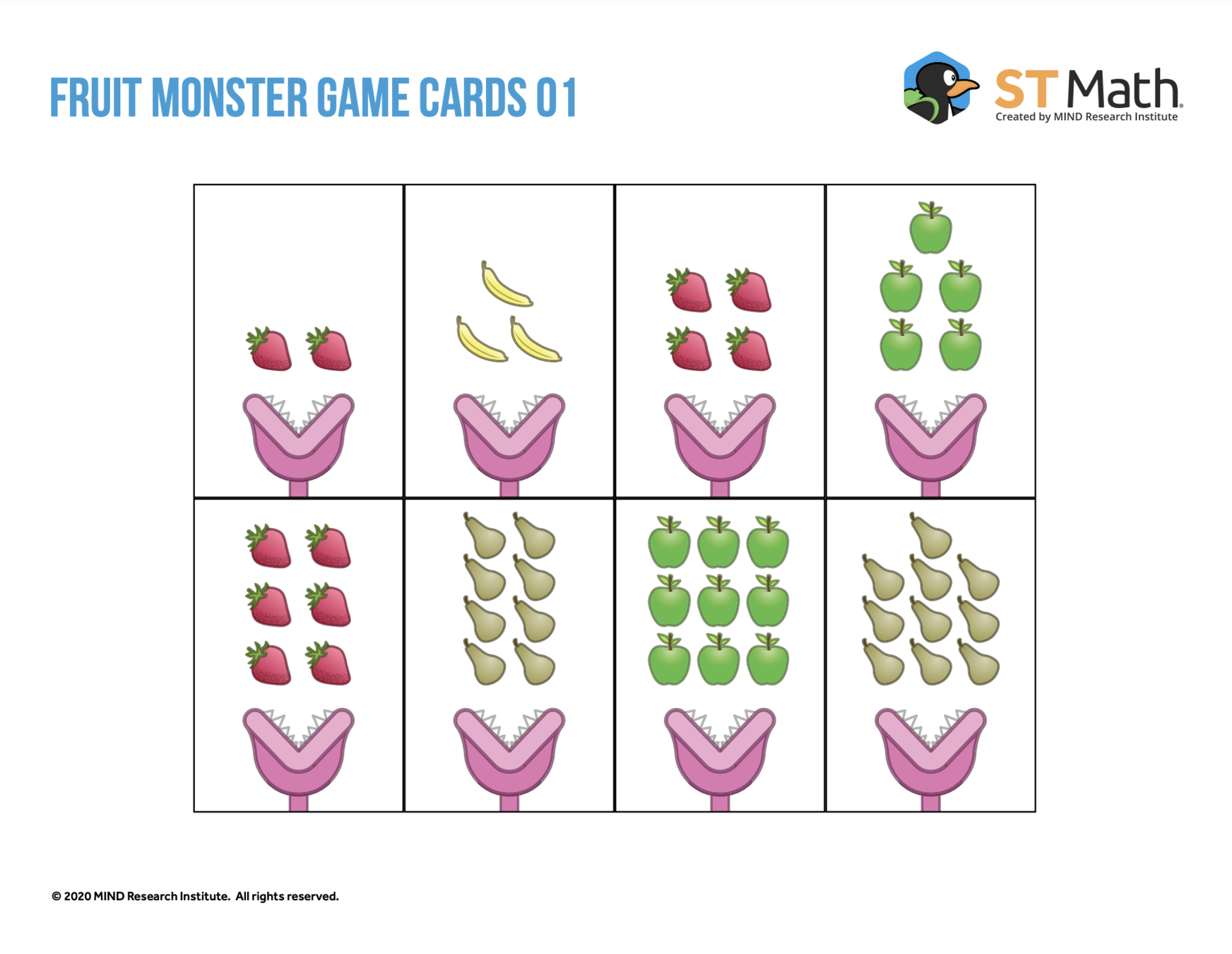
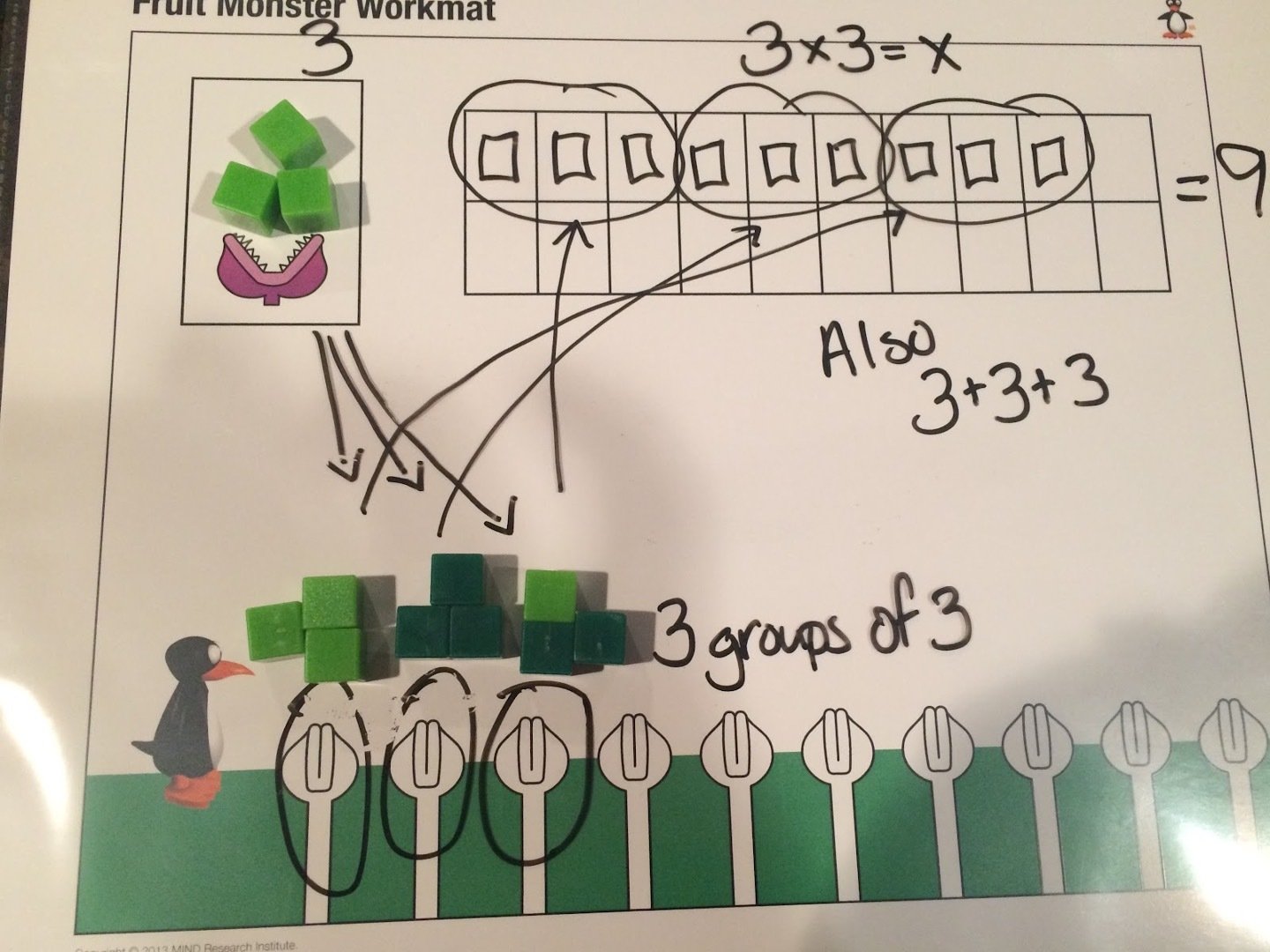
- Use game mats and math mats to model puzzles, illustrate thinking, and pose similar problems.
-
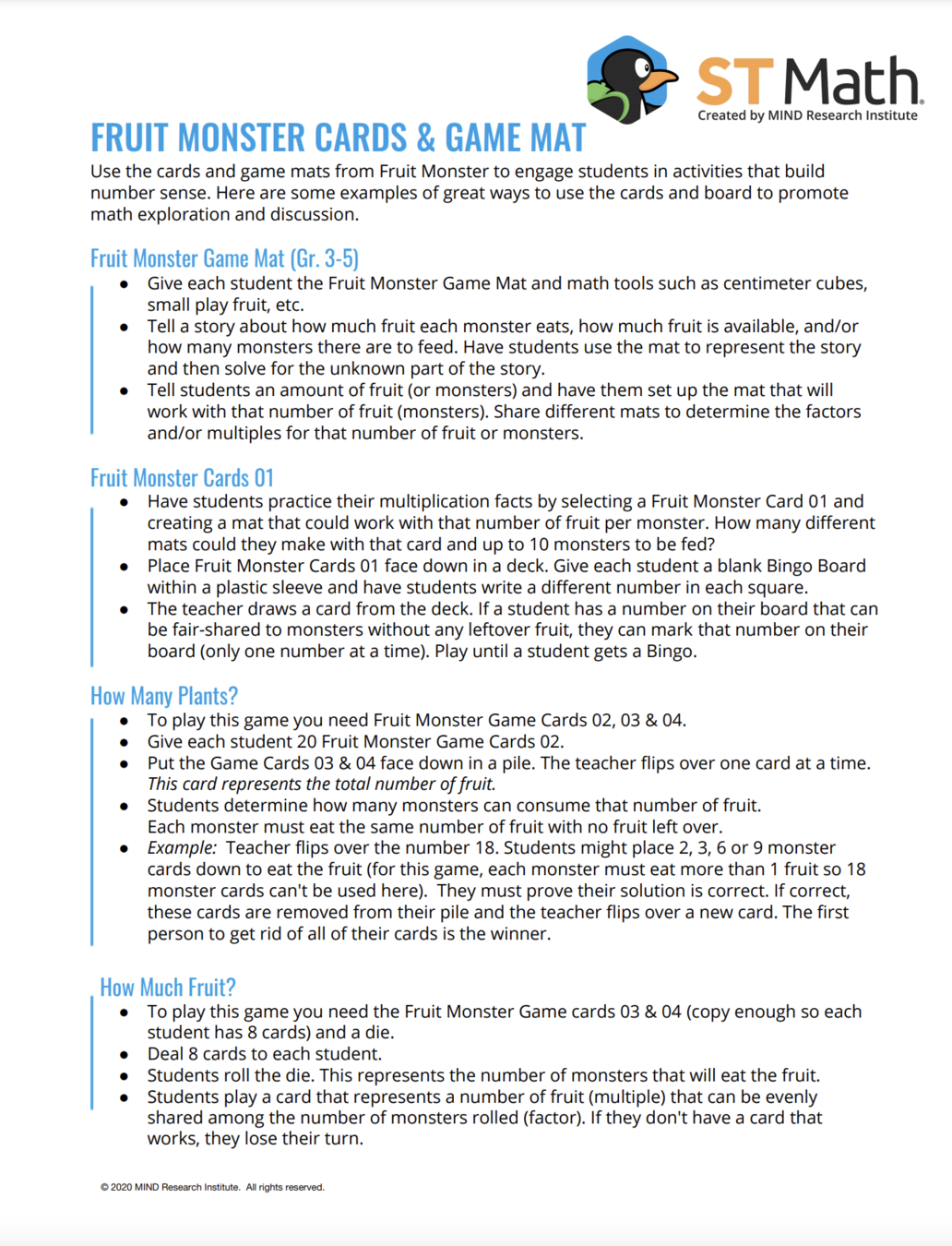
Use the guides to engage students in math conversations focused on number sense in whole group and small group settings.
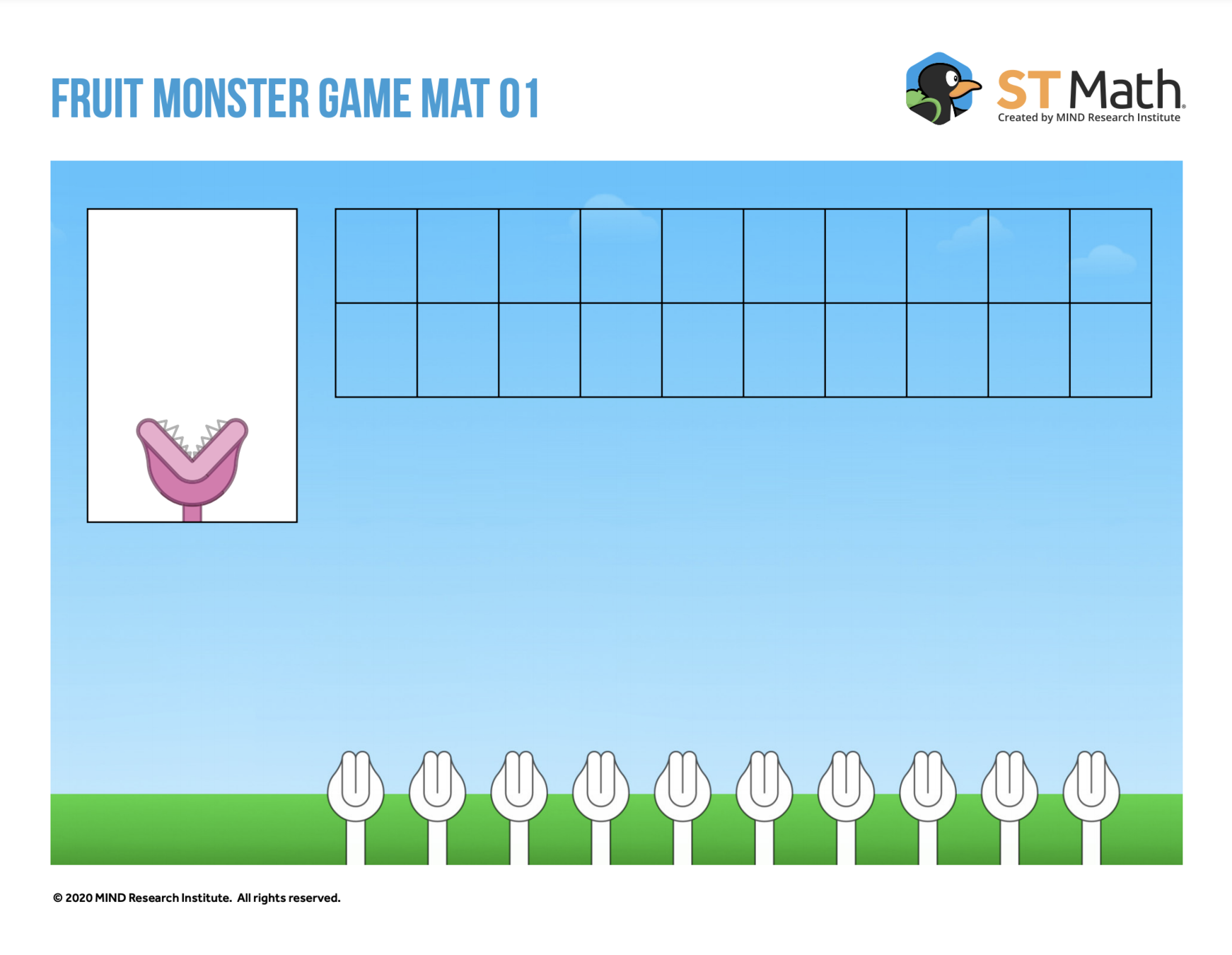
Capture Student Thinking During ST Math Time
- Use game mats to tell math stories and connect learning to symbolic notation and other math concepts
-
Use math journals or exit tickets to help students explain what they are learning
Assignments
Use the Assignments Feature Strategically
-
Make Data from District/School Benchmark Assessments Actionable
-
Focus: Actionable ways to integrate multiple data sources.
-
Look For: Content for which students need
-
to build foundational skills
-
additional practice
-
to have their thinking stretched
-
-
Use the Assignments Feature Strategically
-
Preview Content
-
Focus: Content students have historically struggled with and/or content around a difficult math concept.
-
Look For: Related objectives (to build a stronger foundation) to support student understanding.
-
Assigning Objectives
As a grade 5 teacher, you might assign this because:
-
The visual models give students multiple points of entry into the unlike denominator problems
-
Multiple fraction models with number lines help students conceptually understand
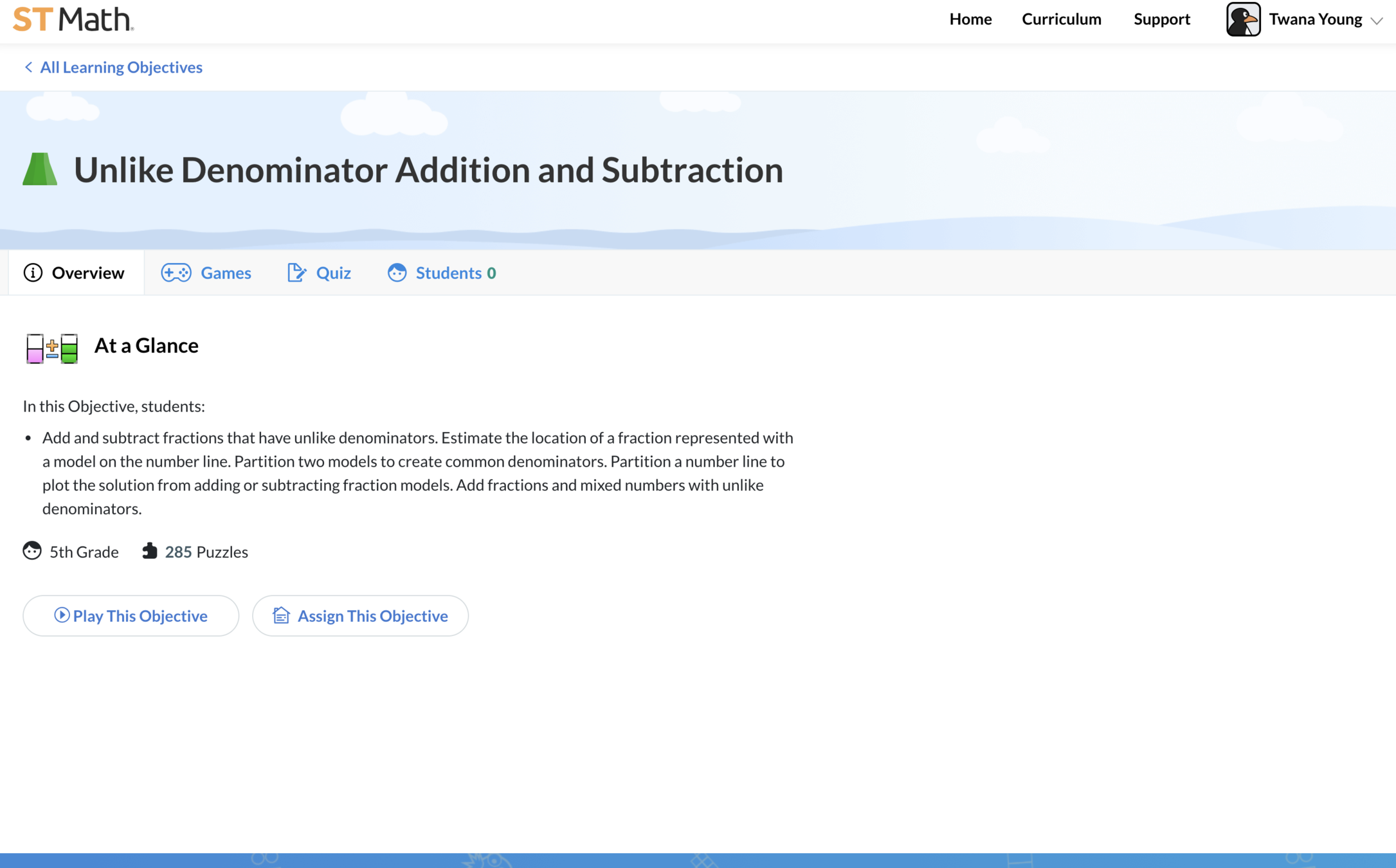
Read the objective description
Grade 5
Use the Assignments Feature Strategically
-
Review Content
-
Focus: Identify content previously taught during class instruction for which students have struggled.
-
Look For: Recommended and related objectives to support student learning.
-
Assigning Objectives
As a grade 3 teacher, you might assign this to students who:
-
Understand the “place value as a procedure”
-
Struggle with the conceptual relationship between each place
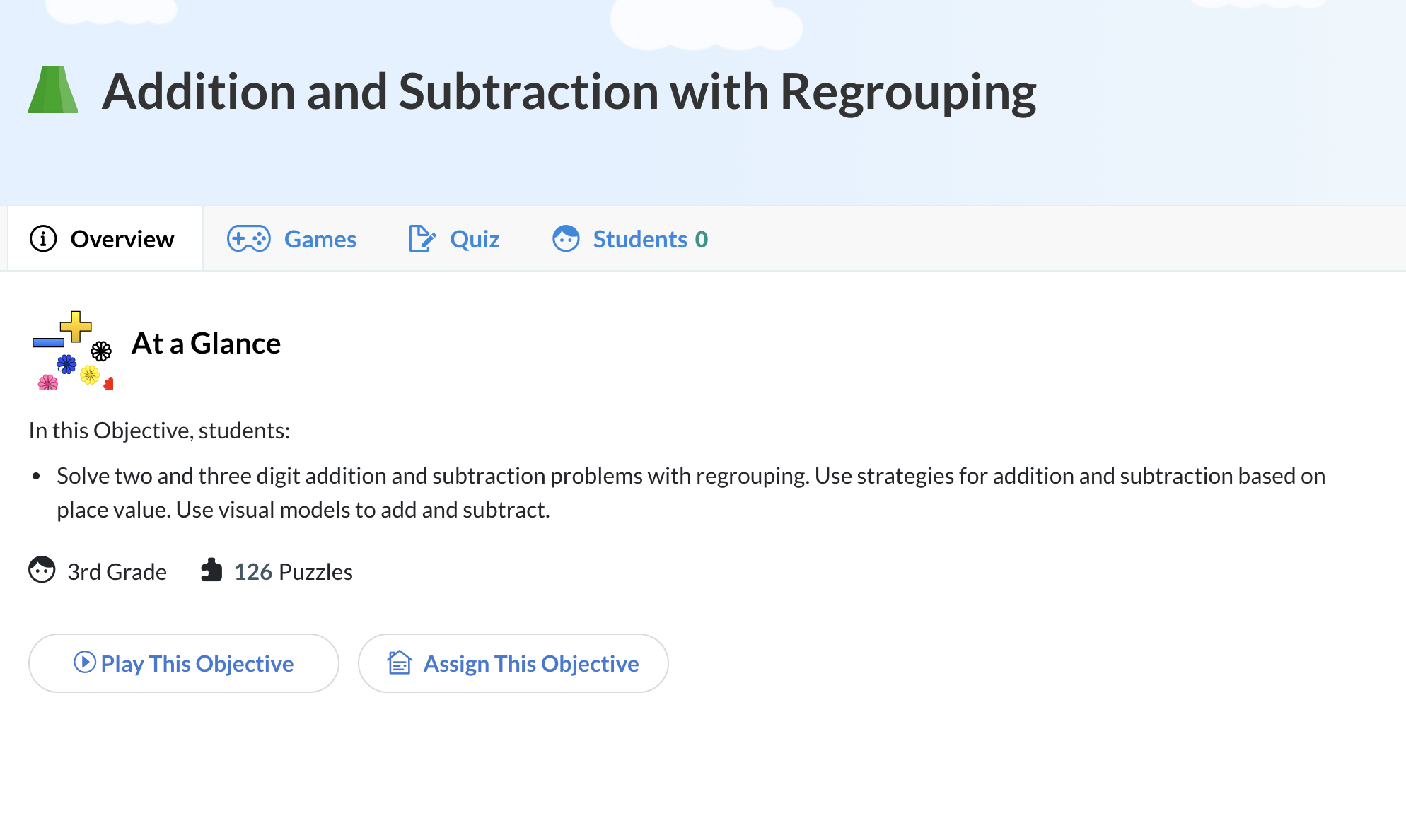
Read the objective description
Grade 3
Use the Assignments Feature Strategically
-
Extend Content
-
Focus: Help students make connections between and among math concepts.
-
Look For: Objectives with related content that supports and stretches student thinking around specific topics.
-
Assigning Objectives
As a grade 1 teacher, you might assign this to:
-
Further, explore addition and subtraction problem structures
-
Engage students in multi-step problems
-
Represent situations with equations
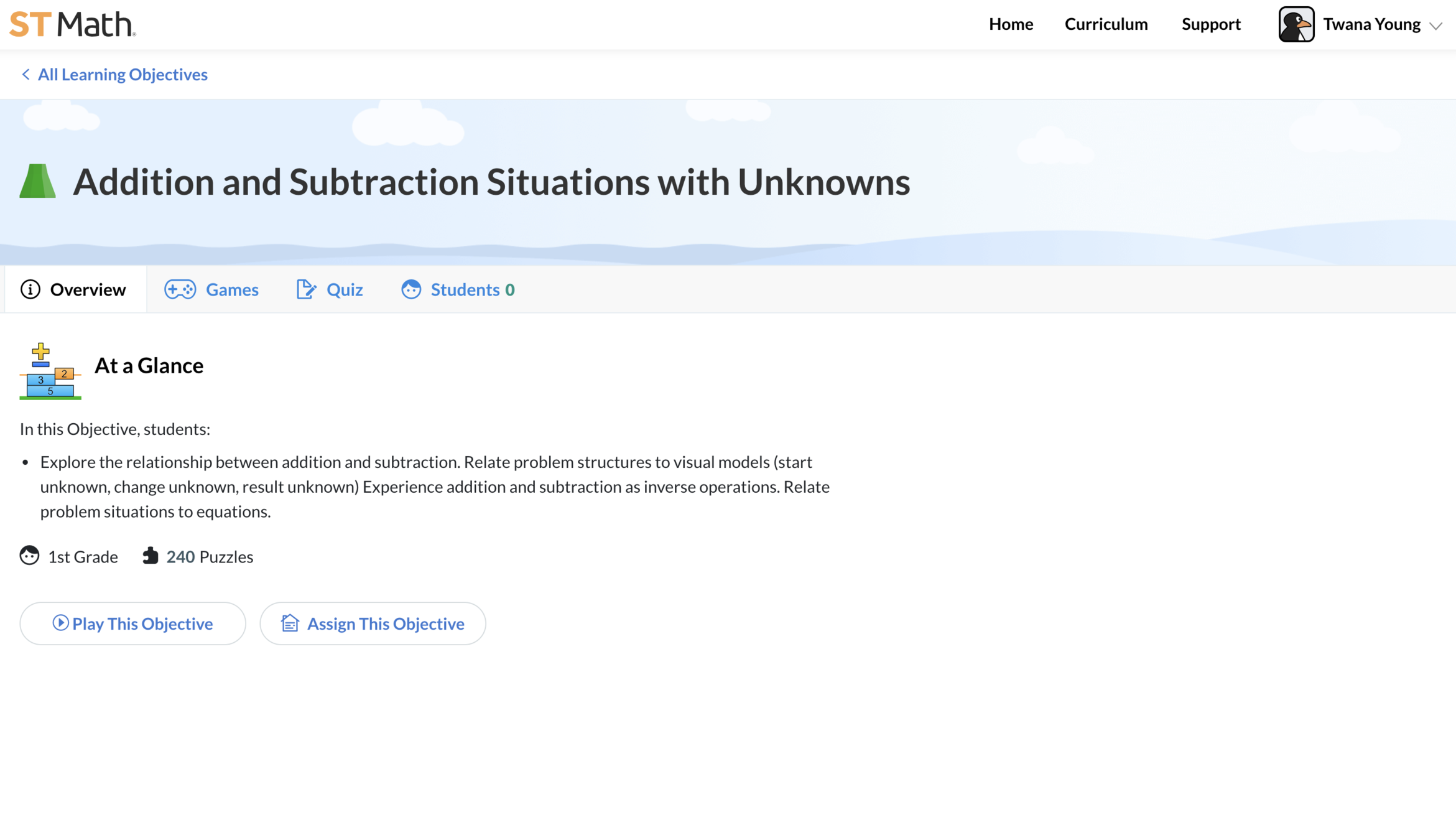
Read the objective description
Grade 1
Implementation Support: Discussion Map
By tyoung4762