




The Journey Module Plans provide insight into the schedule, preparation, instruction, and closure for teachers.
Journey Modules are organized into three sections: Module at a Glance, Session Overview, and Session.
Interested in learning more about the ST Math Camp modules? Click on the choices below to explore!
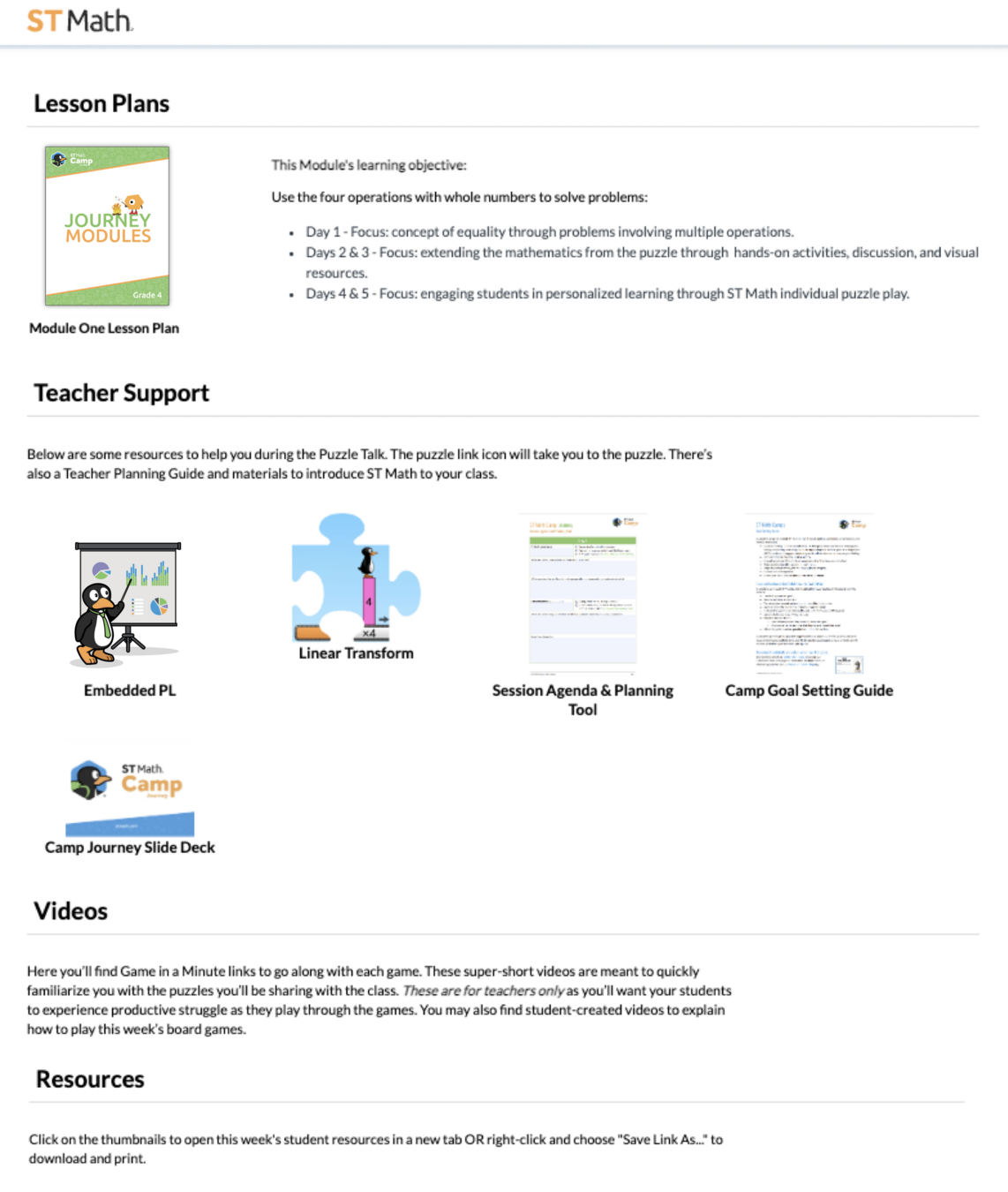
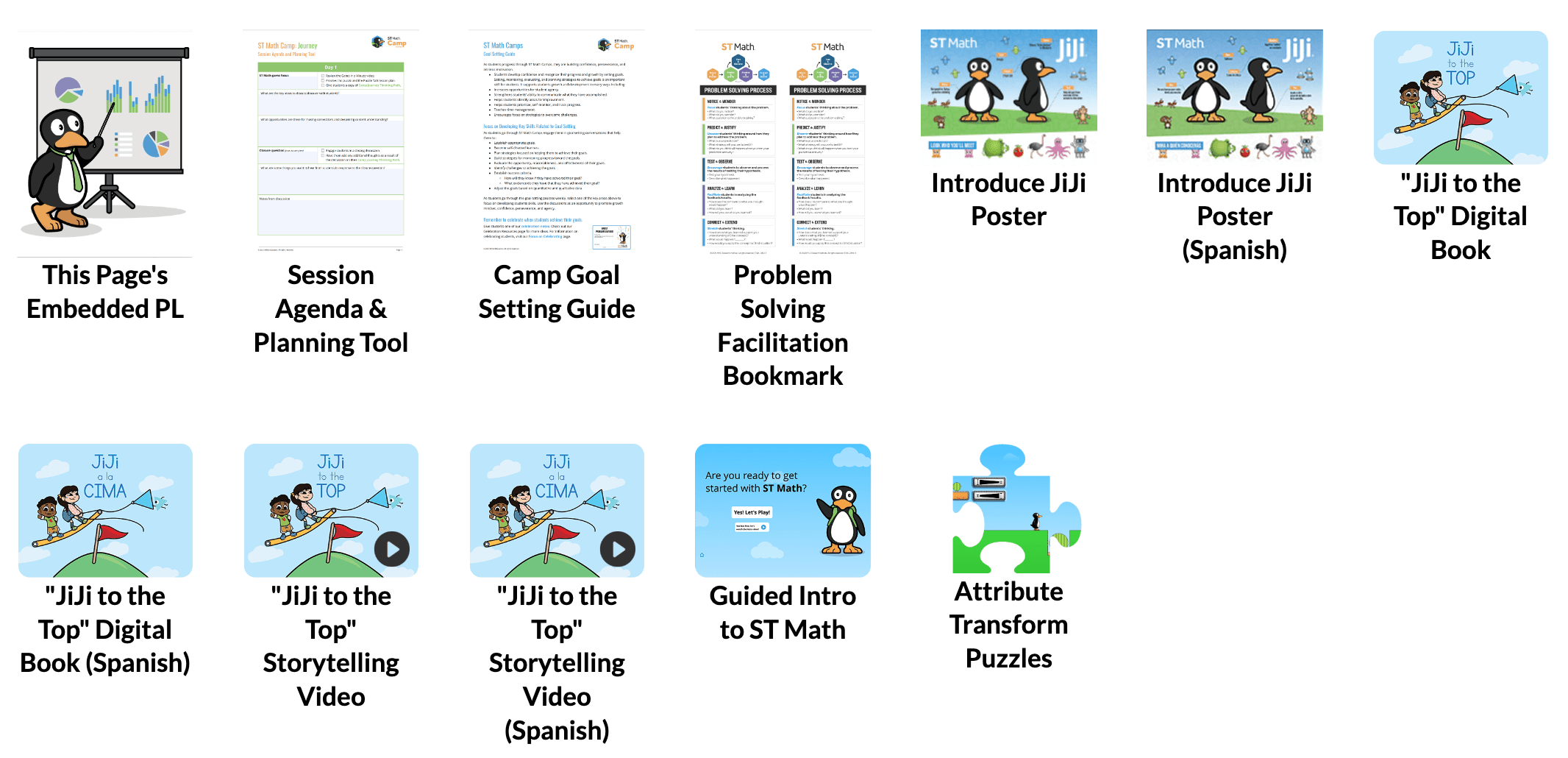
The Teacher Support section includes some great resources to help you to introduce ST Math to your class.
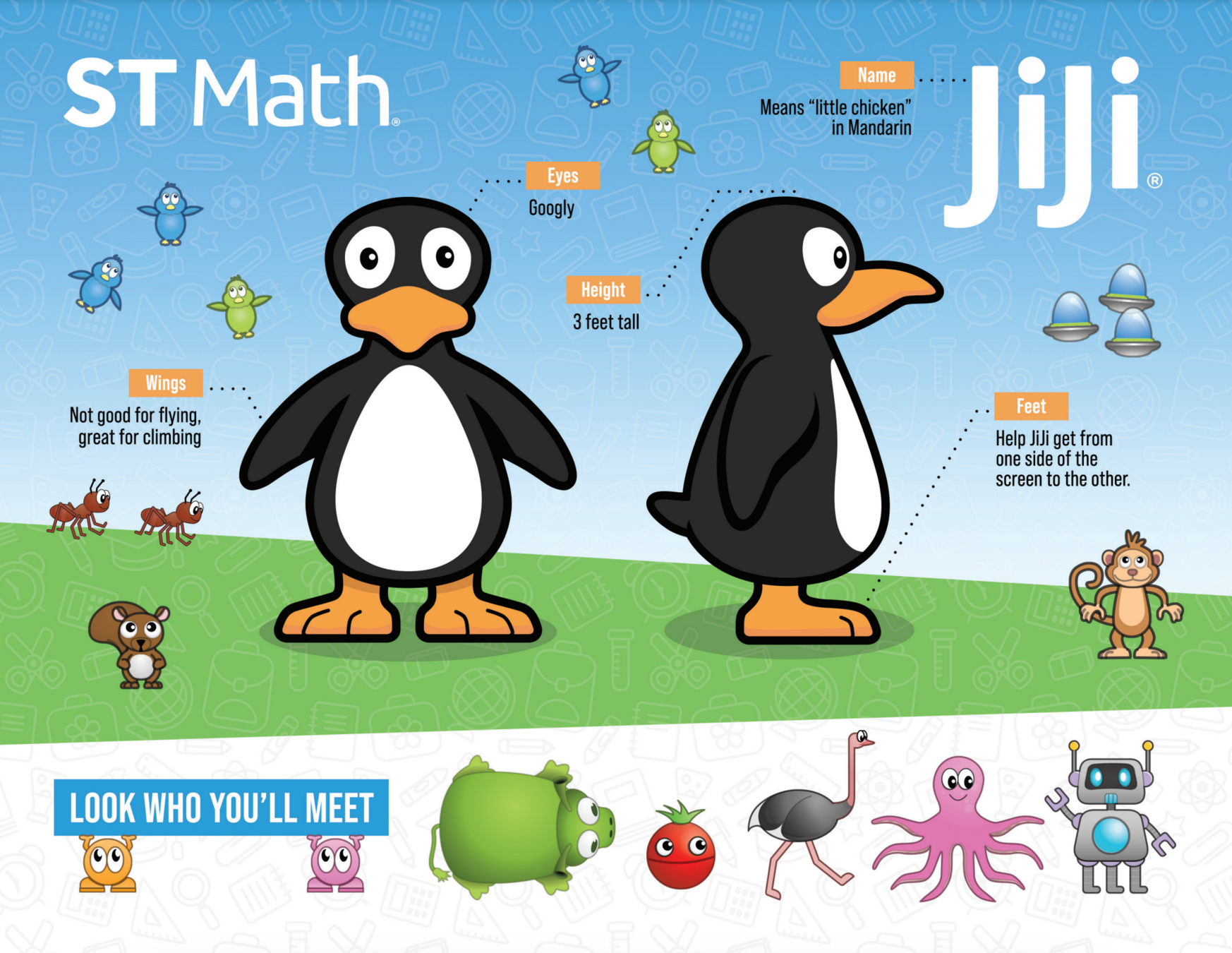
Along with planning tools, goal-setting guides, and links to the weekly ST Math games, this section also includes a digital storybook and a colorful poster to get acquainted with Jiji!
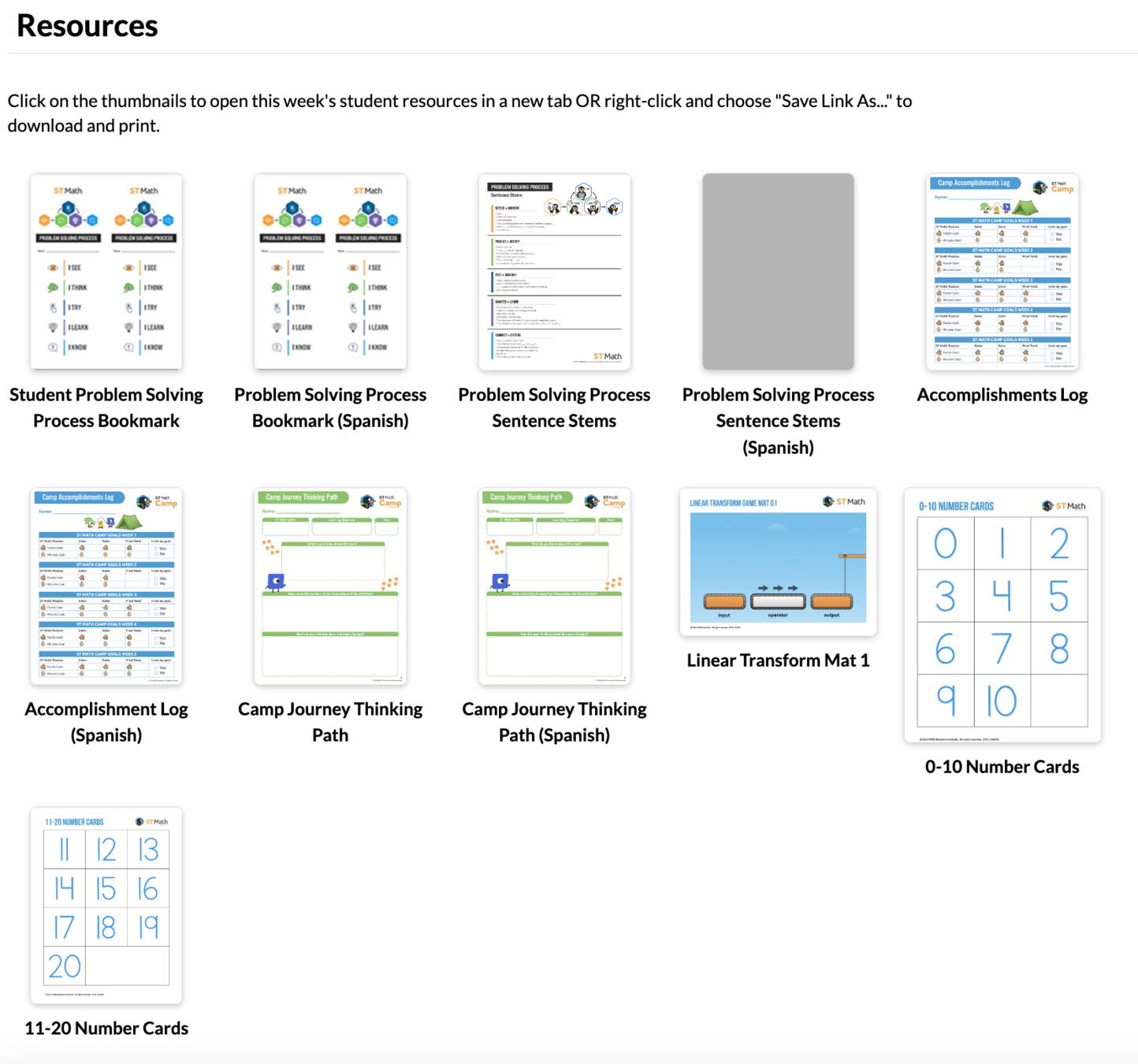
Looking for resources? You have come to the right place! In this section, you will find links to printable logs, problem solving pages, mats, paths, and cards.

OFF
OFF
OFF
OFF


Each module of the ST Math Camp experience centers around three main sessions: Puzzle Talks, ST Math Activities, and 1:1 Game Play.



Game-in-a-Minute
Start by watching a short video preview of the game that you will be using with students for this Puzzle Talk.
Puzzles for the Talk
Take time to prepare to play the game with the students by setting up a screen and projector, gathering whiteboards or scratch paper for the students, and playing the game on your own.
Facilitation
- Ask students to share what they already know about the topic and explain that you will work as a class on a Puzzle Talk.
- Share your screen and project the puzzles; engage students in discussions using the Facilitation Questions and the Problem Solving Process.
- Discuss student strategies, test them, and discuss the feedback.
- Repeat the process with other puzzles.


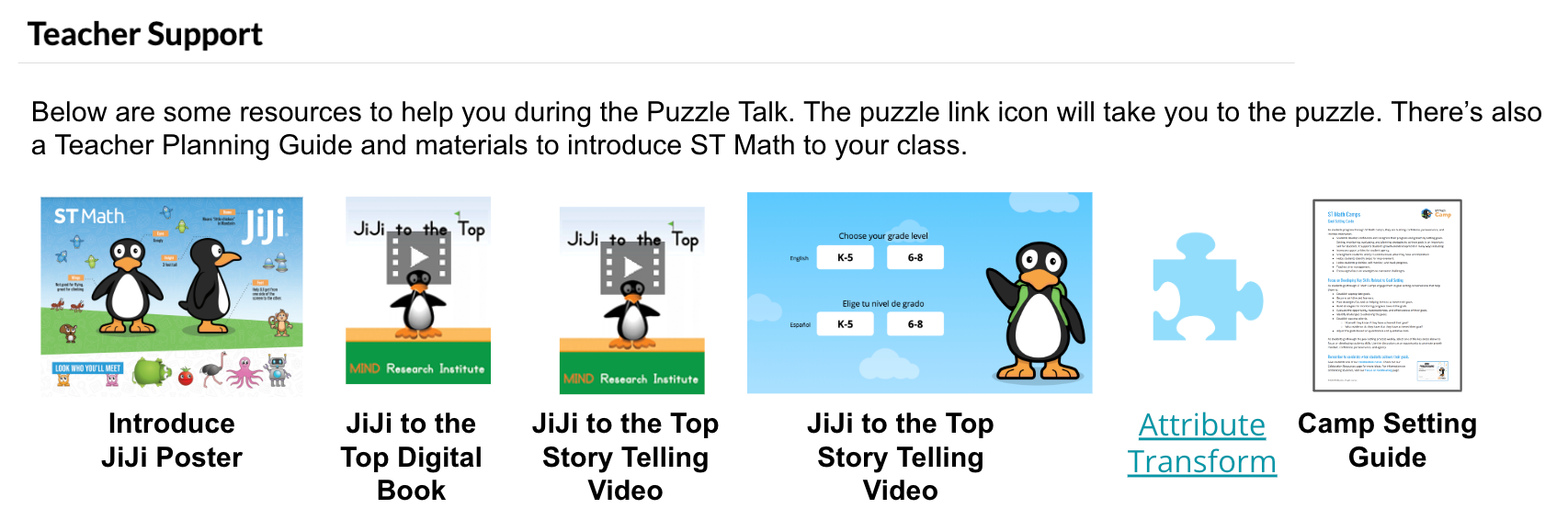
The Teacher Support section of the website includes everything that you will need to conduct a successful Puzzle Talk.
Preparation
Instruction
Preparation
Instruction
Beyond the Puzzle
Review the activities for the week and choose one to use for the day.
Check on and gather the necessary amount of manipulatives for the chosen activity.
Game Play
- Prepare the space and number groups for all students to be able to play.
- Allow time for the students to play the activity, swapping groups after a few rounds if desired.
- Watch the clock so that you have enough time to clean up.
These activities intentionally allow for variation, so use your creativity to further stretch student thinking around the mathematical concepts.



ST Math Activities are designed to extend the learning beyond the puzzle. These activities illuminate the mathematics and allow students to further explore, practice, discuss, and connect the mathematics that they are learning.
Set-up


Preparation
Instruction
Getting Ready
Provide an Accomplishments Log and ST Math Journal to each student. It is important to ensure that each student has a device and ST Math sign-in credentials prior to the first 1:1 Game Play session.
Game Play
Students play ST Math independently, focusing on the grade level Journey or the objectives the teacher has placed in Assignments.
Teacher Tip:
Ask open-ended questions:
What was something you liked about the games?
How did you do in achieving your goal?
What helped you achieve your goals?
Setting Goals
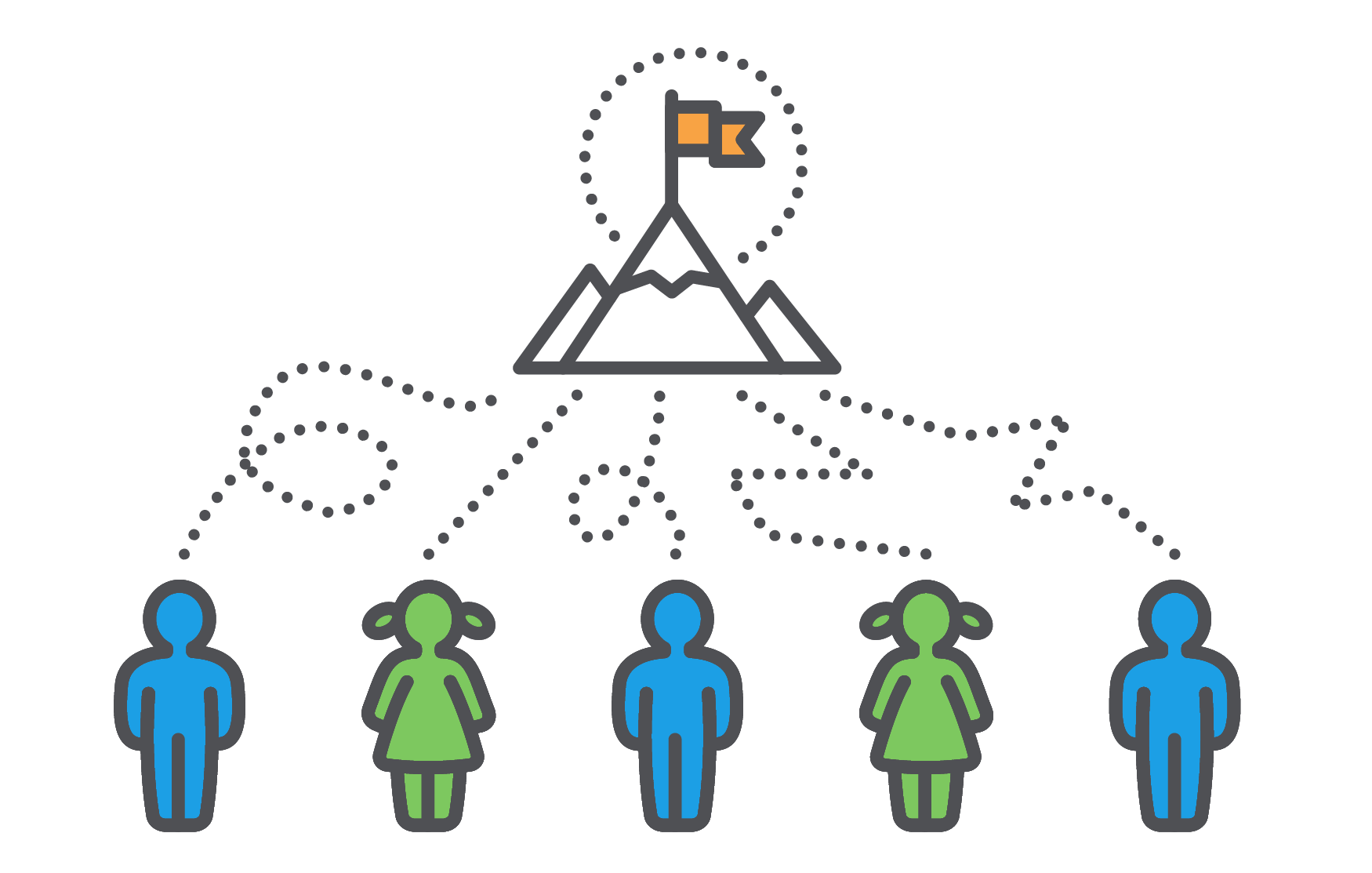
Discuss goal setting with students using the Goal Setting Guide. Set an ST Math goal for the week.

Closure
Discuss the games students played and review their goals on their Camp Journey Thinking Path.

Explore the various resources available in the Teacher Support section to effectively introduce your class to ST Math and facilitate successful Puzzle Talks. Discover the essential tools that can assist you in this endeavor by browsing through the options provided below.

Get to Know Jiji
To learn ST Math like a pro, you first need to get to know Jiji the Penguin! The Teacher Support section includes three great resources that can help you do just that. Click on each image below to access the resource.
The Poster
Introduce ST Math
The Storybook
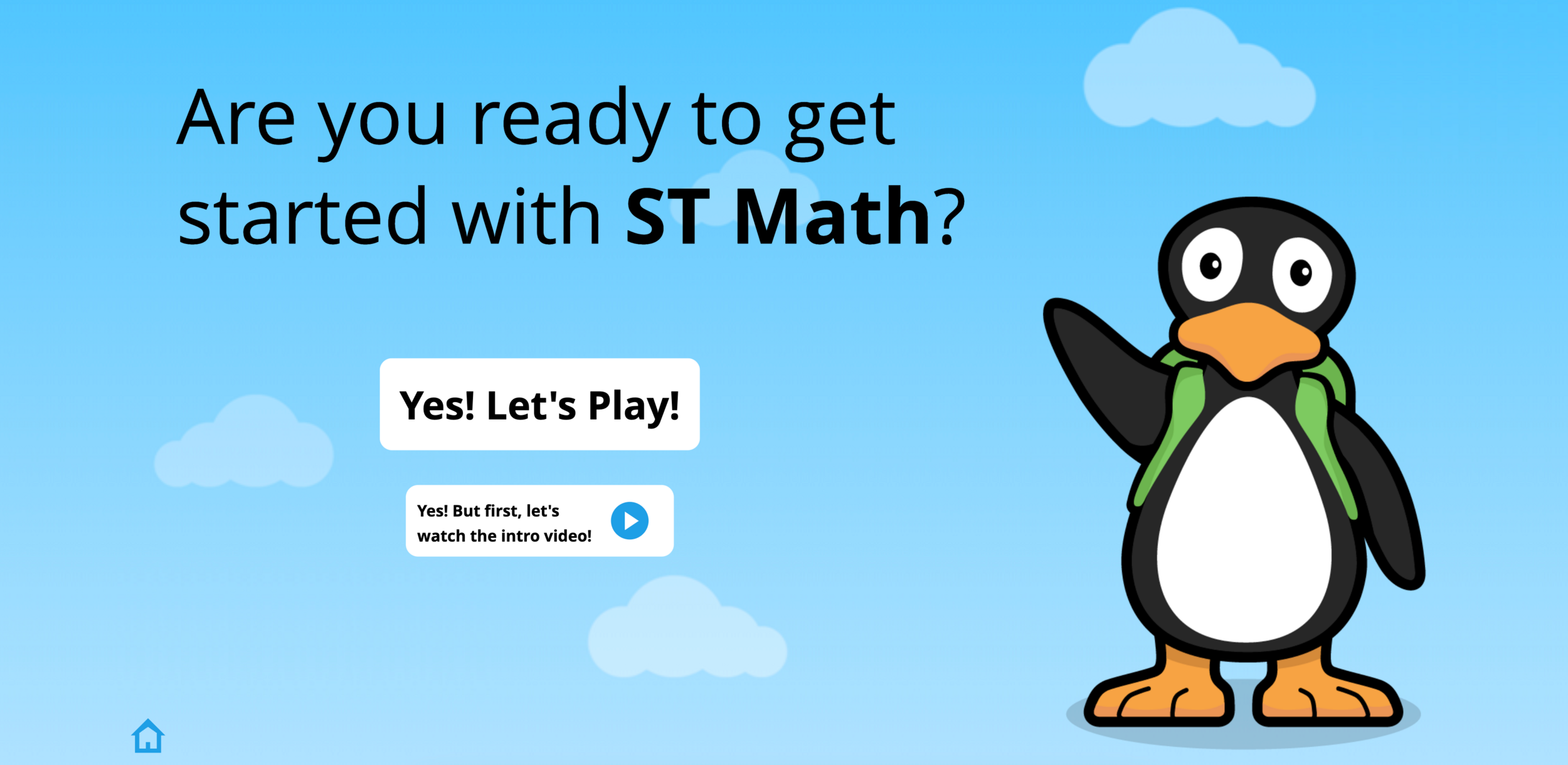
The Guided Intro



Read it or watch it!

Playing the Game
Prior to leading a Puzzle Talk, it is important to play the game that the Puzzle Talk focuses on. The Game Demo link will take you directly to the designated game.
Choosing the Puzzles
Each game includes a selection of puzzles within the game. These choices allow the teacher to choose the specific content to work on with the students during the Puzzle Talk.
Game Demos
Controlling the Game
During the Puzzle Talk, it is possible to pause, rewind, and fast forward the game, so it is recommended that teachers practice ahead of time with the game demos.

Game demos are specific to the module, so it is important to choose the correct module.
Important Skills
Students build agency, confidence,
perseverance, and intrinsic motivation as they progress through ST Math Camps by setting goals. Setting, monitoring, evaluating, and planning strategies to achieve goals are important skills for students. It supports their growth and development in many tangible ways.
Goal Tracking
The Goal Setting Guide provides information on how to help students track their progress in the goals that they set at the beginning of the module through the use of the Accomplishment Log.
Goal Setting Guide
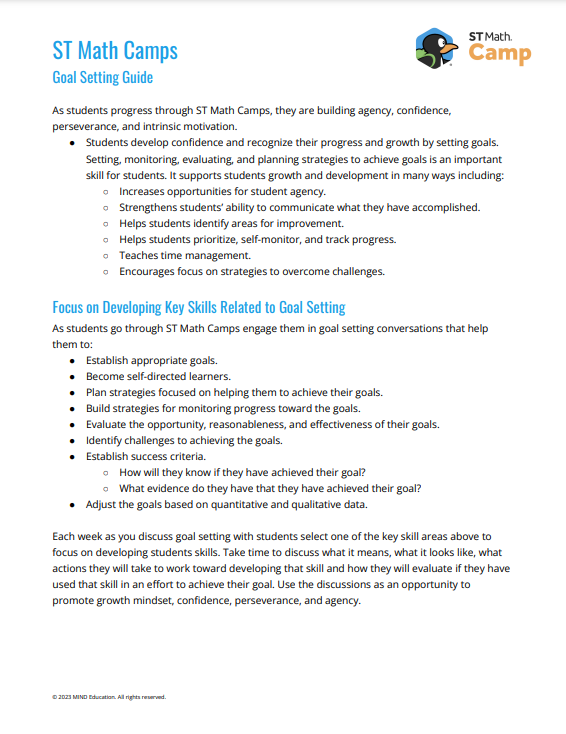

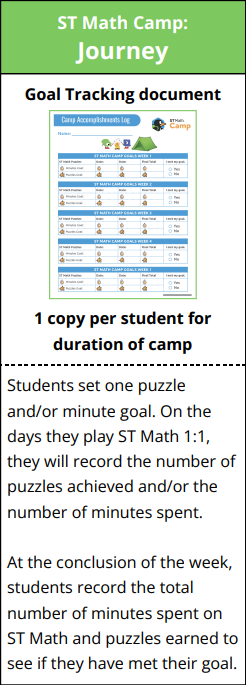

Click the image to access the Goal Setting Guide
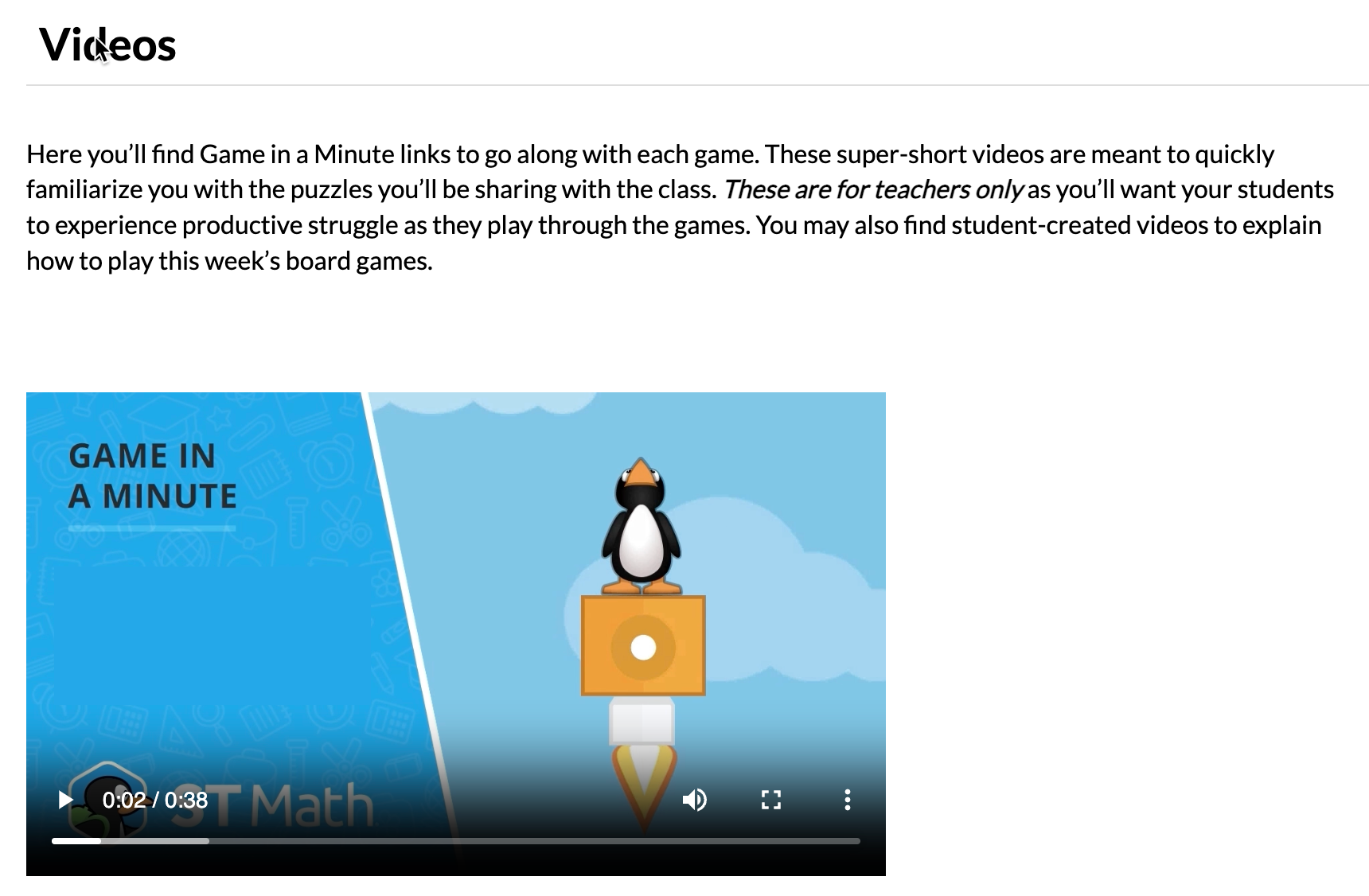
If you are not familiar with the ST Math games used in the modules, take some time to review the Game in a Minute videos. These super-short videos are meant to quickly introduce you to the puzzles you’ll be sharing with the class. Note: These are for teachers only.

Watch the Game
Wondering how to play a game? Click on our short one-minute videos on how to play each game. Review the game in a minute videos to quickly familiarize yourself with the puzzles you’ll be sharing with the class.
Game in a Minute
Note:
The Game in a Minute videos are for teacher-use only. The videos are not meant to be shown to the students.


Game in a Minute example

Maximize the ST Math Camp experience with our extensive collection of resources. This section features student bookmarks, coloring pages, logs for student accomplishments, progress trackers, and reflection questions. Learn more about these helpful printables by clicking on the links below.
The Process
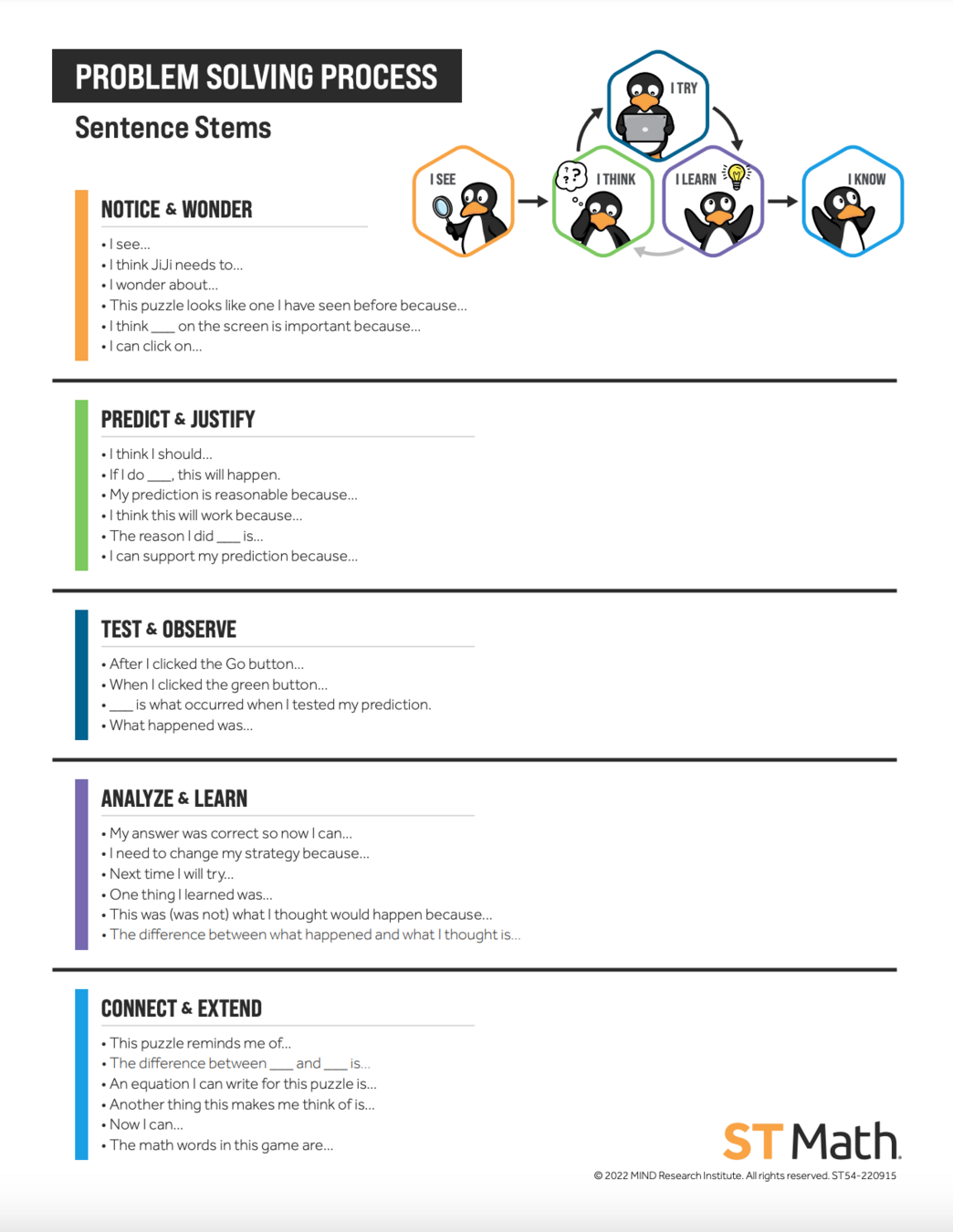
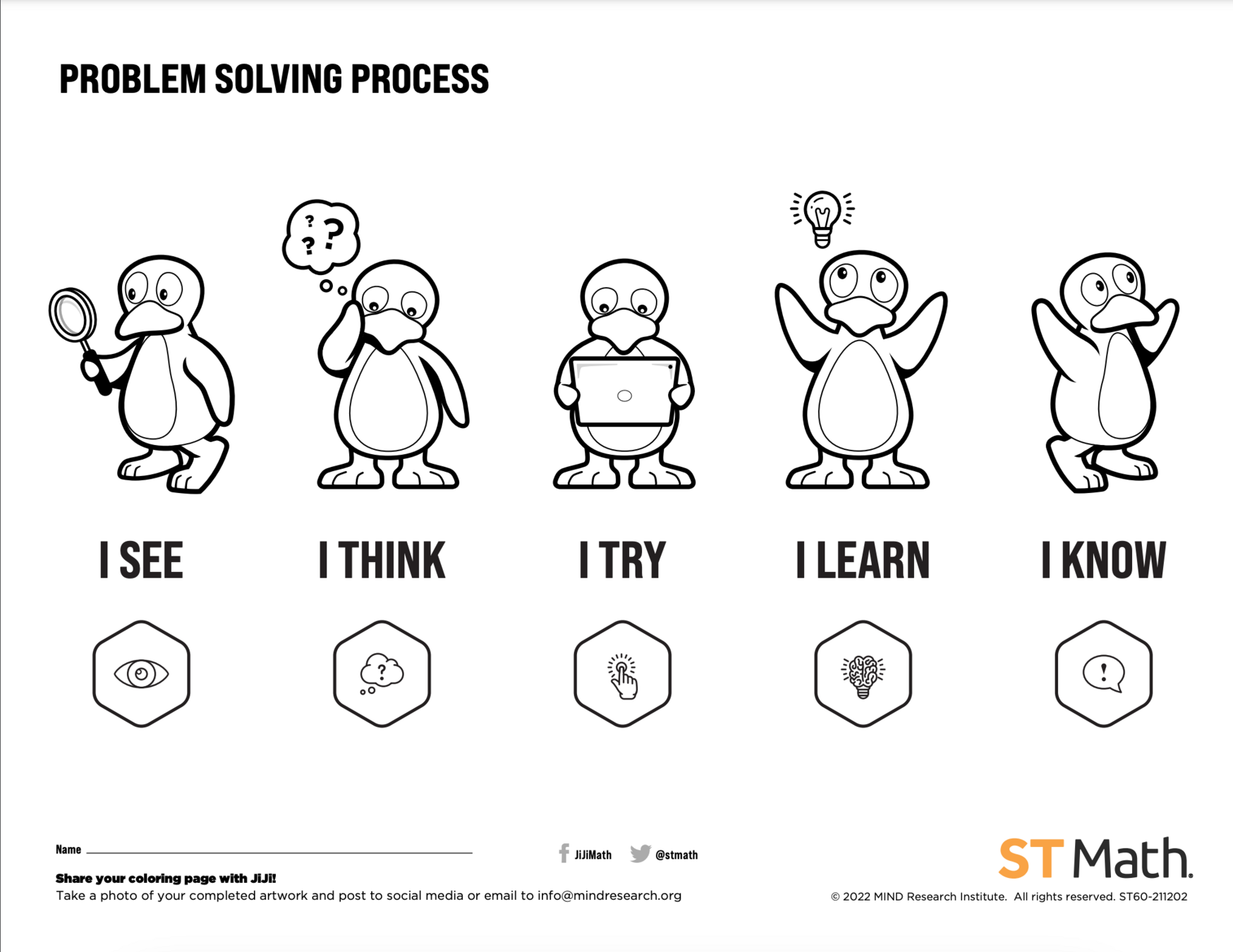
The Problem Solving Process was developed to make the perception-action cycle easier to bring into the classroom. The goal is to get students involved in the process of learning which requires noticing what is going on and then starting a cycle of predicting, testing, and analyzing.
Tools
There are several tools that teachers can use with students in the Problem Solving Process, including bookmarks and coloring pages for discussions. These tools are available in English and Spanish.
Problem Solving Process
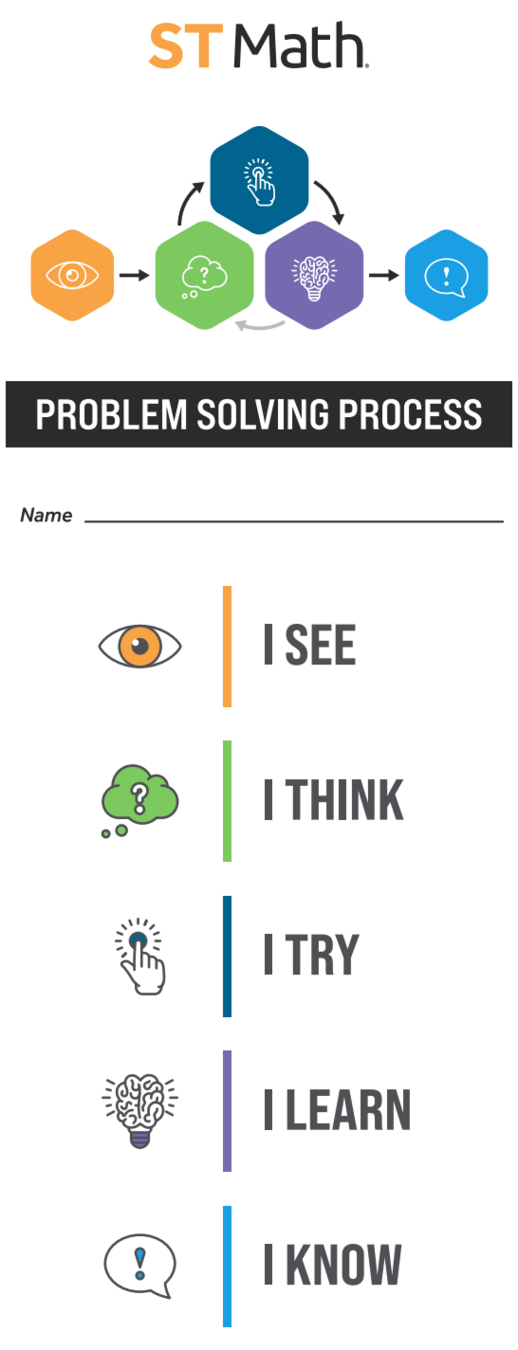

English
Spanish

Accomplishment Log
Student Goals
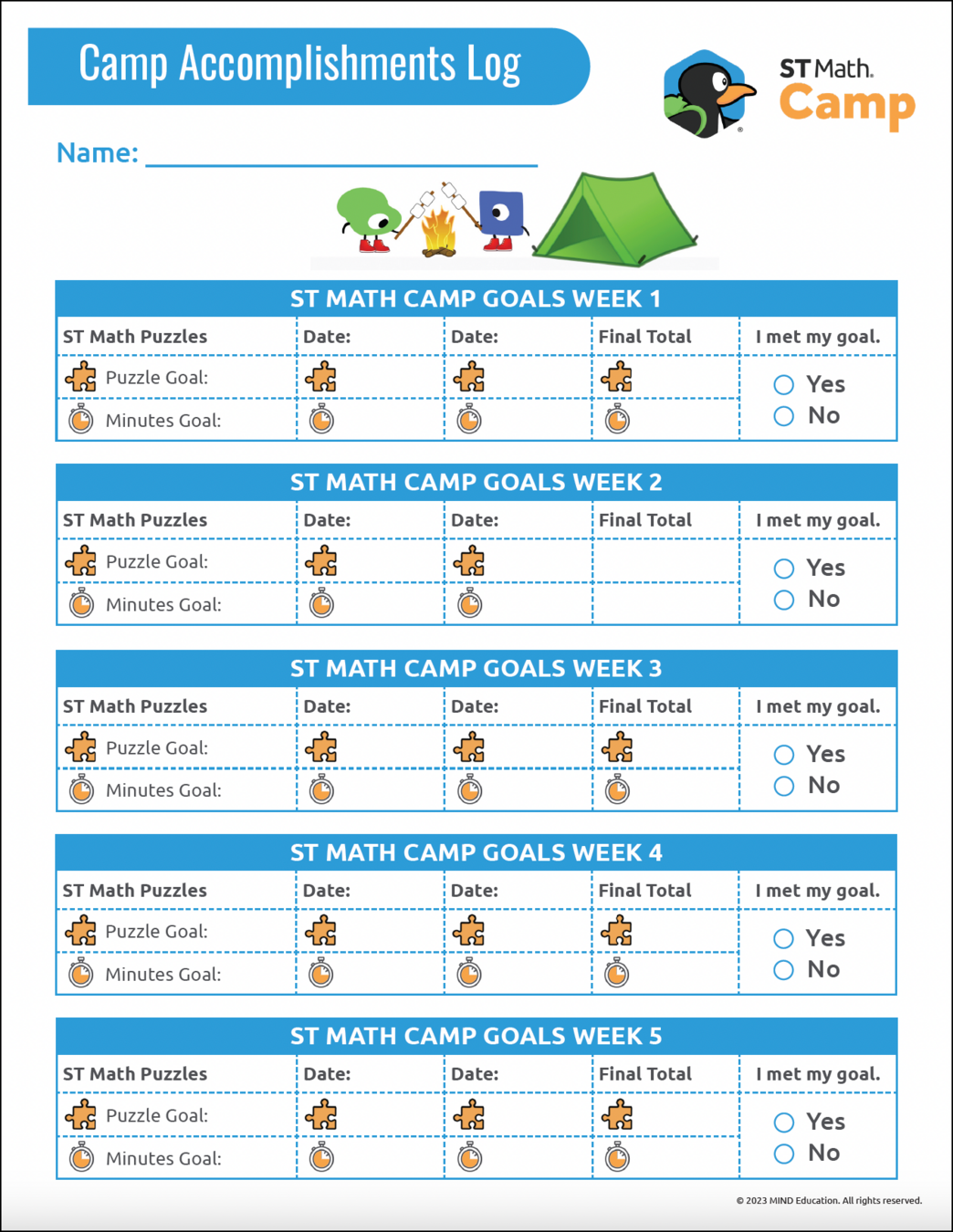
The Accomplishment Log is designed to support students and teachers with monitoring, student accountability, and writing in math. When students are mindful of their data, they are able to see their progress, reflect on their learning, and work with their teacher to set and track appropriate goals.

Students set one puzzle and/or minute goal per module. On the ST Math Game Play days, they will record the number of puzzles achieved and/or the number of minutes spent playing. At the conclusion of the module, students record the total number of minutes spent on ST Math and the total number of puzzles earned to see if they have met their goal.
Tracking Progress

English
Spanish
This tool is available in English and Spanish.

Thinking Path
Student Goals
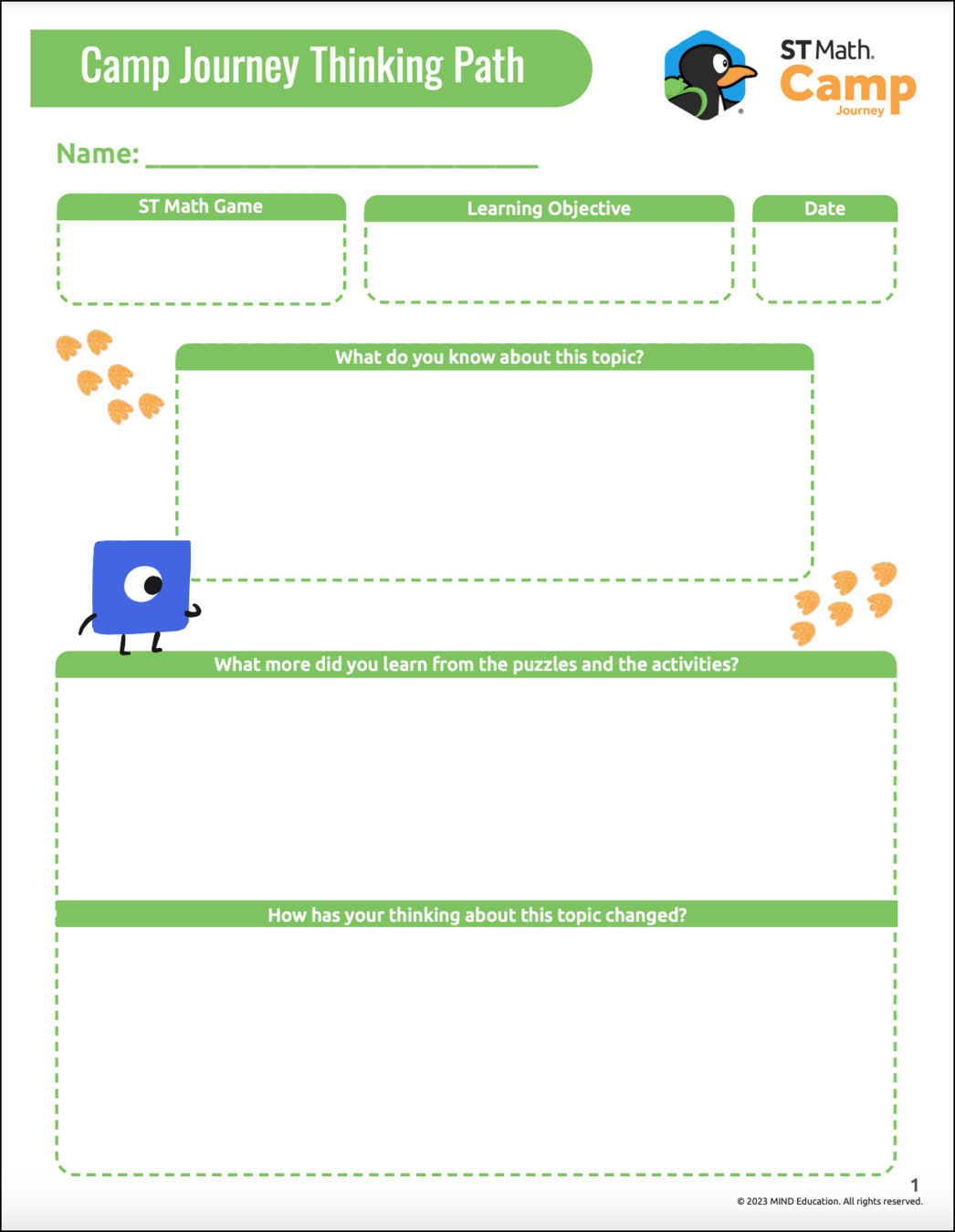
The Thinking Path resource gives students the chance to show what they know about an objective at the beginning of the module, to record new ideas and discoveries throughout the module, and to reflect on their learning at the end of each module.
Throughout the Module
At the end of each session, students add new ideas learned from puzzles and activities, and changes to their thinking as part of the Campfire Chat.
End of the Module
At the end of each module, students self-evaluate their goal progress and reflect on their learning.

This tool is available in English and Spanish
English
Spanish
Beginning of the Module
During the Puzzle Talk, students fill out the first section of the Thinking Path, which includes a learning objective, the date, and prior knowledge.
JOURNEY_module_NEW_USER
By dwhitby