





OFF
OFF
OFF
OFF
Welcome to ST Math Camp professional learning! Click on the icons on the left to learn all about Camp Modules. Then click the icon again to close it.
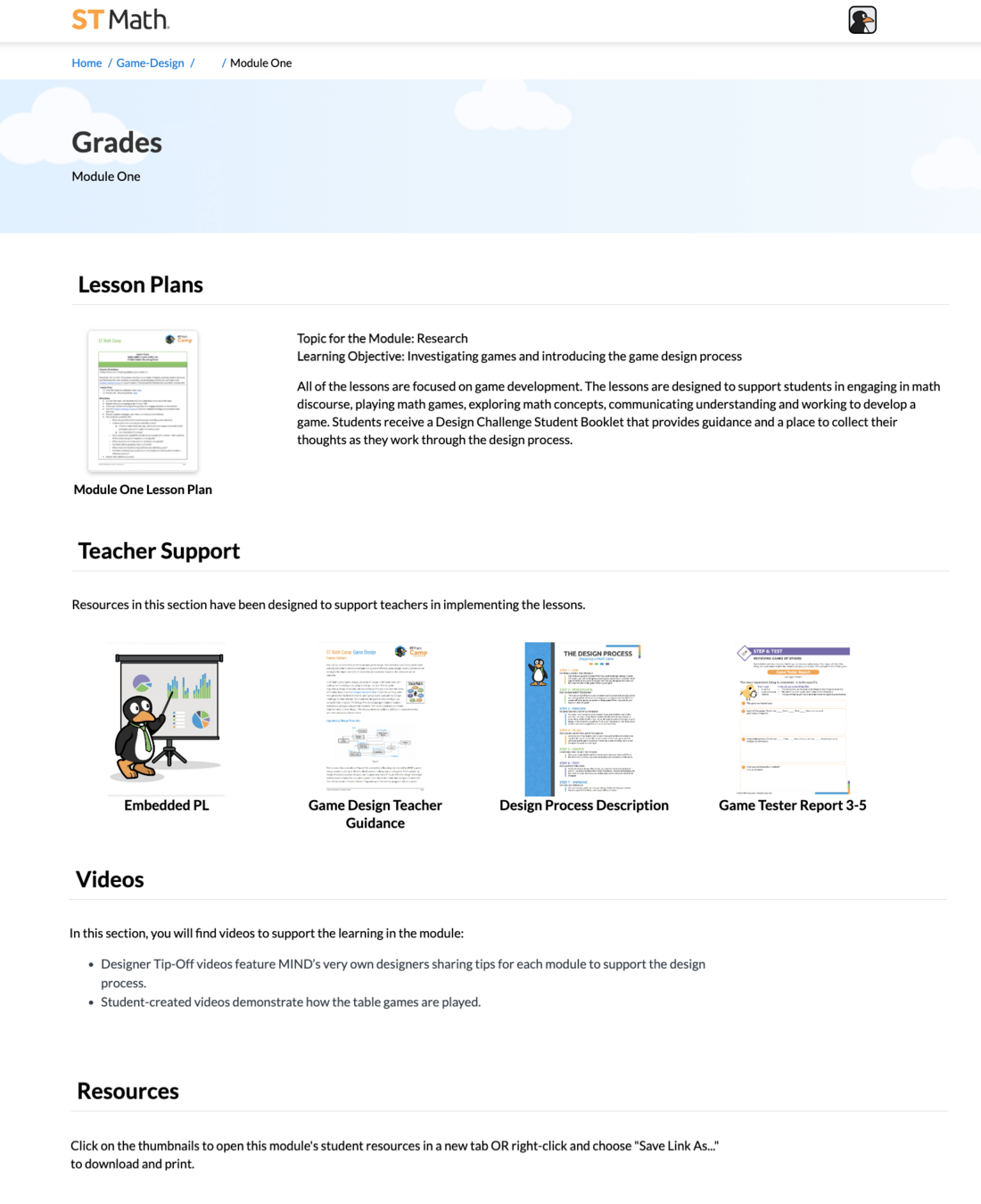
The Module Lesson Plans provide insight into the schedule, preparation, instruction, and closure for teachers.


The Videos section includes two incredible tools to support teachers in the ST Math Camp experience: Designer Tip-Off videos and Student-Created Videos.

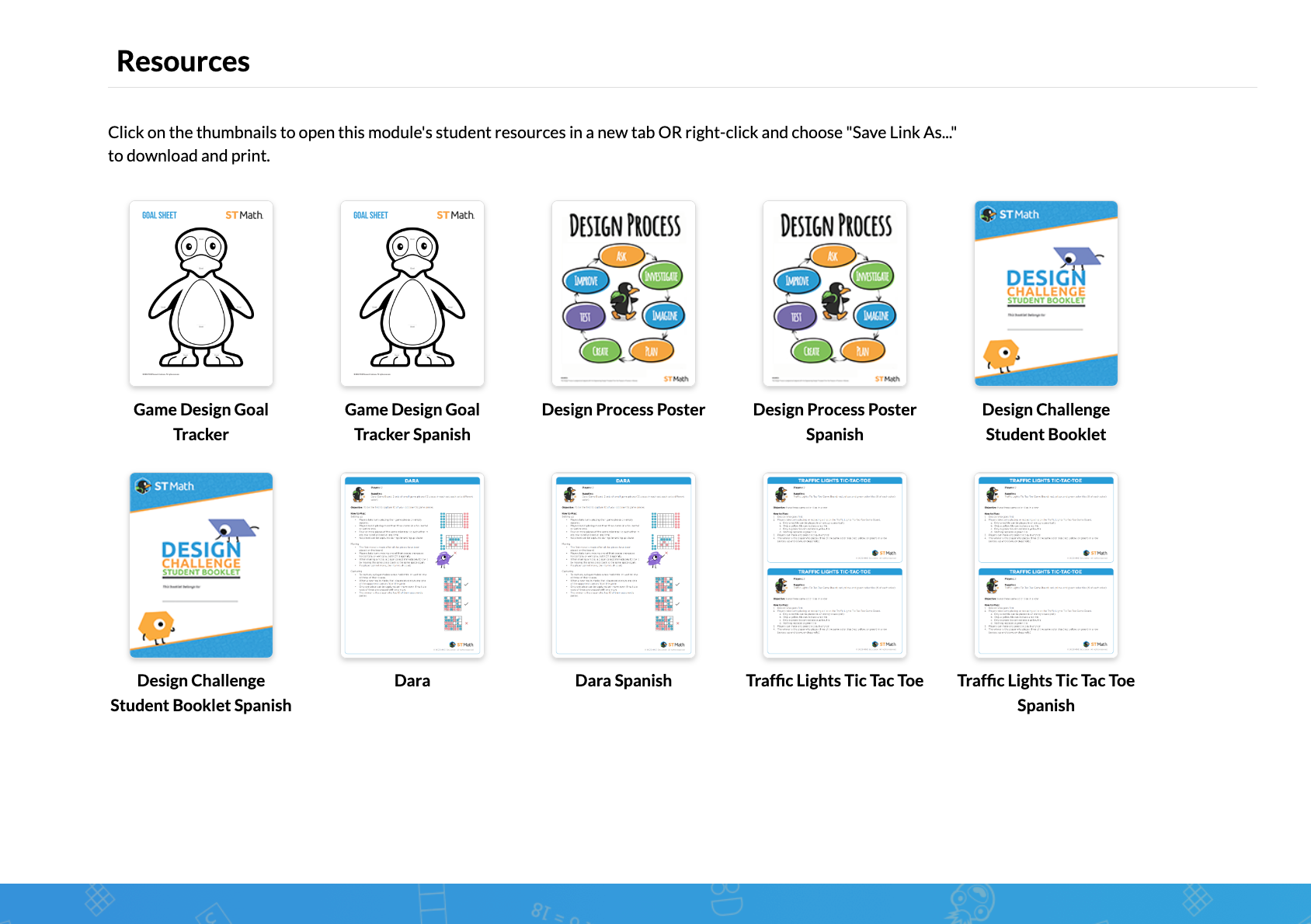
Looking for resources? You have come to the right place! In this section, you will find links to printables that will help you facilitate the ST Math Game Design Camp from beginning to end.
Interested in learning more about the Module Lesson Plans? Click on the choices below to explore the layout of each session.
This document provides all of the modules for ST Math Camp: Game Design. All of the sessions in the modules are focused on game development
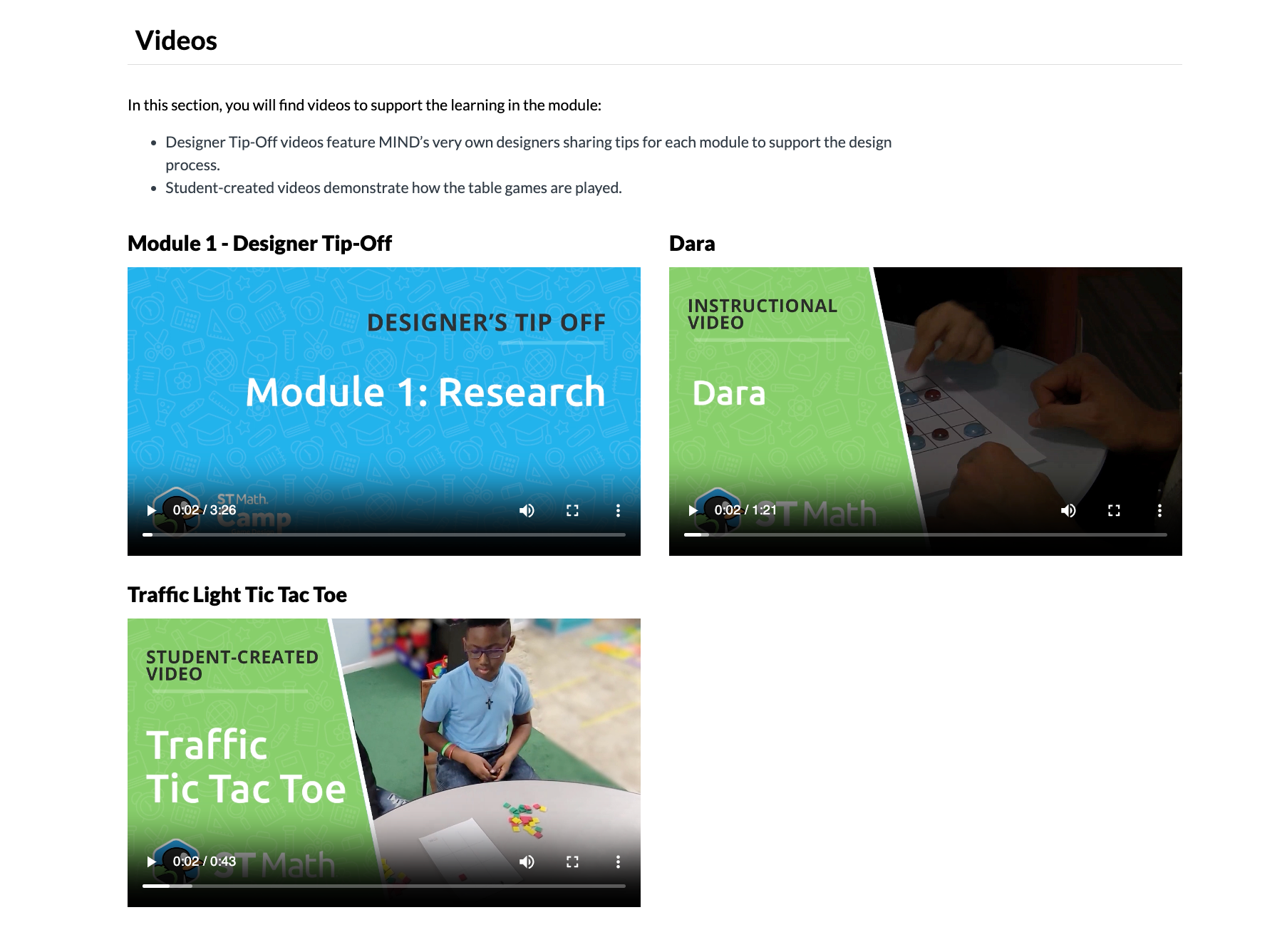
The Designer Tip-Off videos feature MIND’s very own designers sharing some module-specific tips.
The Student-Created Videos feature actual students demonstrating the grade-level specific table games.

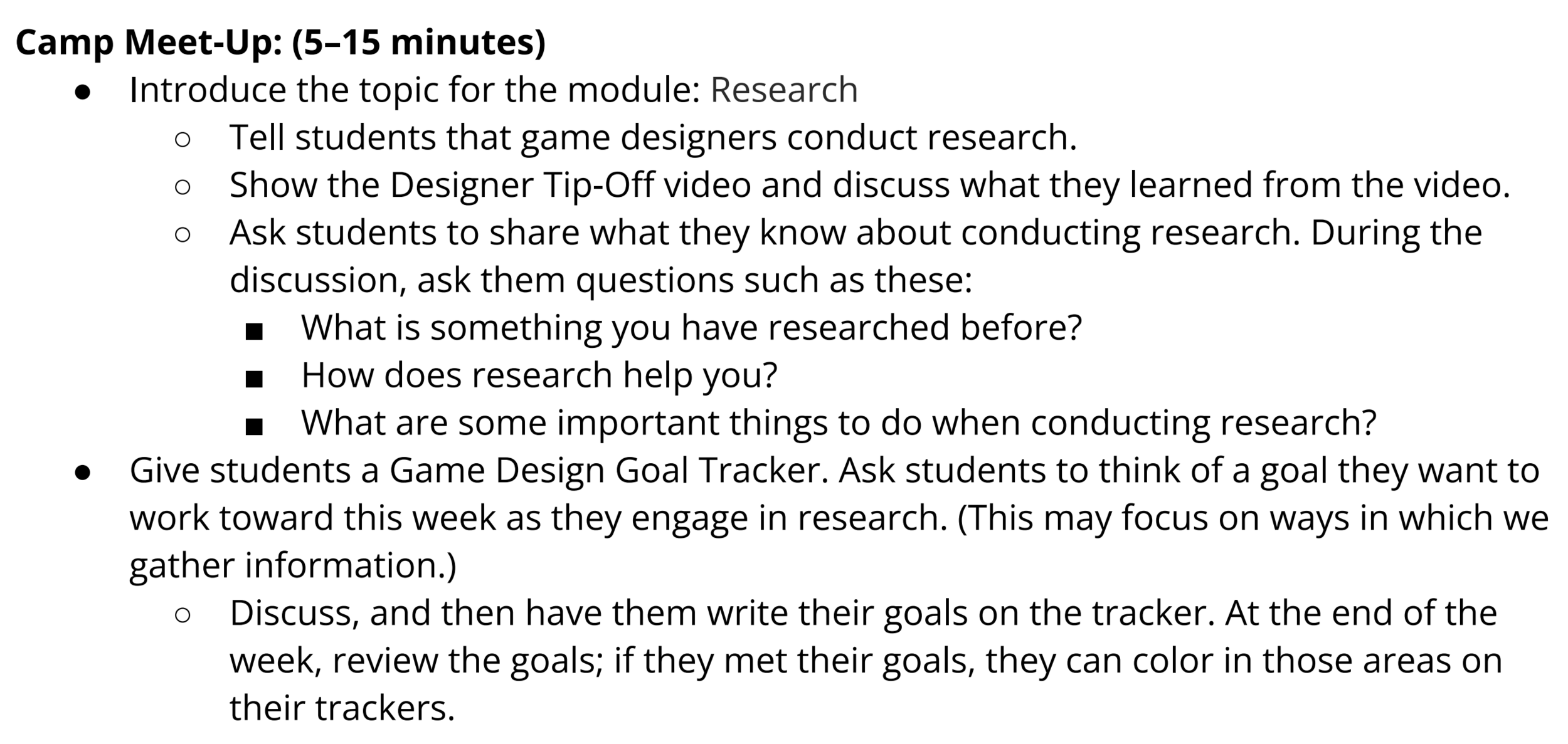
Camp Meet-Up
Opening
Each session of the ST Math Game Design Camp begins with a Camp Meet-Up. This 5-15 minute opening is a time to review previous sessions or to introduce the new session. It is an important check-in time as it provides some much-needed reflection time as students continue to develop their games - and their design process skills!
ST Math Camp: Game Design was created to help students understand that they can be the creators of mathematics.
Activity Directions
Opening
The Activity Directions in each session provide guidance for:
- Reviewing the current session,
- Facilitation and discourse,
- Grouping students, and
- Games and game demonstrations.
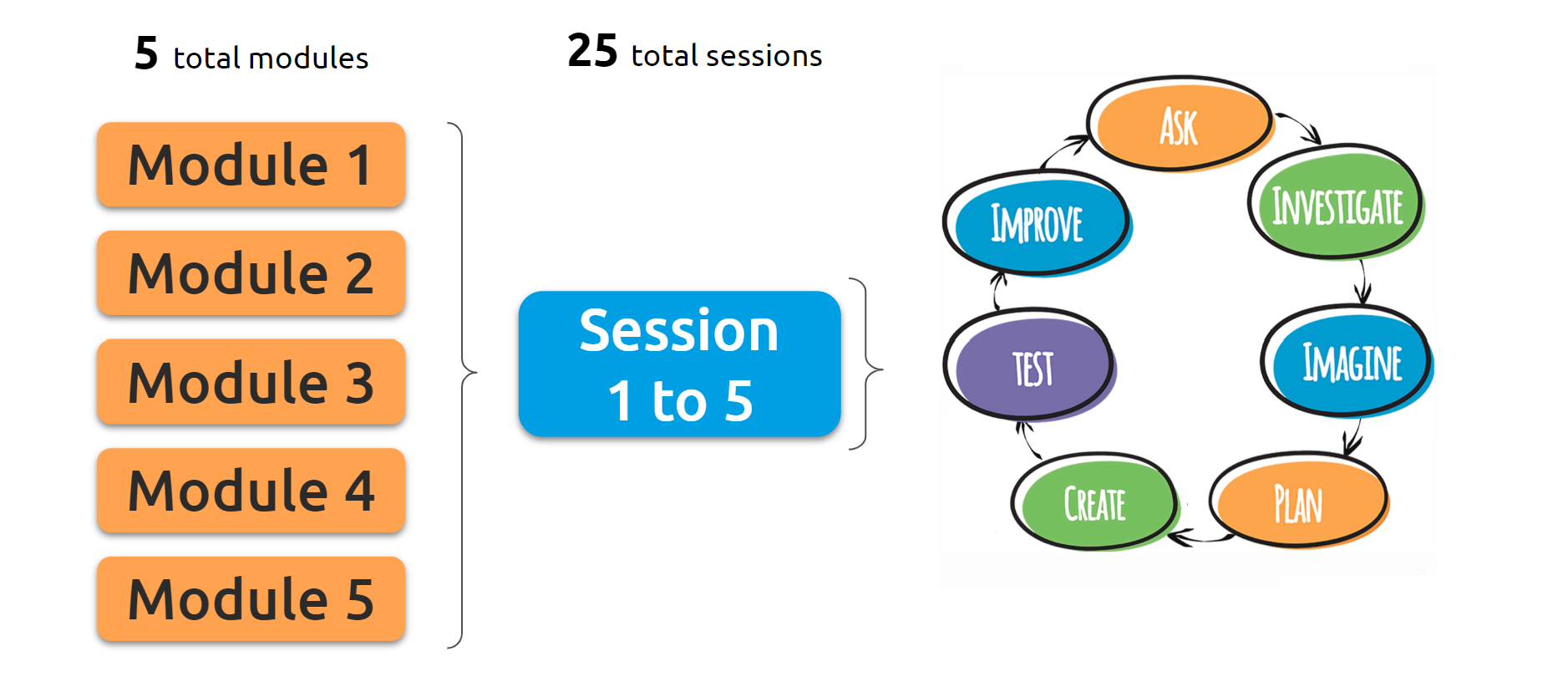
There are five sessions in each of the five modules, and each session has a very specific set of activity directions.

Click on a module to learn more about the activity directions of each session in the module.




Design starts with curiosity and questions. In Module 1, all five sessions focus on:
-
Getting students excited about game design,
-
Setting up and maintaining an environment for student learning and collaboration,
-
Encouraging students to share their ideas.
Play and ask: game 1
Play and ask: game 2
Introduce Game Design
Investigate the games
Investigate and imagine

As students continue through the design process, they start to imagine what their game will look like in the end. Remember to continue to focus on:
-
Getting students excited about game design,
-
Setting up and maintaining an environment for student learning and collaboration,
-
Encouraging students to share their ideas.
Reflect on ideas
Move ideas to games
The math in the games
Games: the name and the "why"
Thinking about rules and changes

Module 3 brings about some big steps as students start to make plans to move forward in the creation of the game.
The Design Challenge Student Booklet includes a list of requirements and a game planner that students will use in this part of the process.

Build an idea
Game rules and How to
Make the game
How the game will be built

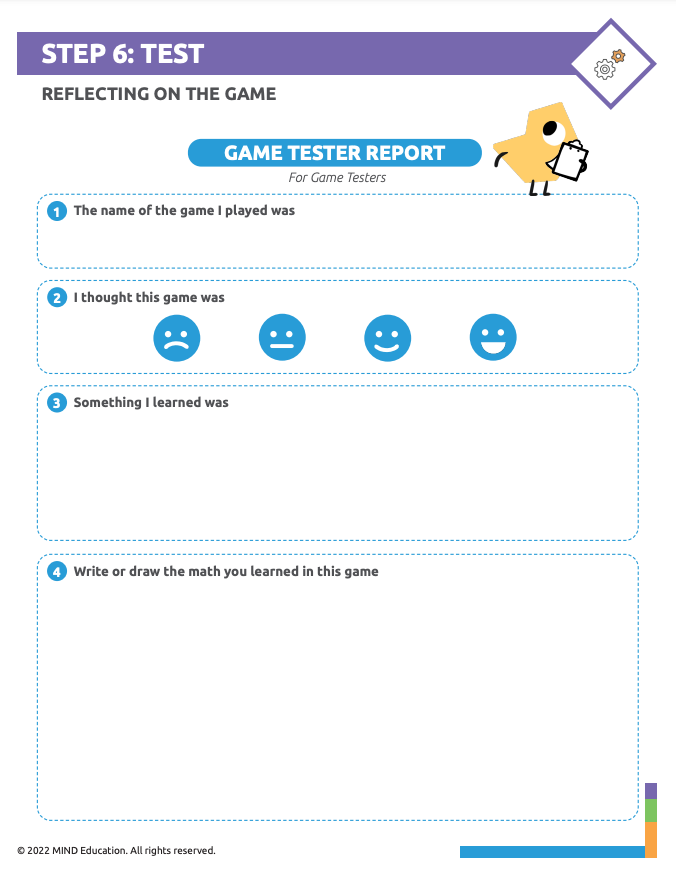
In Module 4, students move into the stage of testing their games and using their friends' feedback from the Game Tester Report to make improvements.

Make improvements and test it again
Feedback from friends
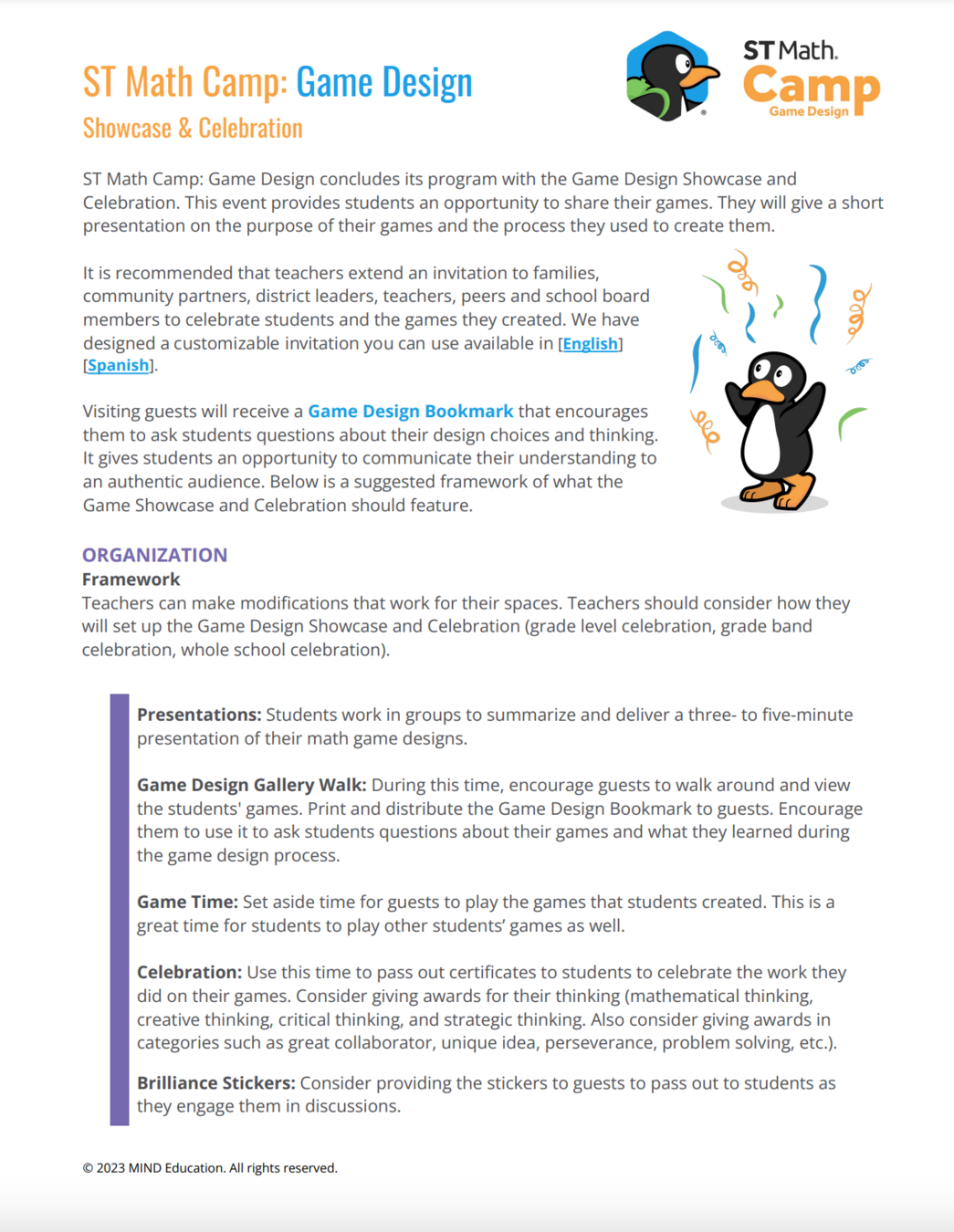
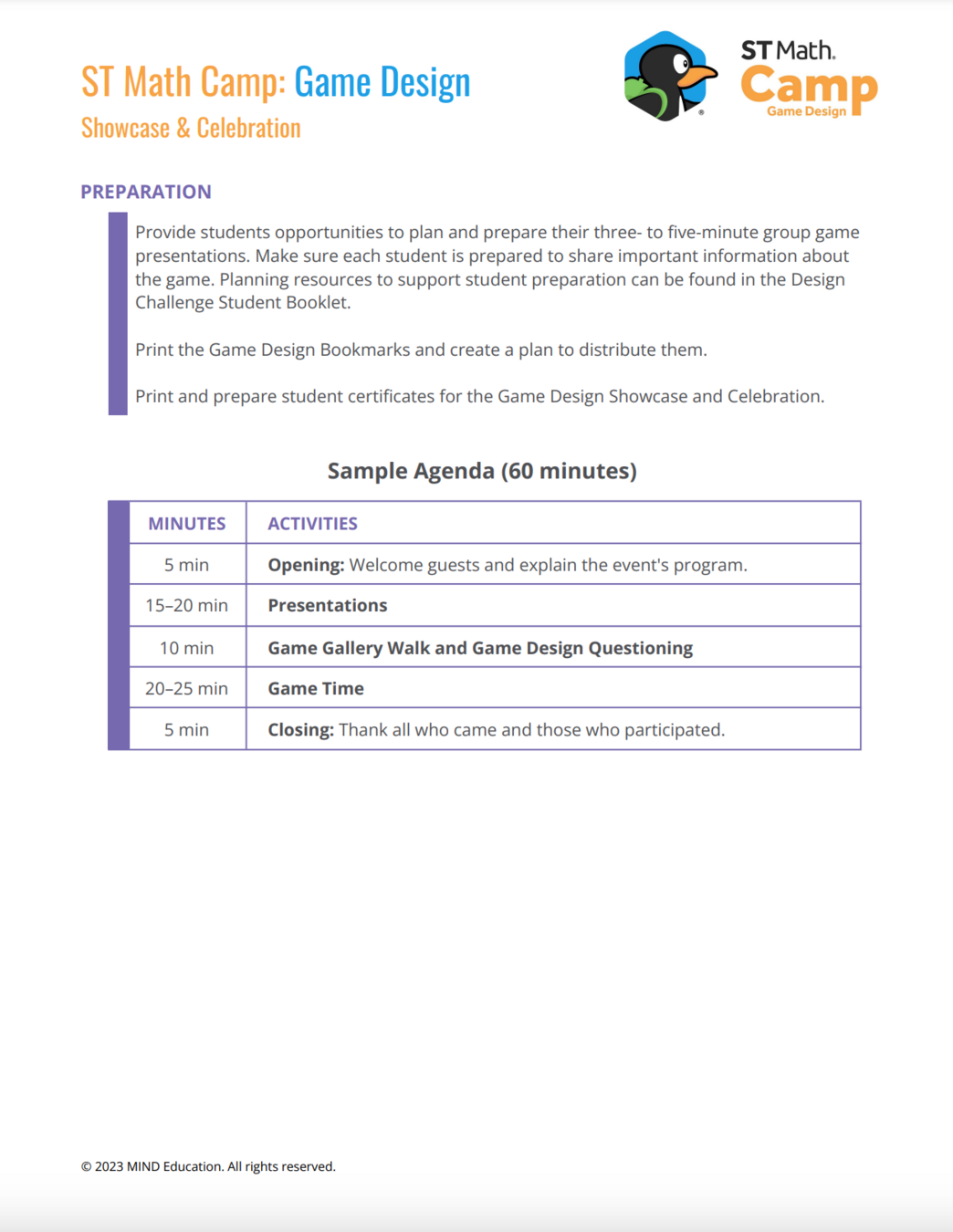
The final module of ST Math Design Camp focuses on improving and showcasing the students' games. They will give a short presentation on the purpose of their games and the process they used to create them.
The Showcase & Celebration Guide includes everything that you need to organize the showcase, prepare the students, and to celebrate!
Testing and making final improvements
Showcase!
Final improvements and Showcase preparation
Click here to access the Showcase & Celebration Guide
Campfire Chat Closure
Closing
Each session of the ST Math Game Design Camp ends with a Campfire Chat. This 5-15 minute closing is a time to guide students further into the design process. Ending the session with a conversation about their experiences in that session, how those experiences connect to previous sessions, and how it applies to their game design process is a great way to bring closure to the session.
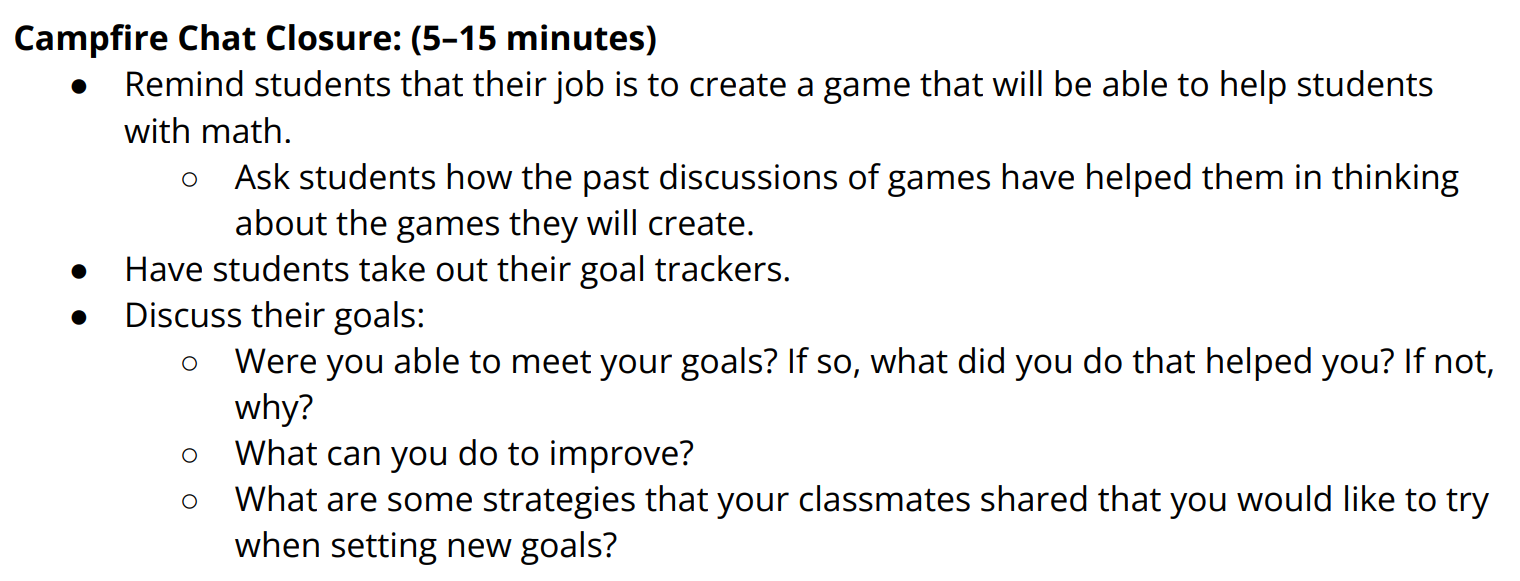
The Campfire Chat Closure also includes time to complete pages in the Design Challenge Student Booklet.
The Teacher Support section provides resources that have been designed to support teachers in the implementation of the lessons throughout ST Math Camp: Game Design. The lessons are designed to support students in engaging in math discourse, playing math games, exploring math concepts, communicating understanding, and working to develop a game.



Teacher Guidance
Planning
Planning with your ST Math Camp curriculum can be as easy as 1-2-3...and 4, thanks to the Teacher Guidance resource. Teacher Guidance focuses on preparing teachers to successfully facilitate discussion and learning through the Design Process. Along with this guidance, the resource provides an at-a-glance planning guide for facilitators.


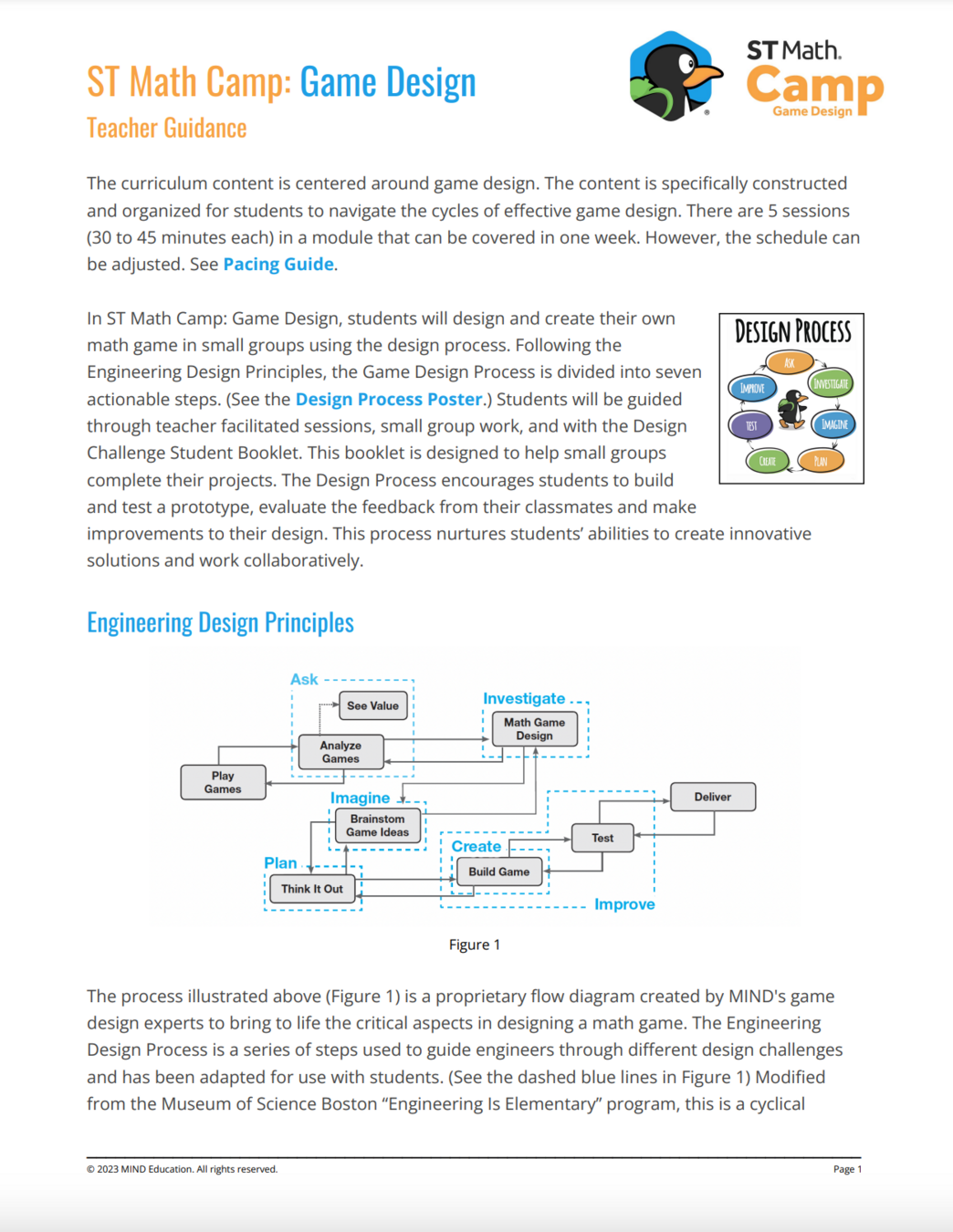
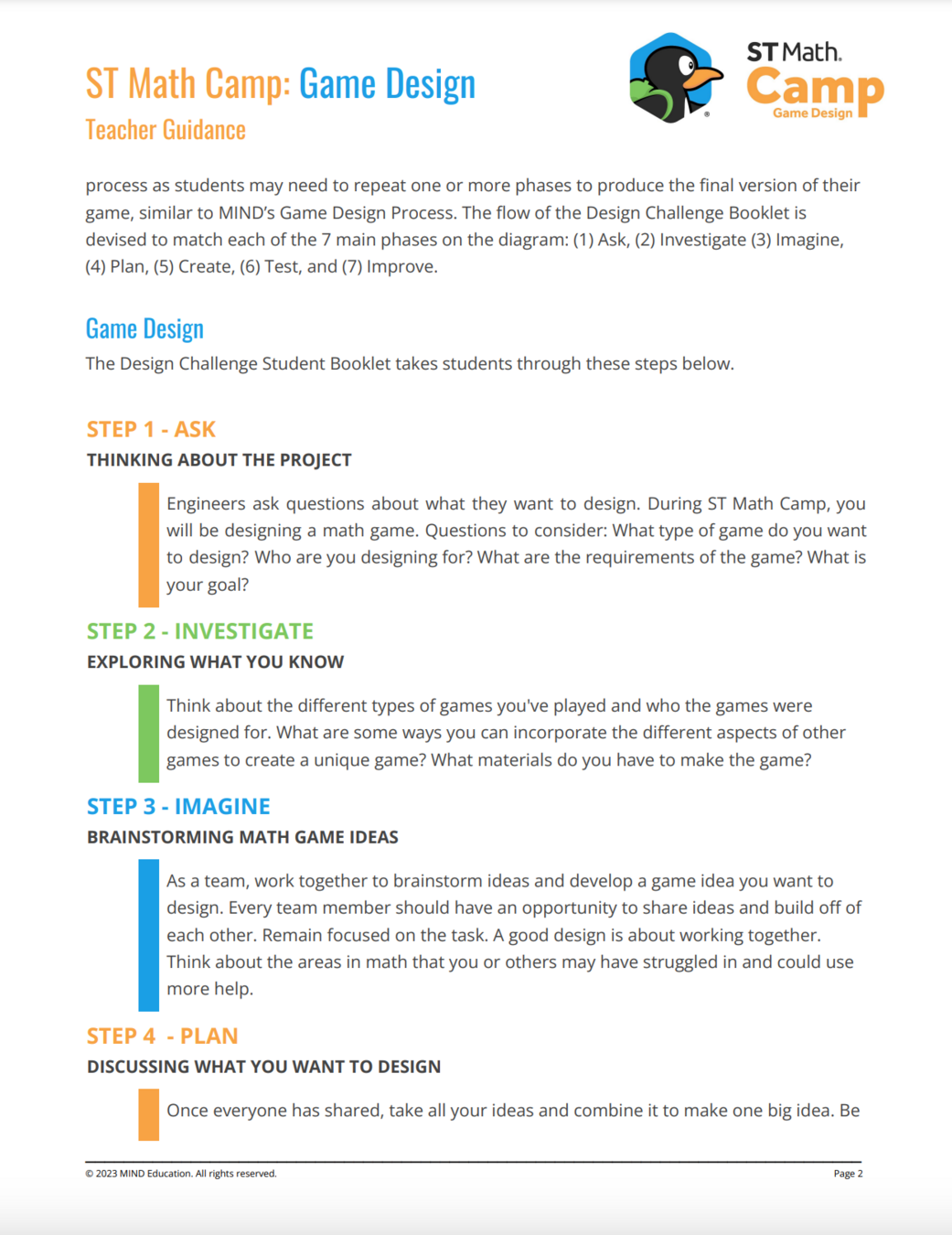
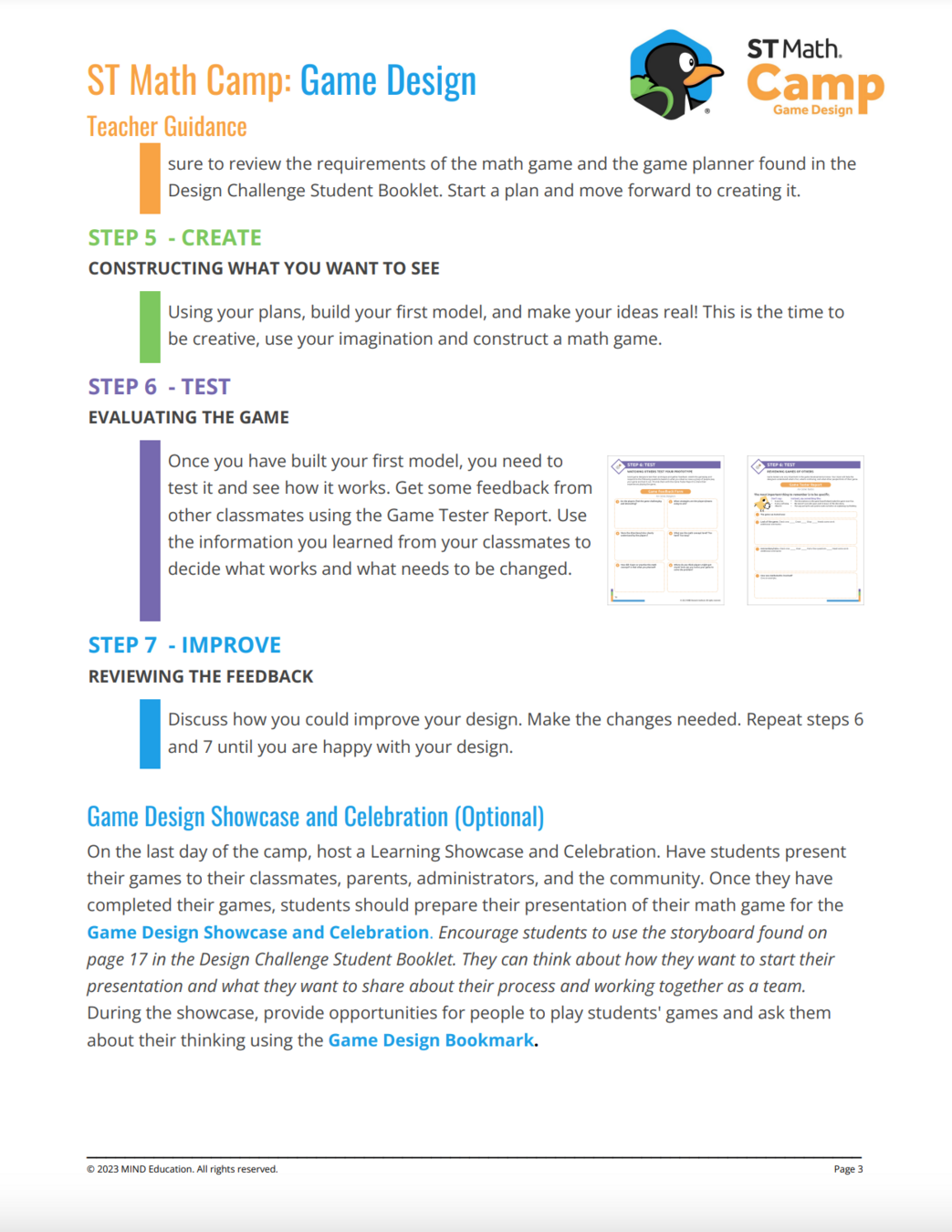
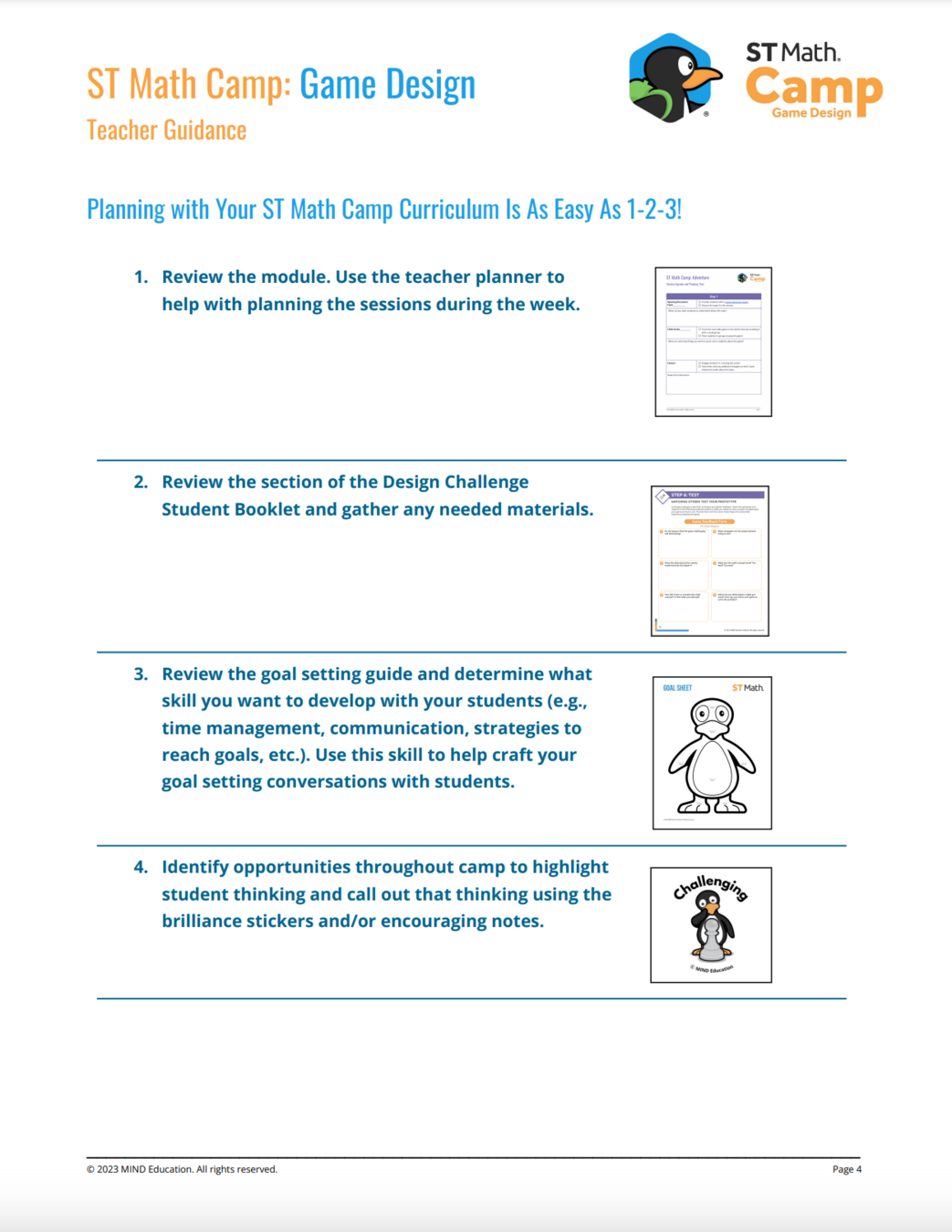
Click here to access the Teacher Guidance resource
The Design Process
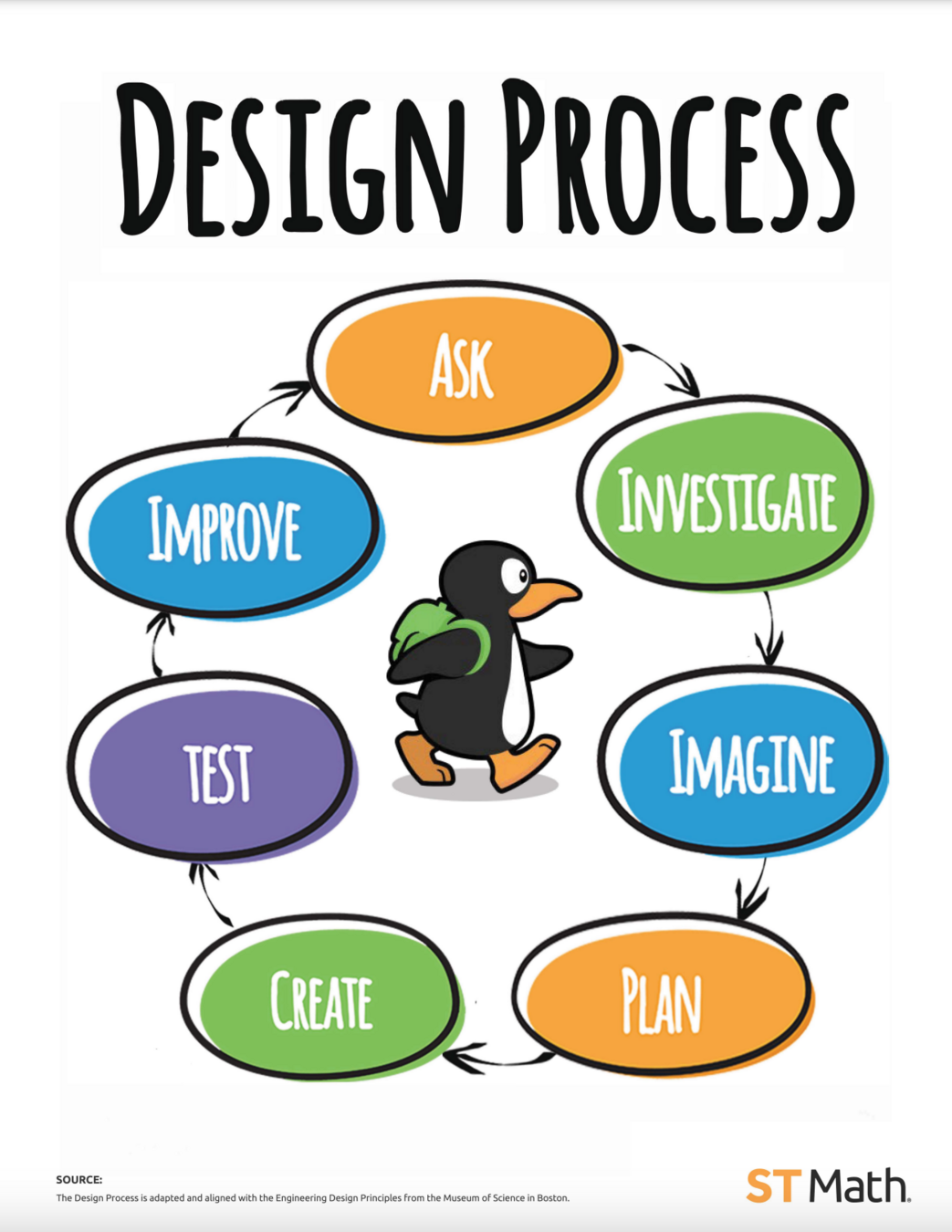
In ST Math Design Camp, students will design and create their own math game in small groups using the design process. Following the Engineering Design Principles, the Game Design Process is divided into seven actionable steps. The Design Process encourages students to build and test a prototype, evaluate the feedback from their classmates and make improvements to their design. This process nurtures students’ abilities to create innovative solutions and work collaboratively.
Design Process Description
The Description
In this section of the website you will find an excellent resource to guide you and your students through the design process:
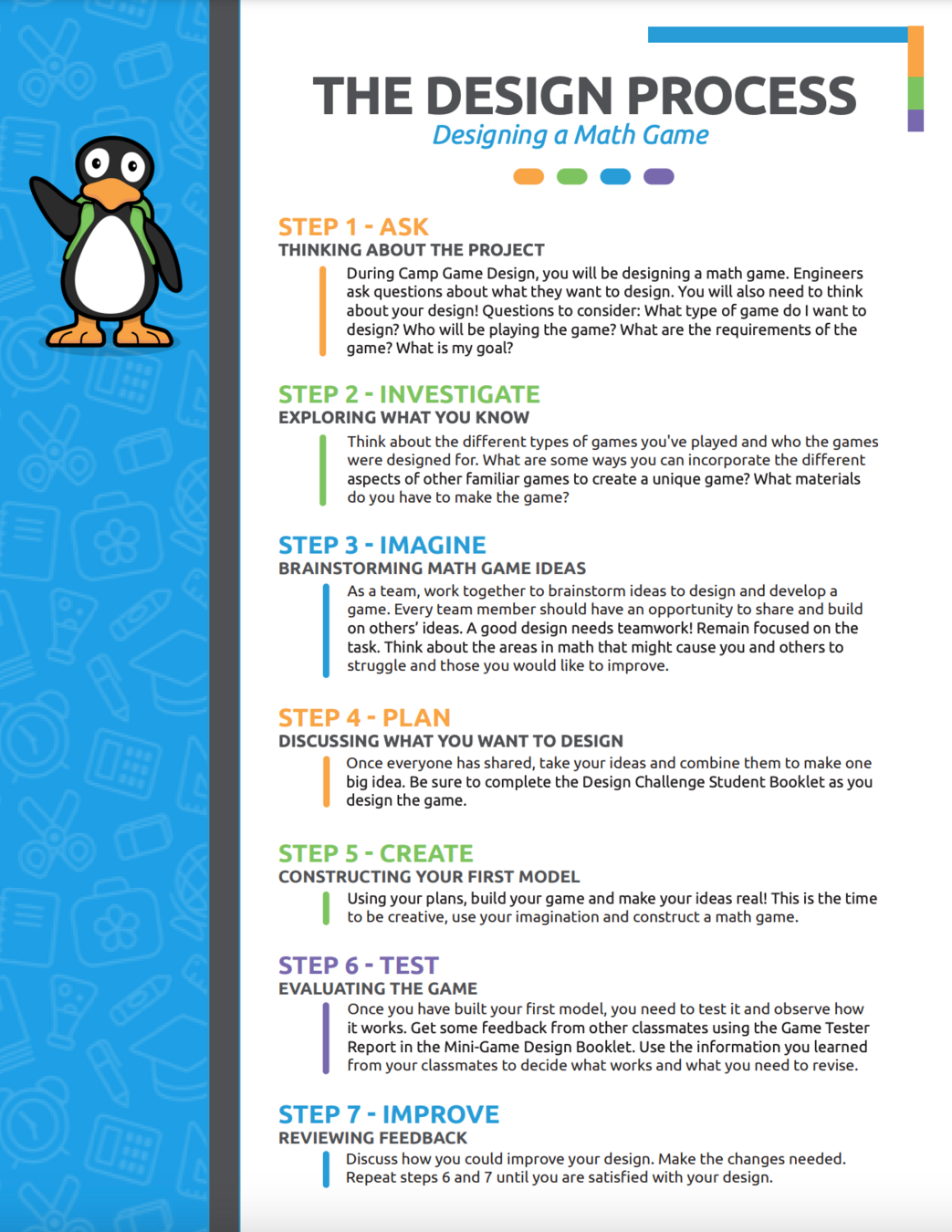
The Design Process Description provides a seven-step description of the design process and how students use it to proceed through the creation of their individual ST Math Game Design Camp game.
OFF
In this section, you will find videos to support the learning in the module. Designer Tip-Off videos feature MIND’s very own designers sharing tips for each module to support the Design Process. The Student-Created Videos provide students and teachers with a firsthand look at the table games included in the ST Math Game Design Camp.

Designer Tip-Off Videos
Insight from the Designers
During the first session of each module in the ST Math Game Design Camp, the Designer Tip-Off videos provide some valuable insight into the process of creating a game. Students watch as the ST Math designers explain various steps in the Design Process that they used in creating the Design Camp games.
Each grade-level band has access to the Designer Tip-Off videos to use during the appropriate session. Click the image for an example of a tip-off video.

Student-Created Videos
Preparation
Students have the opportunity to play an ST Math table game at the beginning of each module. Some of these games include a very familiar premises, like Traffic Light Tic Tac Toe. Others will be brand new to students and teachers. Since playing the game is a very important piece of the design process, it is crucial for students to fully understand the game. That's where Student-Created Videos come in!
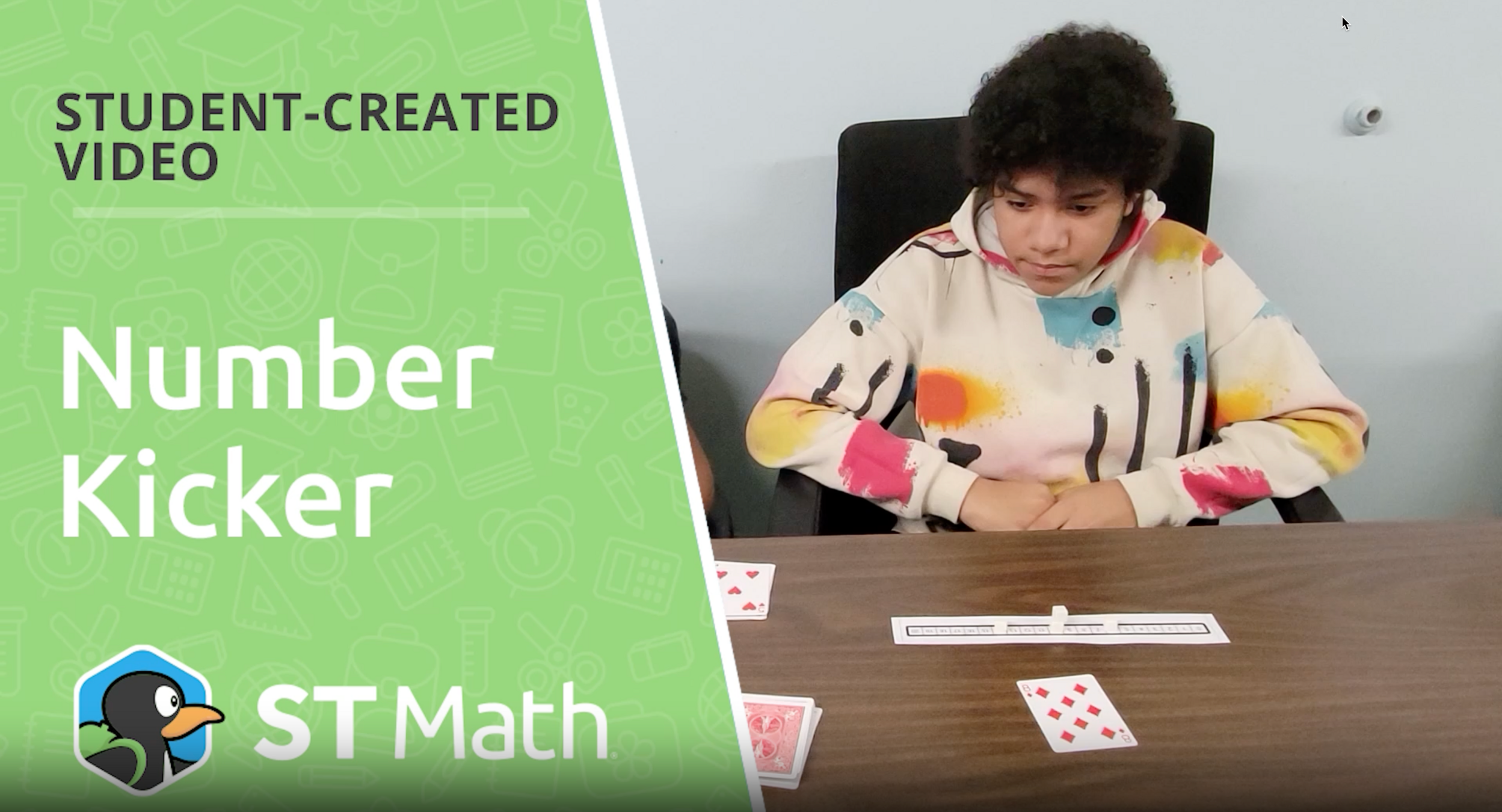
Click on the image below to take a look at one example of a Student-Created Video.


A poster to hang, a booklet for student learning, a unique goal tracker, and an official game tester tool are some of the incredible resources housed in this section. Click on the links below to learn more about each area and to find your way to some useful printables.
Design Process Poster
The Poster
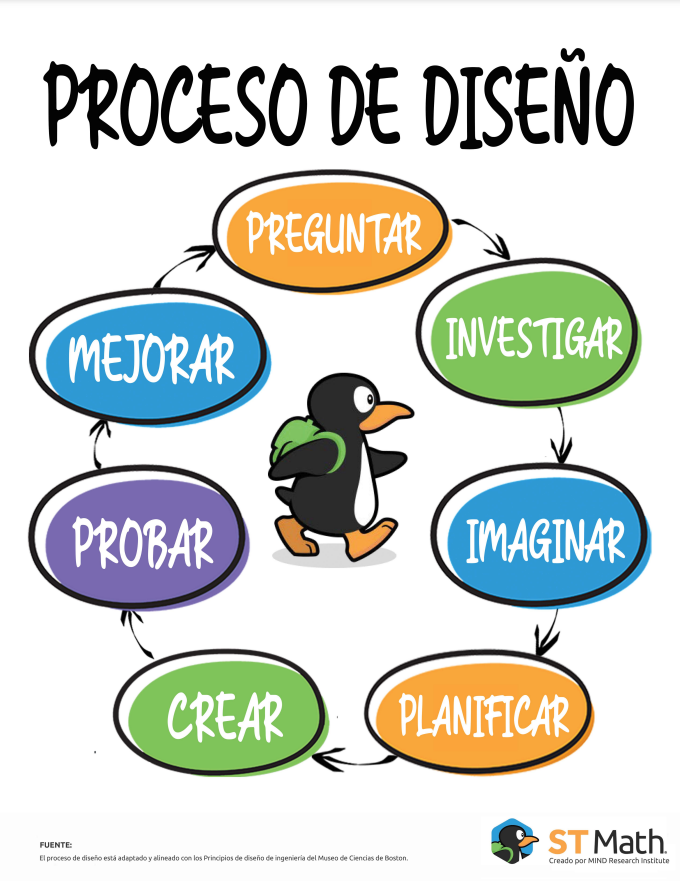
The Design Process Poster provides a clear, easy to follow, quick glance visual for your classroom. Use it as part of your discussions and to encourage independent thinking in your students.
Design Challenge Booklet
Student Booklet
Students will be guided through the seven actionable steps of the design process through teacher facilitated sessions, small group work, and with the Design Challenge Student Booklet. This booklet is designed to help small groups complete their projects. The Design Process encourages students to build and test a prototype, evaluate the feedback from their classmates, and make improvements to their design. This process nurtures students' abilities to create innovative solutions and work collaboratively.
Each grade-level band (K-2, 3-5, 6-8) has its own Design Challenge Student Booklet with age-appropriate content.
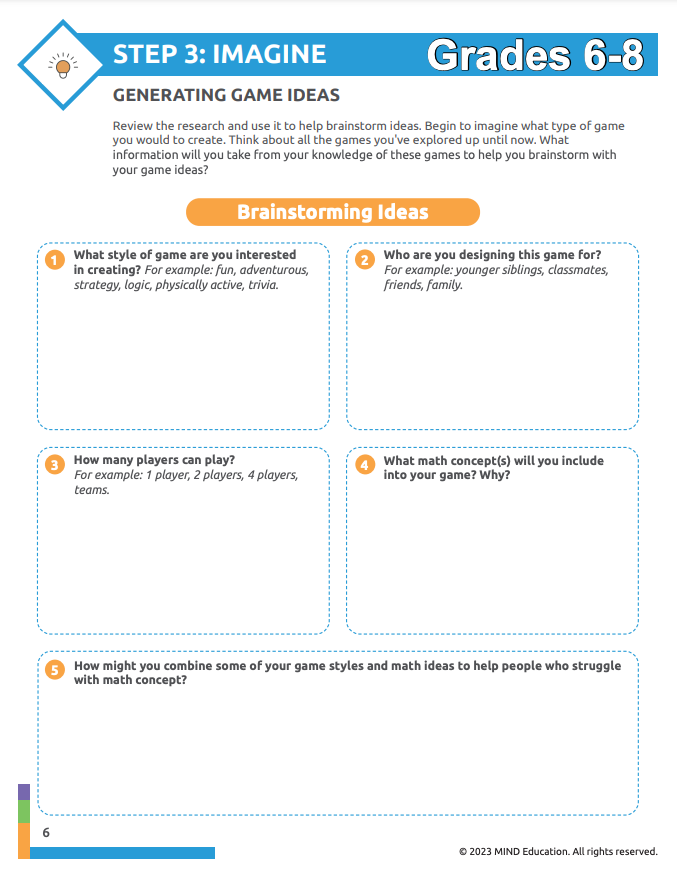
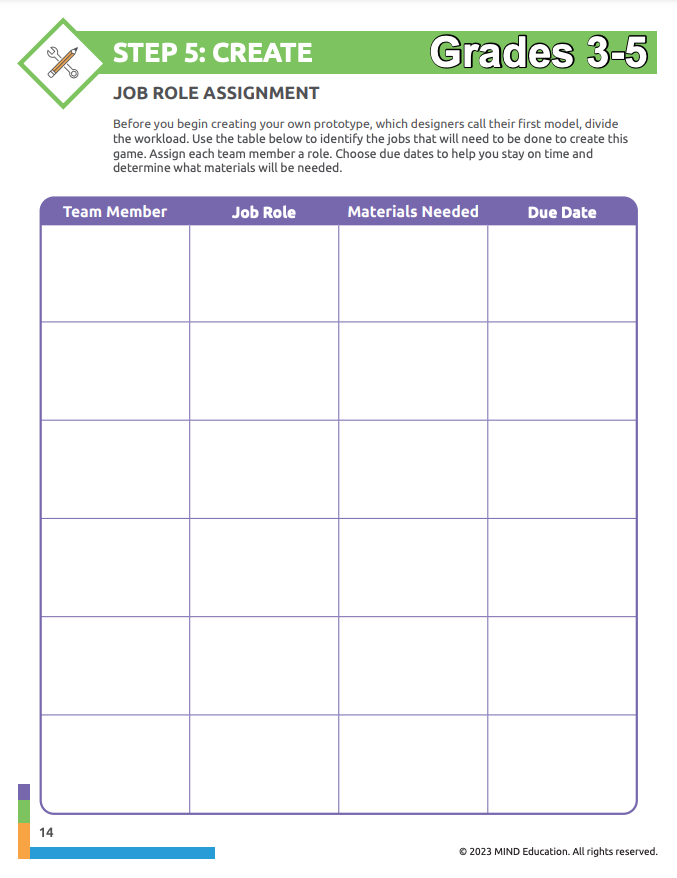
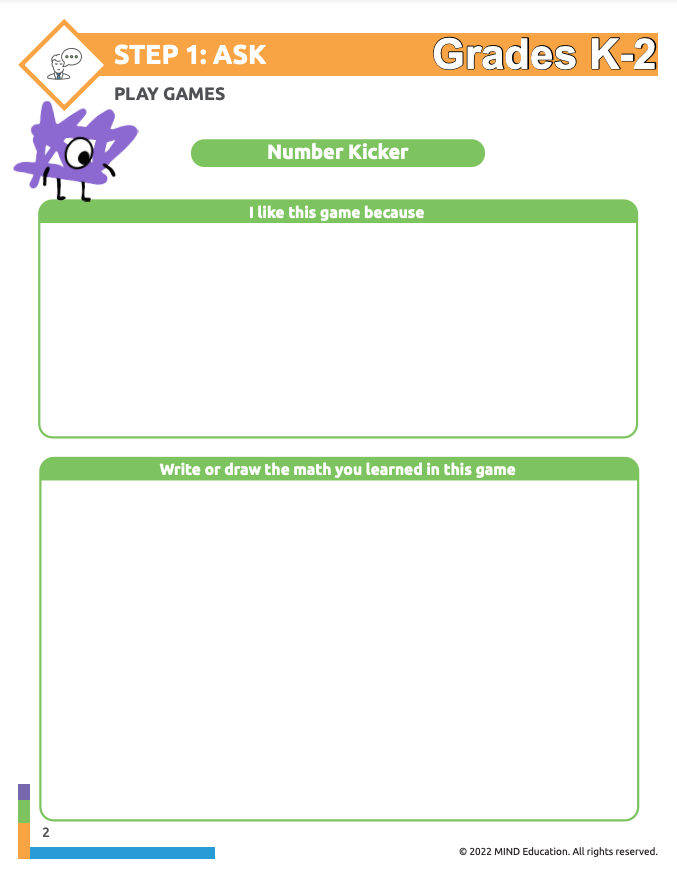
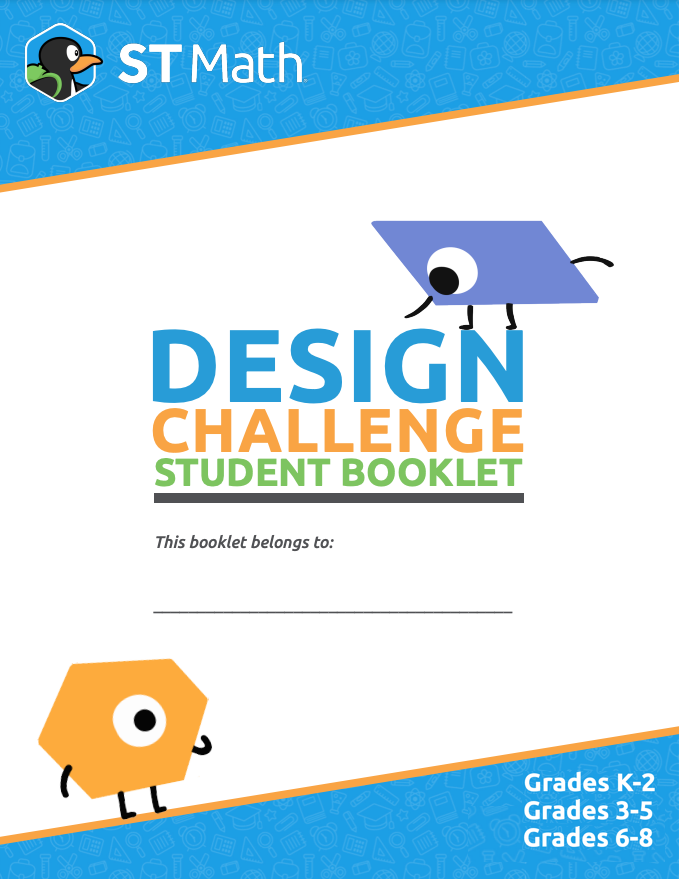
Goal Tracker
Student Goals
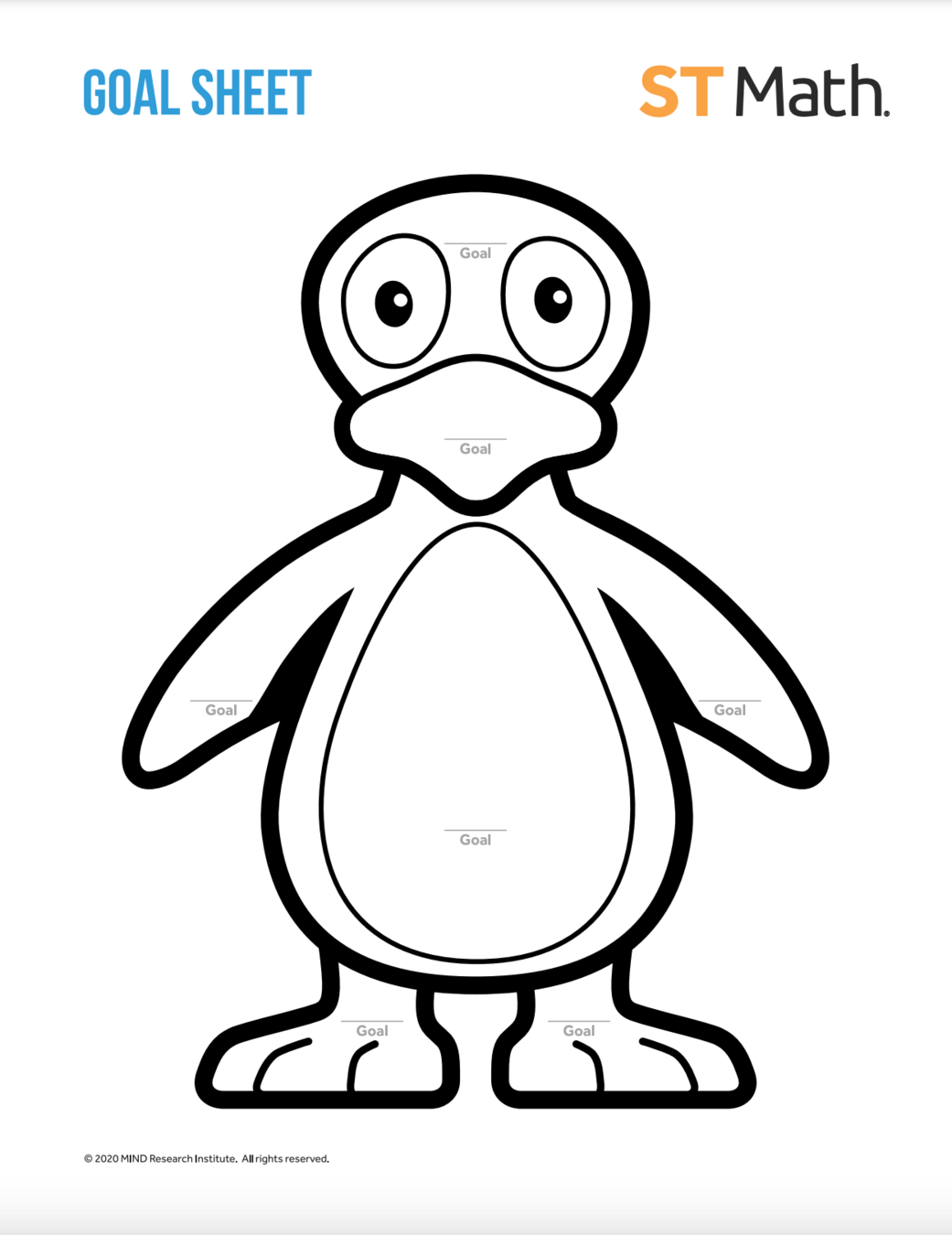
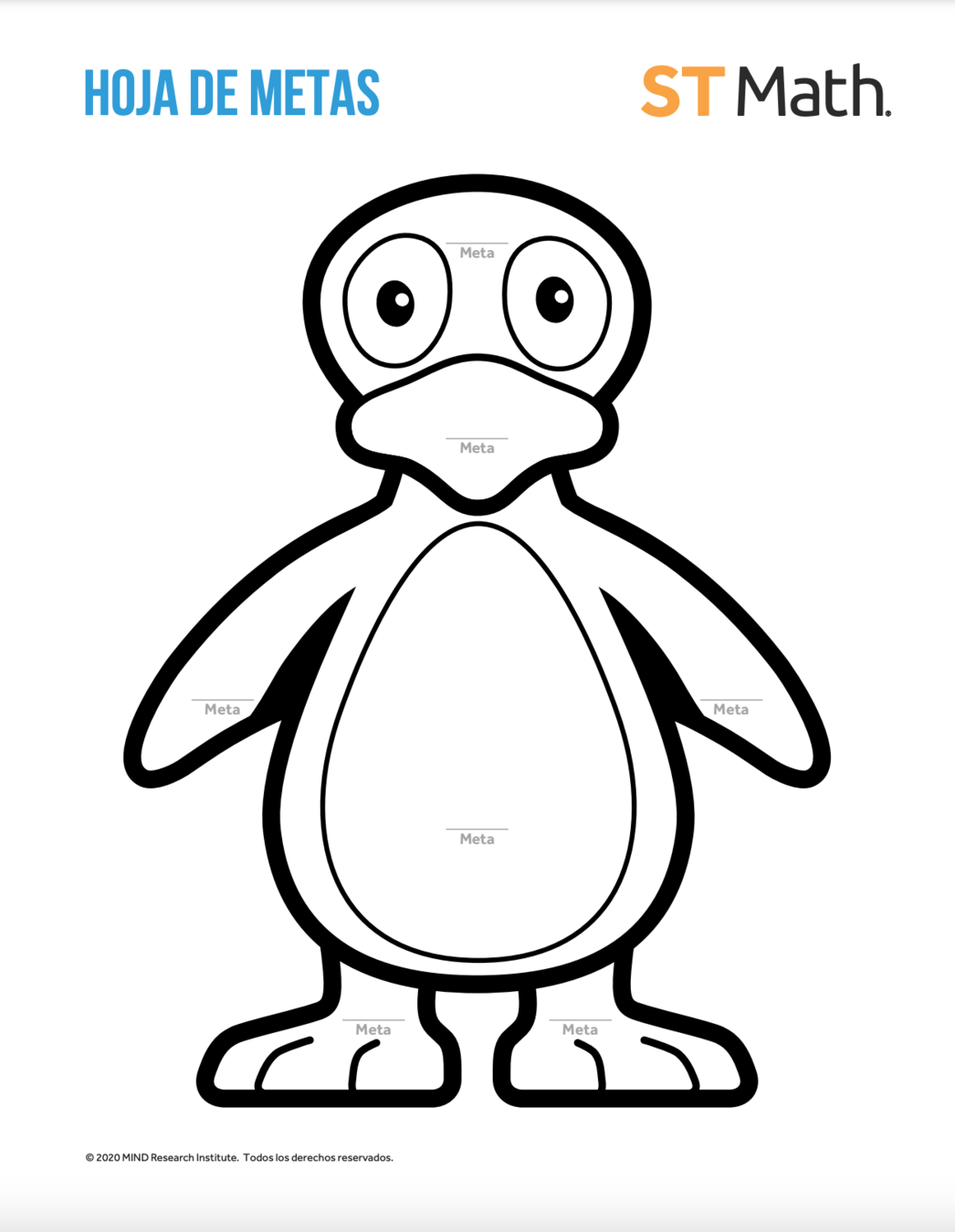
The Goal Setting Guide provides information on how to help students track their progress in the goals that they set at the beginning of the module using the Game Design Goal Tracker. As students reach their goals, they can color the corresponding areas on their sheets.

Students set one puzzle and/or minute goal per module. On the ST Math Game Play days, they will record the number of puzzles achieved and/or the number of minutes spent playing. At the conclusion of the module, students record the total number of minutes spent on ST Math and puzzles earned to see if they have met their goal.
Tracking Progress
English
Spanish

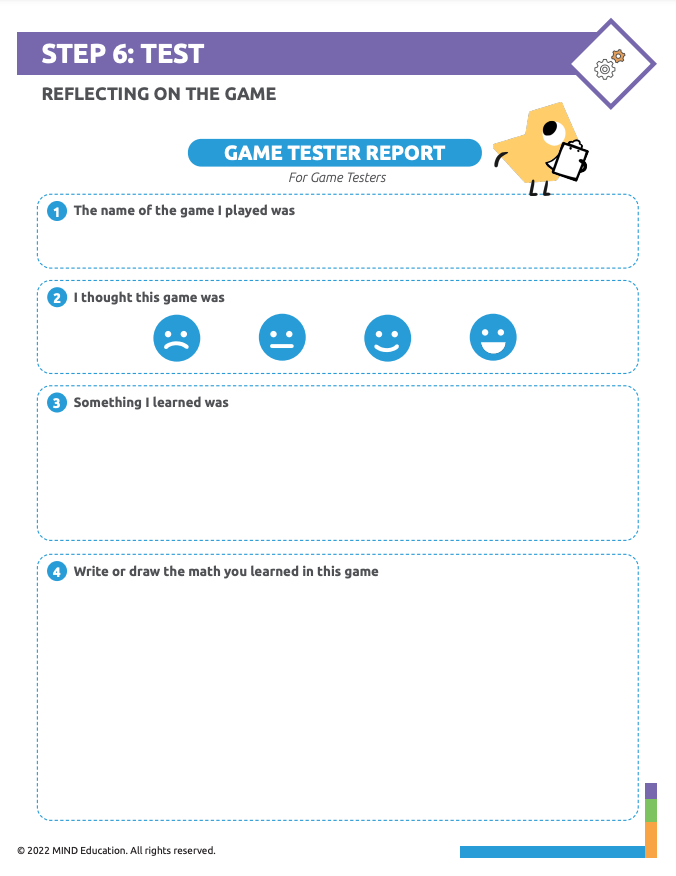
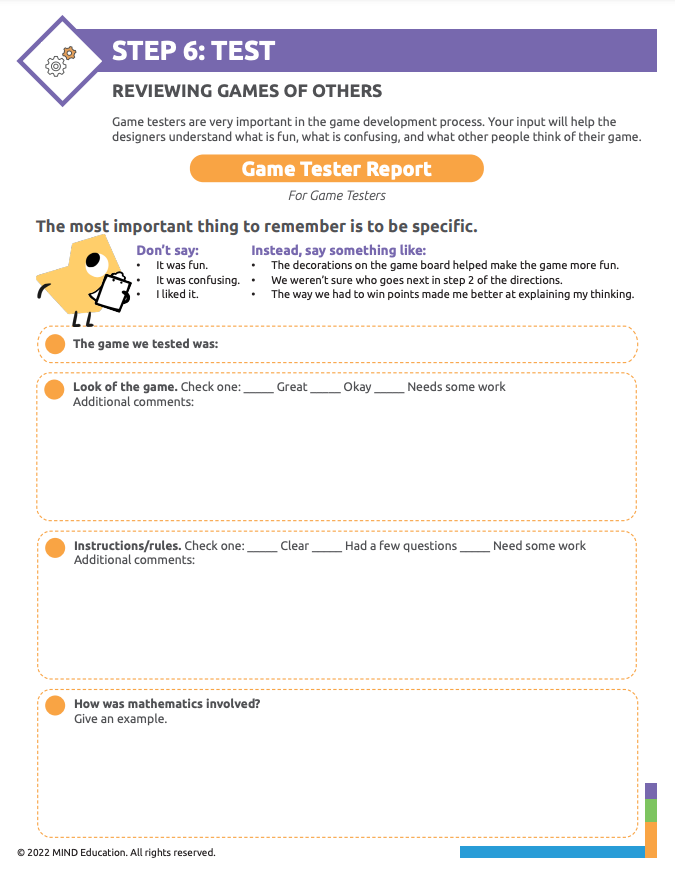
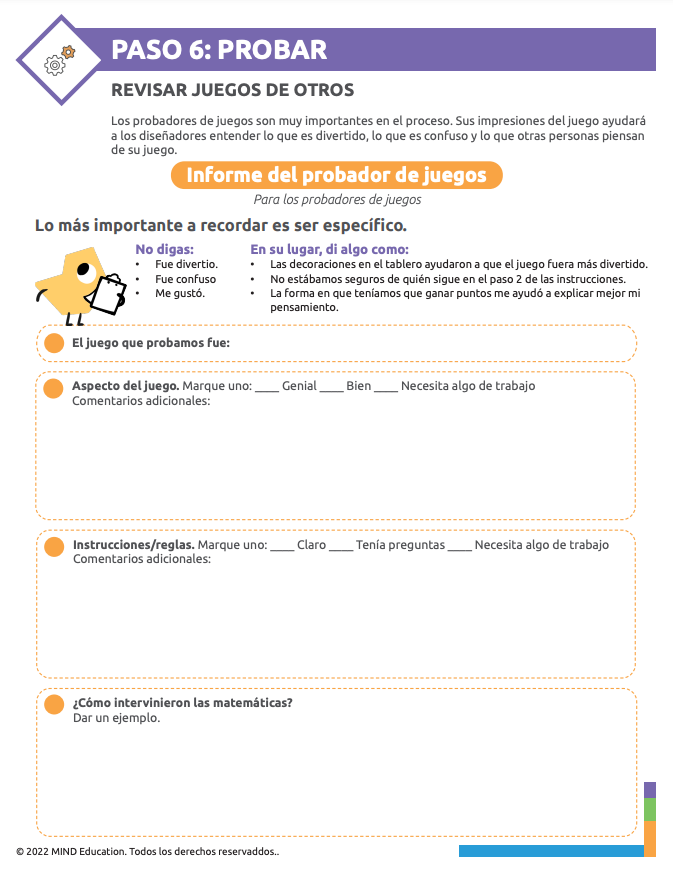
Game Tester Report
Feedback
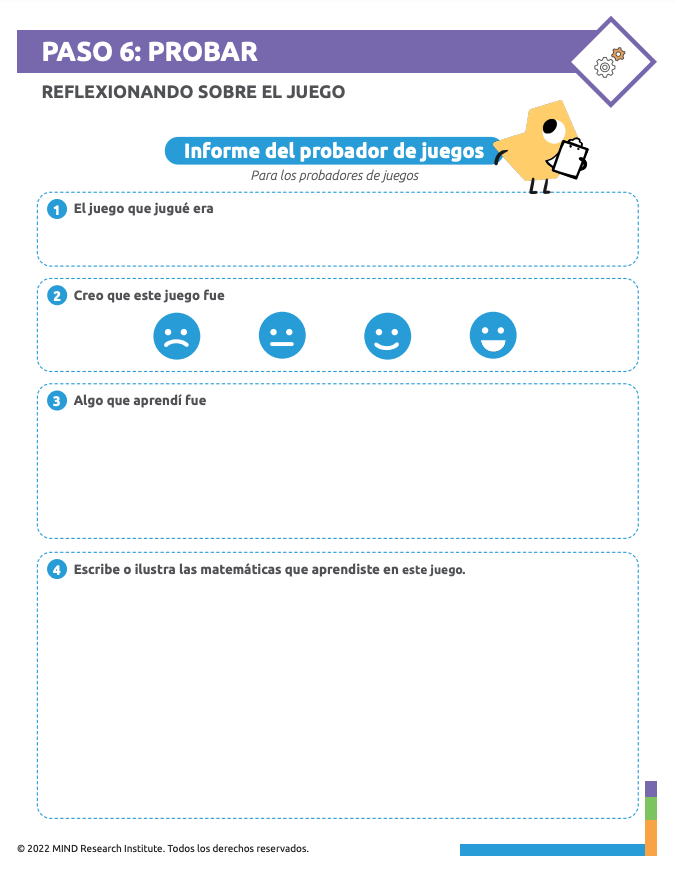
Once students have built their first model, they will test it and see how it works. Classmates use the Game Tester Report to give the designer feedback. The information from the classmates will help students to decide what works and what needs to be changed.
English
Spanish
K-1
K-1
3-8
3-8
Design_Lesson_landing
By dwhitby